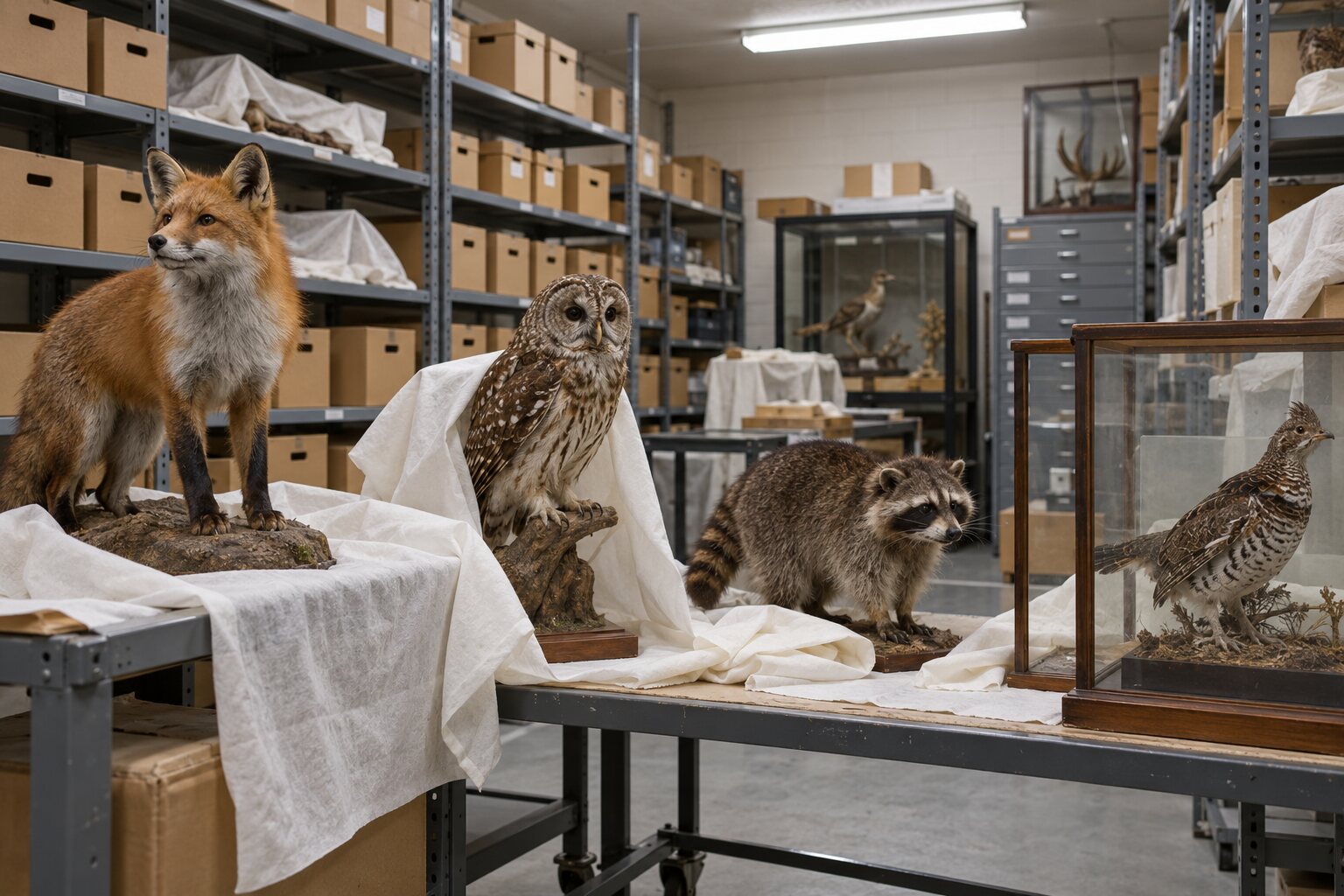
MARROW, West Virginia — Ash County has postponed the sale of five mounted animal specimens from its former nature room after paper labels disappeared inside locked display cases and compacted paper was found beneath the mounts. Commissioners voted Monday to retain the lot while the county documents its condition and determines whether it can be transferred to a school or museum.
The specimens — a red fox, raccoon, barred owl and two ruffed grouse — were displayed at the Rockmouth Reservoir visitor building until the room closed in 2019. They have since been kept in a climate-controlled records annex with mineral samples, teaching posters and other county property. None is considered a protected historic object.
Facilities clerk Owen Rusk prepared the lot Thursday by photographing each mount with its accession card and a new surplus tag. When he returned Friday, the cards and tags were gone. The cases remained padlocked, and security tape across the doors showed no break. Rusk initially suspected insects or loose adhesive until he found several dark pellets on the case floors.
The pellets were made entirely of damp paper fibers pressed into narrow cylinders. When records staff separated one under a magnifier, blue ink from a surplus form remained visible between the layers. Another contained part of the fox's accession number. No hair, plant matter or animal waste was identified in the material.
The mounts are conventional prepared skins fitted over forms, with glass eyes and closed mouths. They contain no digestive organs. County health officer Mara Tern said mold, rodents and dermestid beetles can damage taxidermy and paper, but staff found no droppings, gnawing or insect casings outside the display cases. The annex was treated for pests in August.
A camera covers the storage aisle but not the inside of each case. Overnight video shows no person entering. Shortly after 2 a.m., the owl case shifts about half an inch toward the wall and settles. The fox's paper tag is visible through the glass before that movement and absent afterward. No motion alert was generated.
The planned auction included old office chairs, two projectors and map cabinets in addition to the nature-room material. The other property will be sold online beginning Wednesday. County administrator Nell Iver said the delay affects no operating program, though proceeds from the specimens had been expected to offset storage costs.
Commissioners considered transferring the mounts without further examination. Rusk objected because the accession history was incomplete and one grouse had begun leaning against its case. The commission authorized up to $650 for a conservator to inspect the lot and directed staff to recreate labels from archived photographs rather than place new paper inside the cases.
On Saturday, staff moved the cases to a secure room and set each on clean white sheeting. The mounts were not removed. By Sunday morning, a fresh pellet lay beneath the raccoon although no paper had been left in its case. It was dry and lighter than the earlier material. A laboratory scale showed it weighed the same as the missing surplus tag to within one tenth of a gram.
Records personnel unfolded the pellet with humidity and plastic tools. The inner strip carried an accession number for a great horned owl removed from the collection after water damage in 1981. The county's disposal ledger says that mount was burned at the former road garage. Rusk found the ledger entry intact and in its expected box.
The conservator is scheduled to visit Thursday. Until then, the county will keep the cases locked and use reusable plastic markers for its inventory. On Monday afternoon, staff photographed the empty shelf where the 1981 owl had once been stored. In the dust behind it were four fresh parallel grooves, each ending in a small crescent of compacted blue paper.