ASHLINE, Ohio — The Ashline Water Department flushed part of its east distribution line Friday after 19 households reported unfamiliar tastes in otherwise clear tap water. Routine testing has not found a bacterial or chemical problem, and the city has not issued a boil notice. Residents may request bottled water while the review continues.
The complaints began Tuesday in a six-block area supplied from the Briar Hill tower. They do not describe a single taste. Some residents reported iron, well water or chlorine, while others named coffee, mint, limestone or a particular kind of dish soap. The water remained colorless and produced no common odor when utility employees visited.
Public works director Nia Carlson said variations usually come from plumbing materials, seasonal treatment changes or water that has remained in a service line. None readily explains why neighbors supplied different descriptions after drinking from the same main. The plant's treatment settings and source water have not changed this month.
Resident Albert Meeks said his kitchen tap tasted like the hand-pumped well at his grandparents' former farm near Newark. He had not visited that property since it was sold in 1987. His wife drank from the same glass and noticed only ordinary municipal water. Meeks replaced the faucet filter before contacting the city, with no change.
Across the street, Tara Nguyen described a faint lemon taste she associated with the soap used in her childhood home. Her son and a utility employee could not detect it. Nguyen said the water was not unpleasant and that she would not have complained if Meeks had not mentioned a similarly specific memory at a neighborhood meeting.
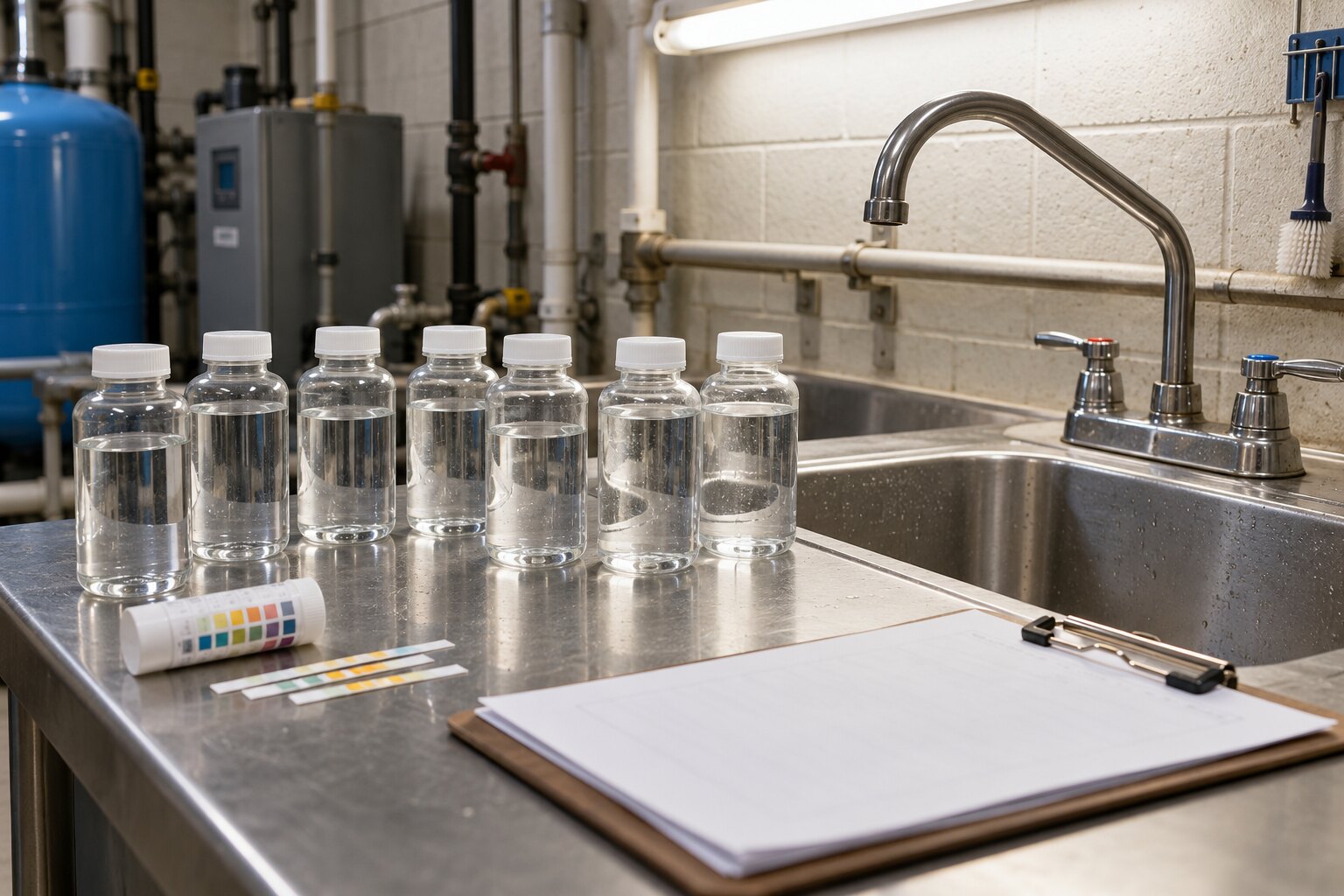
The city collected samples from seven homes, a hydrant and the treatment plant. Tests for coliform bacteria, metals, residual disinfectant and common volatile compounds were within operating limits, Carlson said. A county environmental-health specialist reviewed the preliminary results. The city advised residents to follow ordinary guidance for any water that appears cloudy, discolored or foul-smelling.
The Register attended sampling at the east maintenance garage. Three sealed bottles were poured into identical clean cups. Carlson described all three as neutral. A resident volunteer identified one as rainwater collected from a metal roof, another as water from a church basement and the third as water from her present kitchen. All three had been drawn from the same hydrant within five minutes.
A sensory association can be vivid without reflecting a measurable contaminant, said chemist Adrian Pell, who is not involved in the city's tests. Taste combines odor, expectation and memory, and people can disagree about the same sample. Pell said the clustered timing remains useful information but does not make the descriptions chemically equivalent.
Crews opened two hydrants Friday morning and moved about 180,000 gallons through the east line. The work temporarily lowered pressure on three streets and delayed scheduled pavement repair. Carlson said the city will repeat laboratory sampling Monday and inspect a valve installed during summer utility work.
By Friday afternoon, eight residents said the remembered taste had faded. Four said it had changed. Meeks reported that his water now tasted like the paper cups used at the county fair rather than the farm well. He has continued using it for cooking but is keeping a written log at the department's request.
The laboratory returned the sampling coolers Friday with seven numbered bottles and one additional bottle bearing the initials of the city technician who collected them. She said she did not fill or label it. The seal is intact, and no liquid is visible inside. When the empty bottle is opened in the testing room, Carlson said, each employee who smells it names a different source of water.