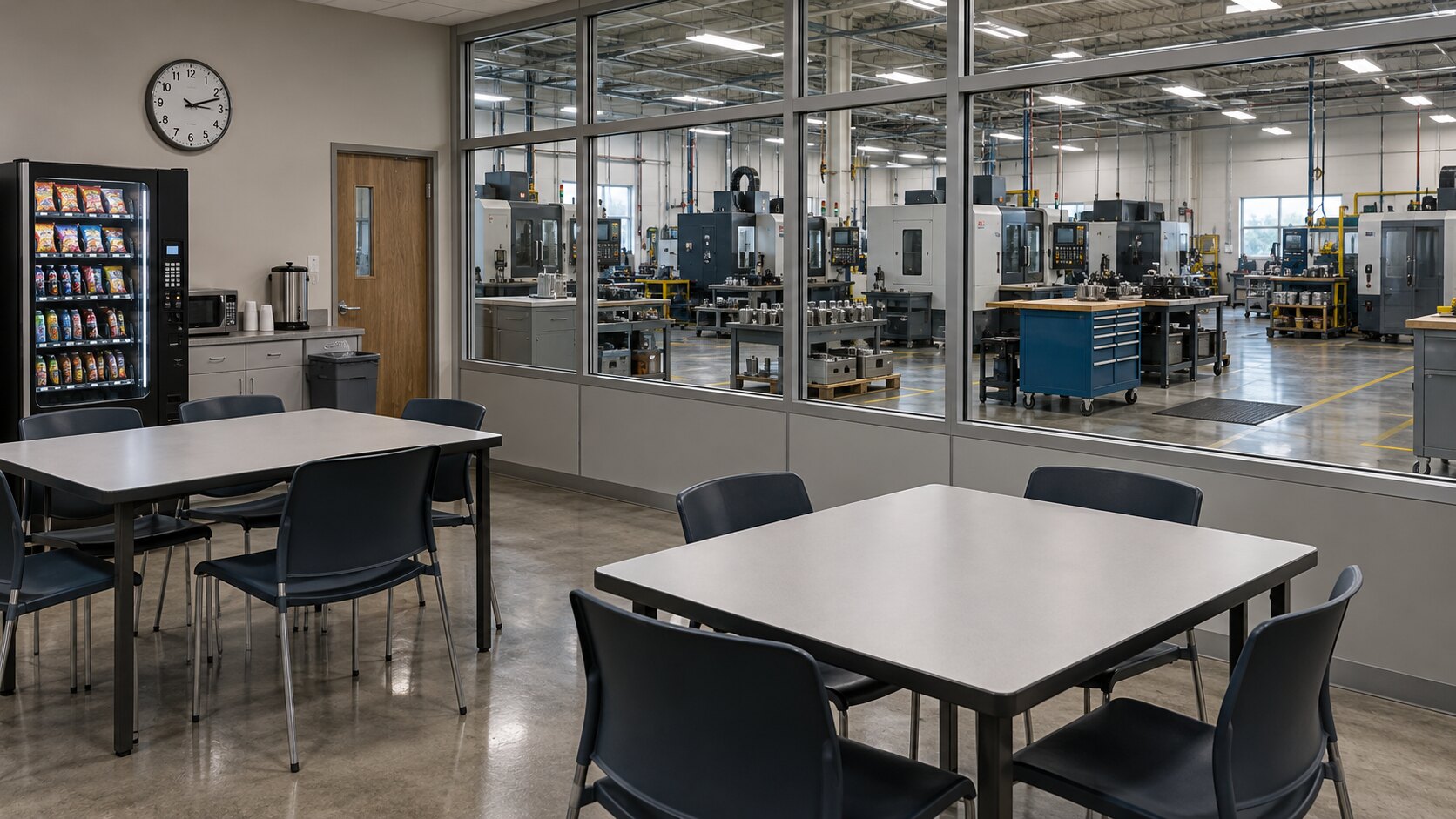
BASIN SPUR, Nebraska — A tool plant has added a paid 10-minute buffer after employees began experiencing scheduled breaks as periods lasting between 38 minutes and nearly two hours. The plant's clocks and production systems record the usual 15 minutes, and no worker has been disciplined for returning late.
Basin Spur Tool & Gauge employs 42 people making replacement sockets, dies and measuring fixtures for farm-equipment dealers. Machines are shut down together at noon so employees can eat in a room separated from the shop floor by a glass wall. The break begins and ends with an electronic whistle tied to the plant clock.
The first report came Monday from four finishing workers who entered at noon and heard the return whistle after what they agreed had been 53 minutes. They described an ordinary break without sleep or confusion. One completed three newspaper crosswords, another changed a bandage and two played a full card game before the whistle sounded.
The wall clock showed 12:15 when they left. Their coffee was cold, the bandage had dried at the edges and all 31 cards remaining in the deck were in the order the players remembered. A security recording shows the four talking and moving throughout the break, compressed into the expected quarter hour without a skipped frame or obvious change in speed.
Different employees reported longer intervals Tuesday and Wednesday. The effect did not include everyone in the room. Some workers heard the return whistle normally while coworkers beside them continued eating and later described additional conversations. Both groups recalled the same opening minutes, then disagreed about when particular people stood or spoke.
Assembler Kira Holt used 47 apparent minutes Tuesday to mend a torn shirt cuff. Coworker Len Cale, seated across from her, remembered Holt holding the needle for less than a minute and leaving with the cuff unrepaired. The shirt itself was stitched when the break ended. The plant camera shows Holt's hands below the table for nine seconds.
Fatigue, repetitive work and clock expectation can distort how a short interval feels, said Alis Rook, an occupational psychologist who reviewed written accounts with the employees' permission. Shared estimates can also converge after discussion. Rook said those effects would not ordinarily permit lengthy manual tasks to be completed inside the shorter period without appearing unusually fast to an observer.
Plant manager Orin Mays moved lunch to two groups, stopped the whistle and assigned a supervisor to end each break in person. Employees may remain in the room for the added buffer even if they believe only 15 minutes passed. The company will not subtract the time from attendance bonuses or require production to be recovered after shift.
The change delayed one inspection batch Wednesday but did not affect shipments, Mays said. Several workers welcomed the longer-feeling rest and asked the company not to close the room. Others began eating in their cars, where no extended interval has been reported. Union steward Tess Brune asked management to treat the matter as a scheduling condition rather than a medical complaint.
On Thursday, three employees carried mechanical stopwatches into the room. Two recorded 15 minutes and four seconds. The third, kept by Holt, advanced 71 minutes before the supervisor opened the door. Its case and spring were intact, and it continued keeping ordinary time afterward while remaining 56 minutes ahead of the plant clocks.
Mays placed the three watches in a locked parts cabinet rather than reset them. During Friday's first shift, employees outside the cabinet heard the noon whistle once. Holt heard a second return signal from inside the closed cabinet 41 minutes later. When it ended, her repaired cuff had been neatly opened and the loose thread was wound around the watch stem.