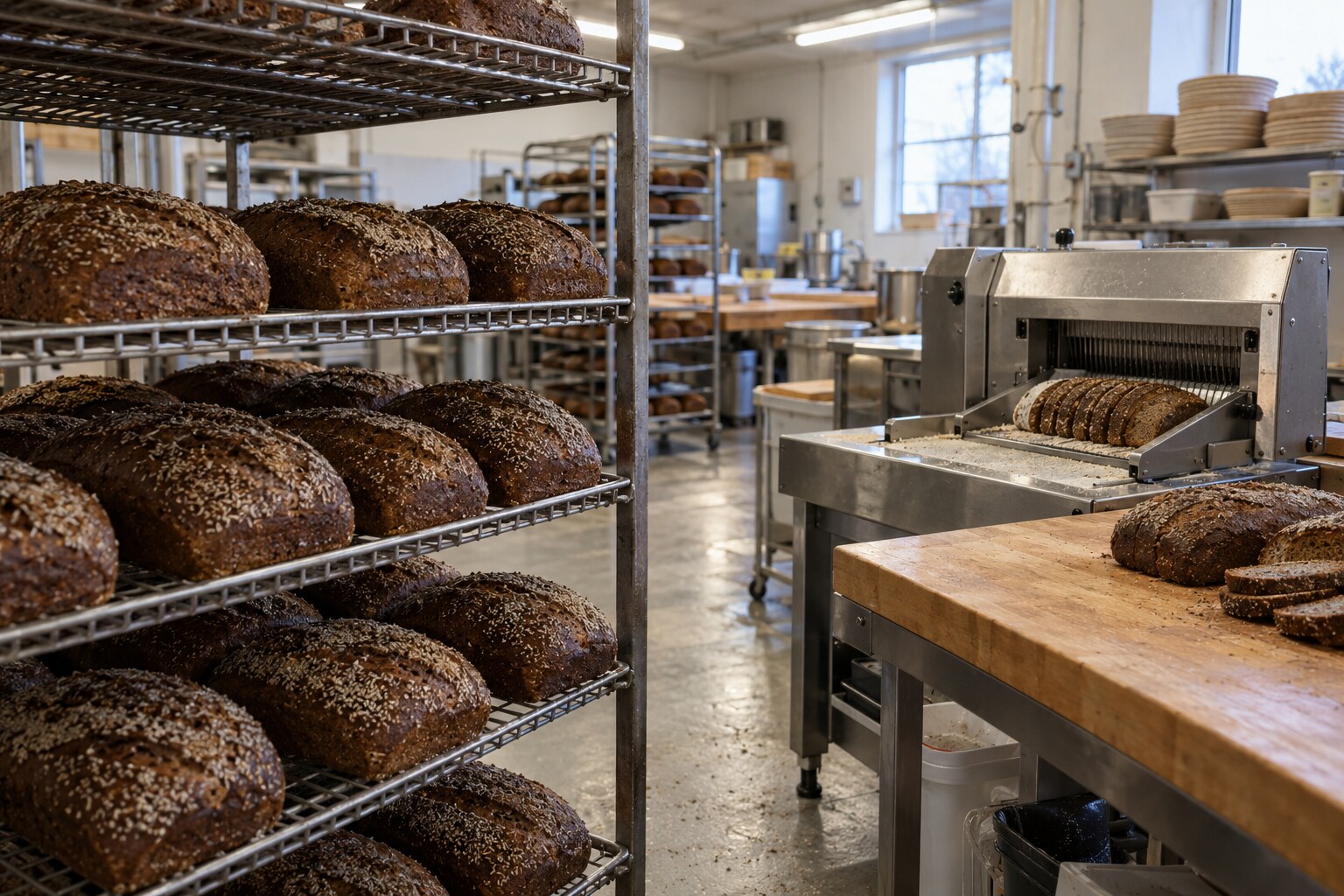
BELLWETHER, Nebraska — Harker Street Bakery has stopped selling its seeded rye and is holding Friday's production after customers found narrow, regularly spaced impressions around hollow areas inside six loaves. The bakery remains open for other bread and pastry sales, owner Pilar Ames said.
The affected loaves came from a 42-loaf batch mixed before dawn Wednesday. Their crusts were unbroken and their weights fell within the bakery's normal range when they left the cooling rack. Four were sold whole, two were sliced for sandwich orders, and the remainder stayed at the shop.
Customer Leon Brice reported the first cavity while cutting a loaf at home. Beneath the heel, the crumb opened around an oval pocket about two inches long. A row of small paired grooves ran along the pocket's upper and lower edges. Brice returned the loaf in a paper bag and asked whether a piece of machinery had pressed into it before baking.
Ames cut the unsold loaves one at a time. Five contained similar pockets at different depths, all surrounded by grooves in the baked crumb. The crust above each opening was continuous. No fragment, insect, mold or foreign material was visible inside, and the bread smelled like the bakery's ordinary rye.
Large gas pockets can form when dough is shaped unevenly or ferments too long, baking instructor Dennis Ko said. Seeds or folds may leave repeated marks along an air chamber. Ko said the grooves in photographs supplied by the bakery were unusually consistent but could not be evaluated without examining the dough formula and finished loaves.
The rye is made from commercial flour, caraway seed, water, salt and a sour starter Ames has maintained for nine years. Flour and seed from the same deliveries were used in earlier batches without complaint. The Wednesday dough rose at its expected rate, and oven temperature logs showed no interruption.
The bakery notified the Bellwether County food office and set aside the returned bread, ingredients and starter for review. Inspector Marta Ewell found no evidence of rodents or insects in ingredient bins, racks or ovens. She did not order the business closed and said the hold is voluntary while samples are checked for ordinary contamination.
Six customers who bought whole loaves were contacted through prepaid-order records. Two had already eaten the bread and reported no illness. One found a cavity and discarded the loaf before hearing from the bakery. The remaining customers returned their purchases unopened and received refunds. Ames said no complaint involved another product.
Employees cleaned the mixer, divider and shaping bench Thursday and made a small test batch with packaged yeast instead of the starter. Those loaves baked without large pockets. A second test using the rye starter produced three cavities, though only one showed the paired grooves. The starter smelled sharp but normal and showed no visible growth beyond its usual bubbles.
Ames plans to replace the starter and resume rye production after the food office receives laboratory results. The canceled batch represents about $260 in sales, plus prepaid lunch orders the bakery filled with wheat bread. She asked customers not to display or sell affected slices while the review is underway.
The starter was weighed, covered and placed alone in the walk-in cooler Thursday evening. It was 14 grams lighter at opening despite an intact lid and no spilled dough. On the surface, a shallow oval had collapsed inward. Along its underside, visible through the clear container, two close rows of small indentations pressed outward against the plastic.