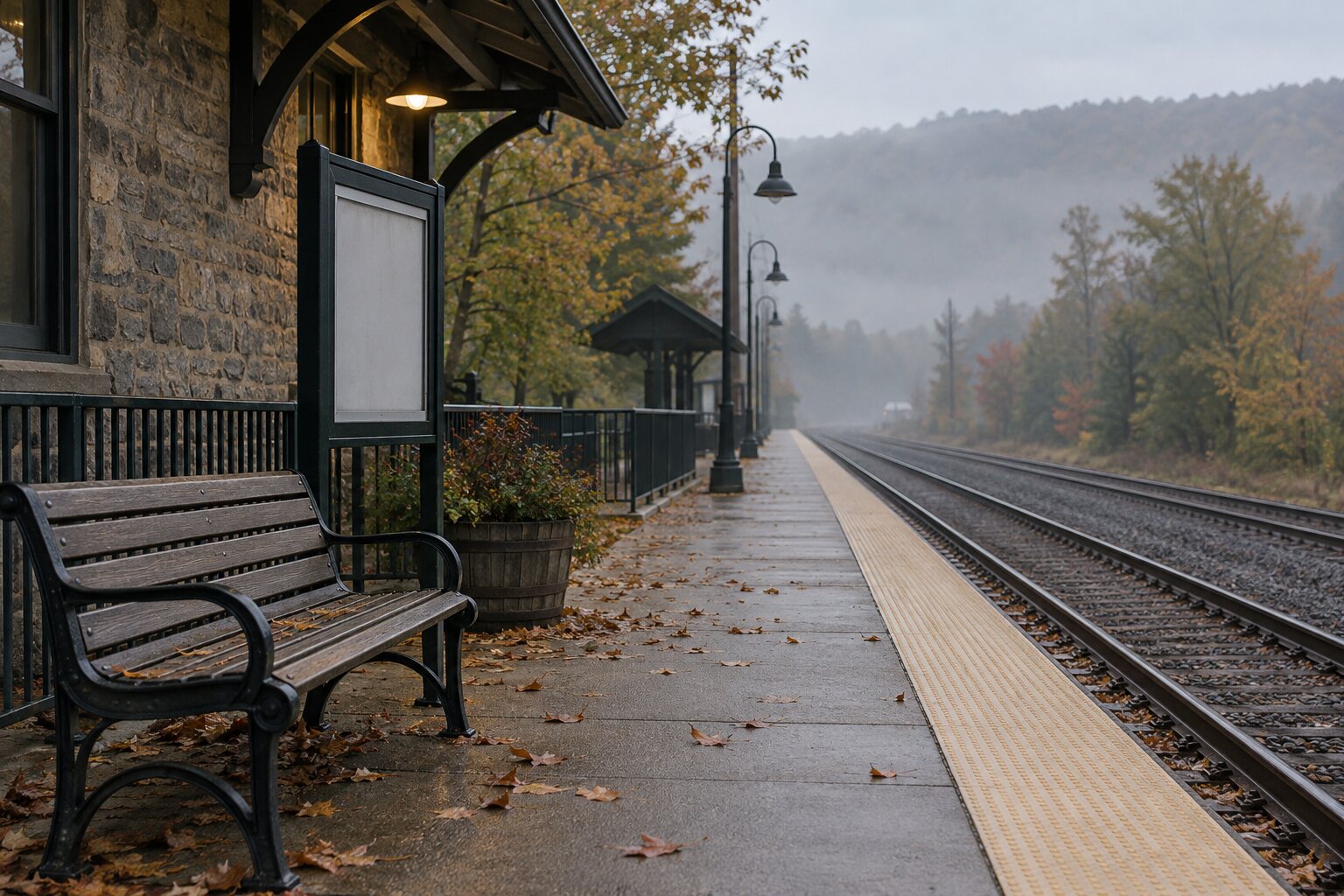
BELLWICK, Pennsylvania — The Rosen Valley Rail District is replacing transfer maps at Bellwick station after riders reported using a stairway that does not appear on the current building plan. The district has not changed train service. It has told passengers connecting to the county bus to follow the marked ramp at the east end of the platform while it reviews the signs.
The first complaint came from nursing assistant Leena Ortiz, who changed from the 7:24 inbound train to a bus on September 8. She said a sign near the waiting-room door sent her down a short flight of concrete steps to the lower curb. She reached the bus in time but could not find the steps when she returned that evening. Ortiz filed a service complaint because the ramp takes longer and her transfer allowance had already been used.
Two other passengers described a similar descent on separate mornings, according to redacted complaint forms provided by the district. One called it a service stair; the other recalled a landing with a handrail painted dark green. Neither recorded a photograph or the number of steps. District manager Naomi Fells said she had no basis to say whether they took the same route or were describing different entrances.
The current station plan shows one public route to the bus stop: a 270-foot ramp along the platform's east fence. There is also a closed freight stair behind a locked metal door, farther west. That stair ends inside a storage room, not at the curb. Maintenance supervisor Glenn Harker said the door's padlock was in place during the morning inspections on each date named in the complaints.
Bellwick's transfer map is an unusually layered document. A 2004 station renovation moved the bus shelter, and the rail district printed new arrows without replacing the whole display case. In 2013, a contractor redrew the platform after installing the ramp. The newest map uses that drawing, but one small arrow at the waiting-room door survived from the earlier sheet. Fells said that arrow should have been removed regardless of whether it explains the riders' accounts.
Ortiz returned to the station with the Register on Monday. She pointed to the older arrow and then to a blank section of wall beside the room. There is no door there. She said she remembered carrying her lunch bag in her left hand and holding a rail with her right. When asked to trace the route on the present map, she stopped at the wall and said she could not do it accurately.
The district reviewed platform camera footage for the mornings in question. Its cameras cover the waiting-room door and part of the platform, but not the curb below. Fells said one clip shows Ortiz leaving the room at 7:27; the image is interrupted for eleven seconds while the recording system changes files. She did not make the footage public because other passengers are visible. The Register could not independently verify the time she reached the bus.
County bus records place Ortiz's fare card on the 7:31 departure. They establish that she boarded, not the path she took. A bus driver working that route said a few riders arrive from the lower side of the station and others walk down the ramp. He said he does not ordinarily watch the waiting-room door while loading passengers and did not recall Ortiz specifically.
For riders with limited mobility, the distinction is practical. The ramp meets the required accessible route, but it adds several minutes for someone who expects a closer connection. The district has agreed to extend the morning transfer window for the next two weeks and will add temporary signs at both ends of the platform. Ortiz said the extension resolves her fare complaint, though it does not help her place the steps.
Harker is searching the district's older engineering files for a curb stair that might have been enclosed during the renovation. Two drawings show a landing behind the waiting room; neither shows a descent to the bus stop. A masonry invoice from 2004 lists concrete work at the south wall without a location more precise than 'station.' Fells said the district will not cut into the wall on the strength of the passenger accounts alone.
On Tuesday a sign crew removed the outdated arrow from the display case. In the course of measuring the space for its replacement, the crew noted four short holes in the concrete beside the waiting-room wall. Their spacing matches the feet of a standard handrail supplied by the district, Harker said. The crew photographed the holes and left them uncovered; the district's construction plan marks that section as unaltered wall.