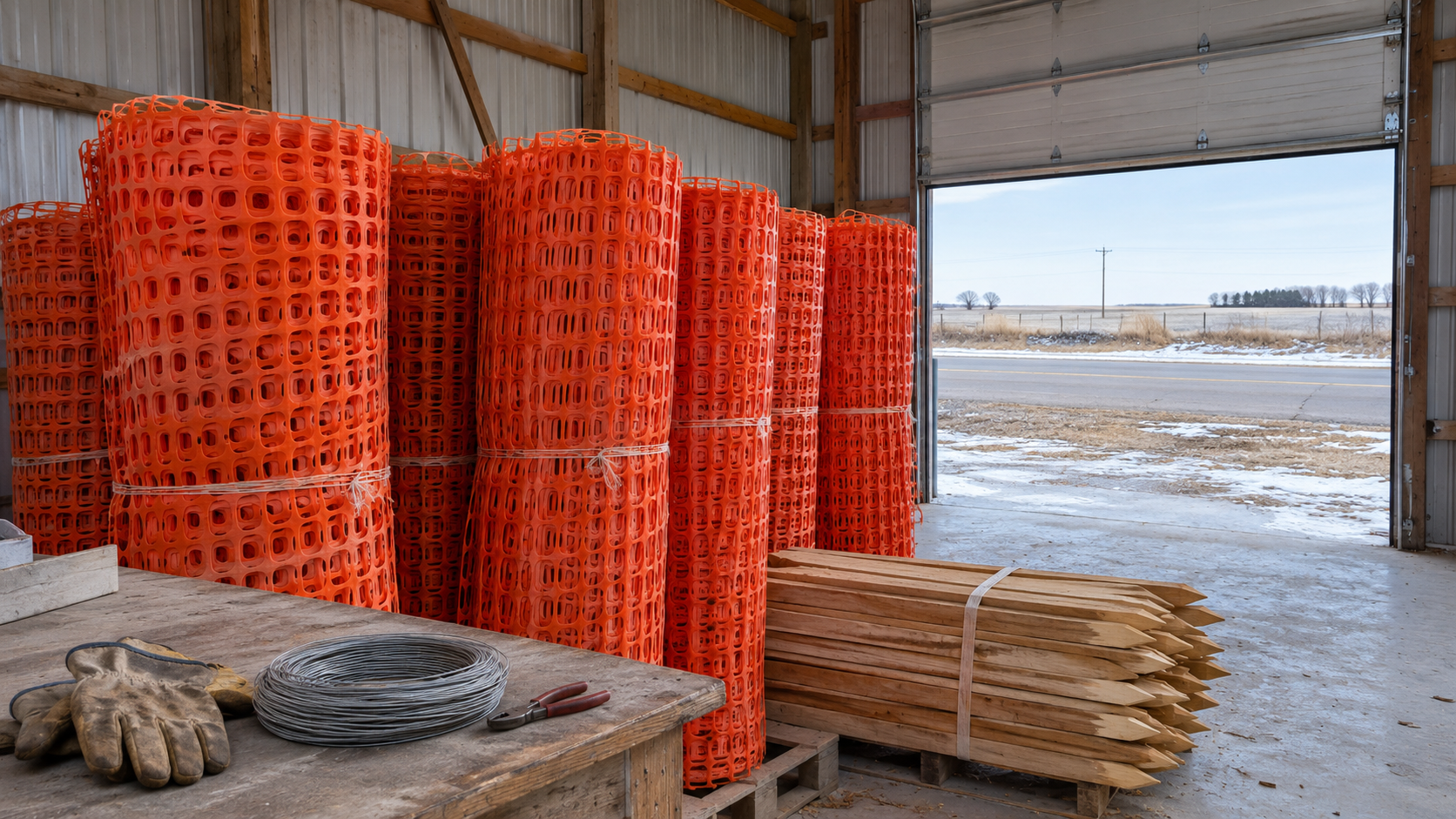
BISON FORK, North Dakota — The county has postponed snow-fence installation along two roads after rolls of plastic fencing released sustained wind when workers unfastened them inside a public works shed. One employee was treated for a scraped shoulder, and the remaining stock has been secured until the county can inspect it outdoors.
The orange fence was delivered in August and stored upright with wooden stakes near the south wall. A four-person crew began loading it Wednesday for routine placement along County Roads 6 and 19. Foreman Dale Orr said the overhead door was closed because morning temperatures were below freezing and outside wind was nearly calm.
When worker Mina Pell cut the twine around the first roll, cold air moved through the plastic openings hard enough to scatter gloves, tags and a box of steel clips. The roll did not unwind. Pell said the gust came from its center and continued for almost three minutes while the fence stood upright on the concrete.
The crew opened the overhead door, shut off the radiant heater and checked for a vehicle or fan operating behind the shed. The outside grass remained still. A second roll began producing air after its tie wire was loosened, though it had not been touched with a knife. That stream blew west across the room, opposite the first roll, and pushed an empty handcart into a post.
Orr ordered the building cleared after the two streams crossed near the loading table. The moving air lifted grit in a narrow column and pressed Pell against a rack before another worker pulled her clear. She declined an ambulance and later received treatment at a clinic. No stakes, fencing or tools left the building.
Rolled mesh can trap air and spring outward when tension is released, said Tessa Venn, an industrial safety consultant who reviewed the storage arrangement. Temperature differences across a large shed may also produce drafts when a door opens. Venn said neither effect would normally create a steady current from the hollow center of a secured roll after the mesh stopped moving.
The county closed the shed and observed it through a window for 40 minutes. Loose papers continued sliding in two directions, although the rolls remained upright. When employees returned wearing eye protection, the air stopped as soon as they retied the first roll and tightened the wire around the second.
Installation was due to cover about six miles before the first significant drifting snow. Public works director Lena Voss said crews can begin with wooden slat fencing stored at another yard and will prioritize the school-bus route. The delay may leave one open section beside a harvested sunflower field, but no storm was forecast for the weekend.
Workers checked delivery labels and lot numbers without finding a difference between the two rolls and 34 that remained quiet. Both affected rolls had been stored beside the same wall, one above the other. The concrete behind them was dry. A dark band of field soil circled each base, although the shed floor had been swept before loading and neither roll had been taken outside.
The soil contained chopped wheat stubble and a small amount of snow, according to the county's preliminary note. Orr recognized the mixture from a low stretch along Road 19 where crews planned to install the lower roll. The upper roll held gray ditch dust and seed husks more typical of Road 6. Neither road had snow on the ground Thursday.
Staff moved one three-foot sample from each roll into separate lidded bins and left the full rolls tied. By Friday morning, the shed was still. Inside the bin marked Road 19, the fence sample lay flat beneath its lid. When Orr released one latch, wind forced the lid against his hand and carried a line of wet snow across the table. The snow stopped at the bin's edge and has not melted in the heated room.