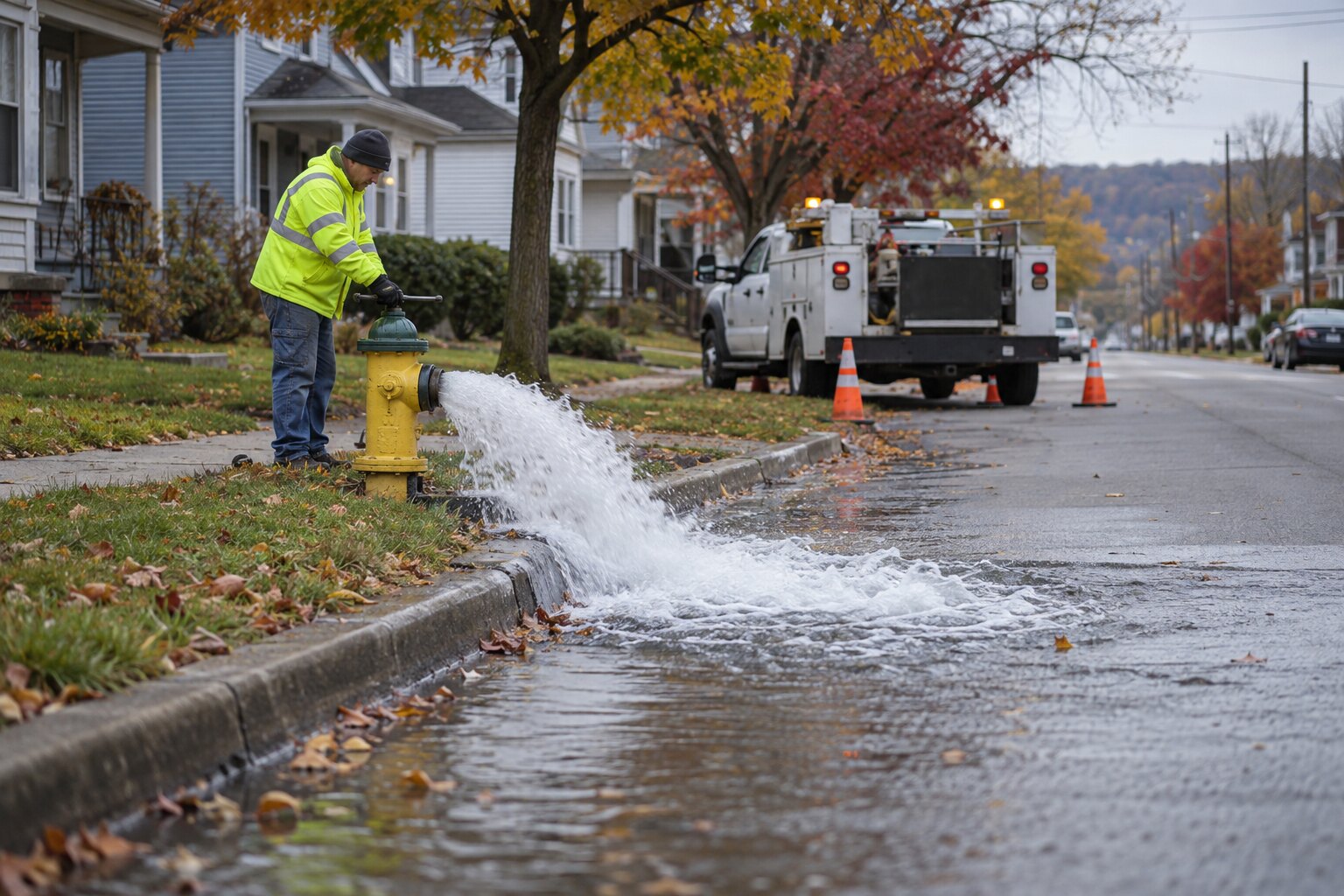
BRIAR NECK, Ohio — The village has extended water-main flushing through Friday after residents on three streets reported tap water carrying the smell of rooms and buildings removed years earlier. Routine bacterial and chemical tests have remained within drinking-water standards, and officials have not issued a boil advisory.
Public works crews replaced a valve at Birch and Cask streets Monday, briefly lowering pressure for 73 customers. When service returned, several households reported earthy or metallic odors common after main work. Others described specific smells: furniture polish in a demolished parlor, wet plaster from a closed school and the cinnamon soap once sold at a neighborhood pharmacy.
Nora Pell said cold water from her kitchen tap smelled like the upstairs bedroom of her grandparents' house, which was razed for the Birch Street widening in 1996. She recognized moth crystals, cedar drawers and the powder her grandmother kept beside a mirror. Pell was eight when she last entered the room and had not discussed it with neighbors.
Across the street, retired mechanic Saul Neve smelled hot rubber and chicory coffee from an auto shop where he worked as a teenager. The building closed in 1981 and stood two blocks from his current home. Neve said the odor faded when he filled a glass, then returned after he took a sip, accompanied by the sensation of grit beneath shoes he was not wearing.
The reports vary from house to house even where properties share the same service line. Residents who recently moved to Briar Neck generally described ordinary chlorine or no odor. In three families, different people using the same faucet identified different places. Water superintendent Mara Solis asked residents to record observations without comparing them first.
Water can pick up harmless smells from pipe scale, disinfectant changes and disturbed sediment, said Corin Doss, an engineer retained by the village. Memory also links odors to places with unusual precision. Doss said the distribution pattern is difficult to attribute to a single compound because the descriptions diverge while samples drawn from neighboring homes remain chemically similar.
Laboratory screens found no fuel, solvent, pesticide or elevated metal concentration. Chlorine residual, turbidity and acidity remained in their expected ranges. Crews opened four hydrants and discharged the equivalent of nearly twice the affected mains' volume, but residents continued to report the scents after fresh water arrived from the treatment plant.
The work has disrupted two restaurants and a child-care center that chose to use bottled water despite the absence of a health order. The village is providing cases to those facilities and will credit unusual usage caused by flushing. Solis said anyone who sees discoloration should run a cold tap and contact the utility, as with any main repair.
Pell saved a covered jar before flushing her pipes. When she opened it for the Register on Wednesday, the water had no obvious odor. After she poured it into her grandmother's surviving washbasin, kept dry on a hallway table, the room briefly smelled of cedar and dust. A damp oval appeared on the wallpaper above the basin although no water had touched the wall.
Village records show that the valve trench crosses ordinary fill placed during the 1996 widening. Workers found brick fragments and a length of clay drain but no sealed room, tank or household plumbing. The removed valve was installed in 2008. Its interior carried mineral scale typical for its age, and it has been retained at the service garage.
Solis plans to restore the usual flushing schedule if Friday's samples remain clear. She has not asked residents to surrender saved water and said the utility cannot verify personal memories. At the garage Wednesday evening, condensation formed inside the dry display jar holding the old valve. The glass smelled of chlorine when opened, but the concrete beneath it carried a sharp line of lavender powder from the jar to the locked door.