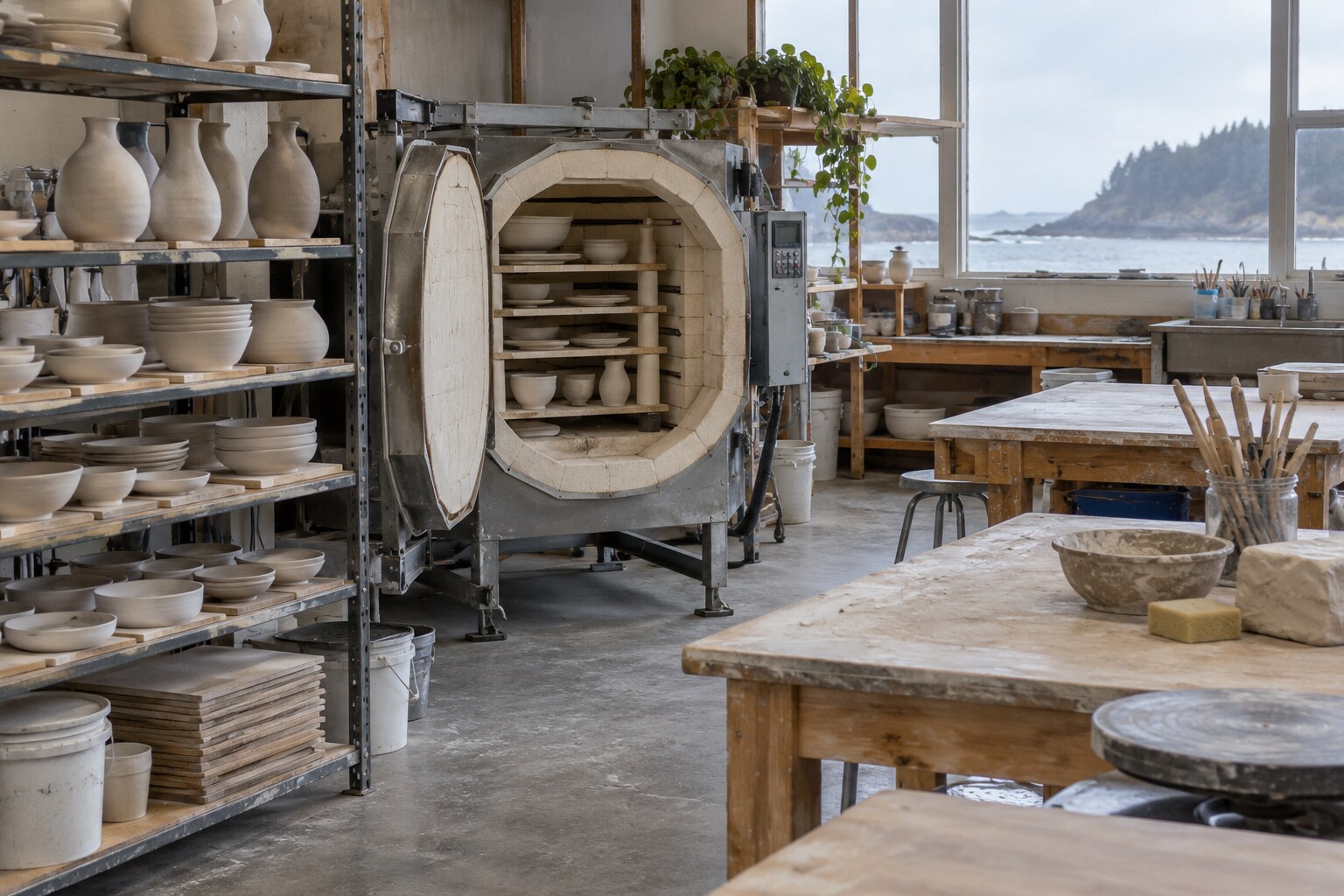
CAPE KESTREL, Oregon — The Cape Kestrel Ceramics Cooperative has suspended use of its largest electric kiln after eight bowls and vases emerged with fine pressure marks along their glazed interiors. The cooperative will move this week's firings to a neighboring college studio and refund members whose work was affected.
The pieces were made during separate classes and loaded together September 29 for a standard glaze firing. Studio manager Imani Rowe opened the cooled kiln Thursday morning. She first noticed a pattern inside a white serving bowl that resembled the ridges and creases of a fingertip pressed into soft clay.
Seven other vessels carried similar marks. Some showed only a partial whorl near the base. Two narrow-necked vases contained sequences of oval impressions extending below the point a hand could reach. Their outer walls were smooth, and the glaze over each impression was continuous rather than cracked or rubbed away.
Photographs taken before loading show ordinary brush marks and throwing rings inside the vessels but none of the finer ridges. Members had signed the bottoms of their work, and Rowe confirmed that no piece had been exchanged. The kiln remained latched during its 13-hour cycle in a studio secured by an alarm after 9 p.m.
The cooperative initially considered whether a student had pressed fingers into wet glaze as a joke. The vessels had been dry and bisque-fired before glazing, however, and several marks appear to rise from beneath the glassy surface. One bowl has five shallow depressions spaced like fingertips, with the deepest mark located under an intact pool of blue glaze.
Kiln technician Arthur Meeks found no error code or unusual temperature in the controller log. Heating elements, shelf supports and ventilation were in serviceable condition. A firing that cools too quickly can crack glaze or distort thin walls, Meeks said, but the affected pieces retained their original dimensions and sat level on the work table.
Clay records pressure well before firing, said ceramic conservator Lenora Wu, who reviewed photographs for the cooperative. Trapped air, glaze crawling and particles falling from a kiln shelf can leave pits or bare areas. Wu said she could not identify a common defect that would produce individual friction ridges beneath a continuous fired glaze, especially inside vessels with different clay bodies.
No member reported skin irritation or other injury, and the studio does not consider the pieces hazardous. Three makers took refunds and left their work for examination. Two others asked to keep their vessels but agreed not to use them for food. The cooperative has wrapped all eight pieces and stored them separately from sale inventory.
Classes will continue for hand-building and wheel work. Finished pieces will be transported 14 miles to Tillerman Coast College until the kiln is cleared or replaced, adding about a week to turnaround times. Rowe said the annual holiday sale remains scheduled, though no work from the disputed firing will be offered.
On Saturday, Meeks removed the shelves and vacuumed ordinary glaze dust from the kiln floor. He found no clay fragments large enough to account for the new depressions. When he wiped the innermost firebrick, moisture gathered in five parallel ovals on the dry cloth. The kiln had been unplugged and cool for more than 36 hours.
The cooperative left the kiln empty and open overnight. At Sunday opening, the firebrick was dry and the studio alarm showed no entry. A plain test cylinder on the lowest shelf had not been part of the firing and carried no glaze. Its interior now held one complete palm impression, including the heel of a hand, pressed outward into the wall. The cylinder's narrow opening measures two inches across.