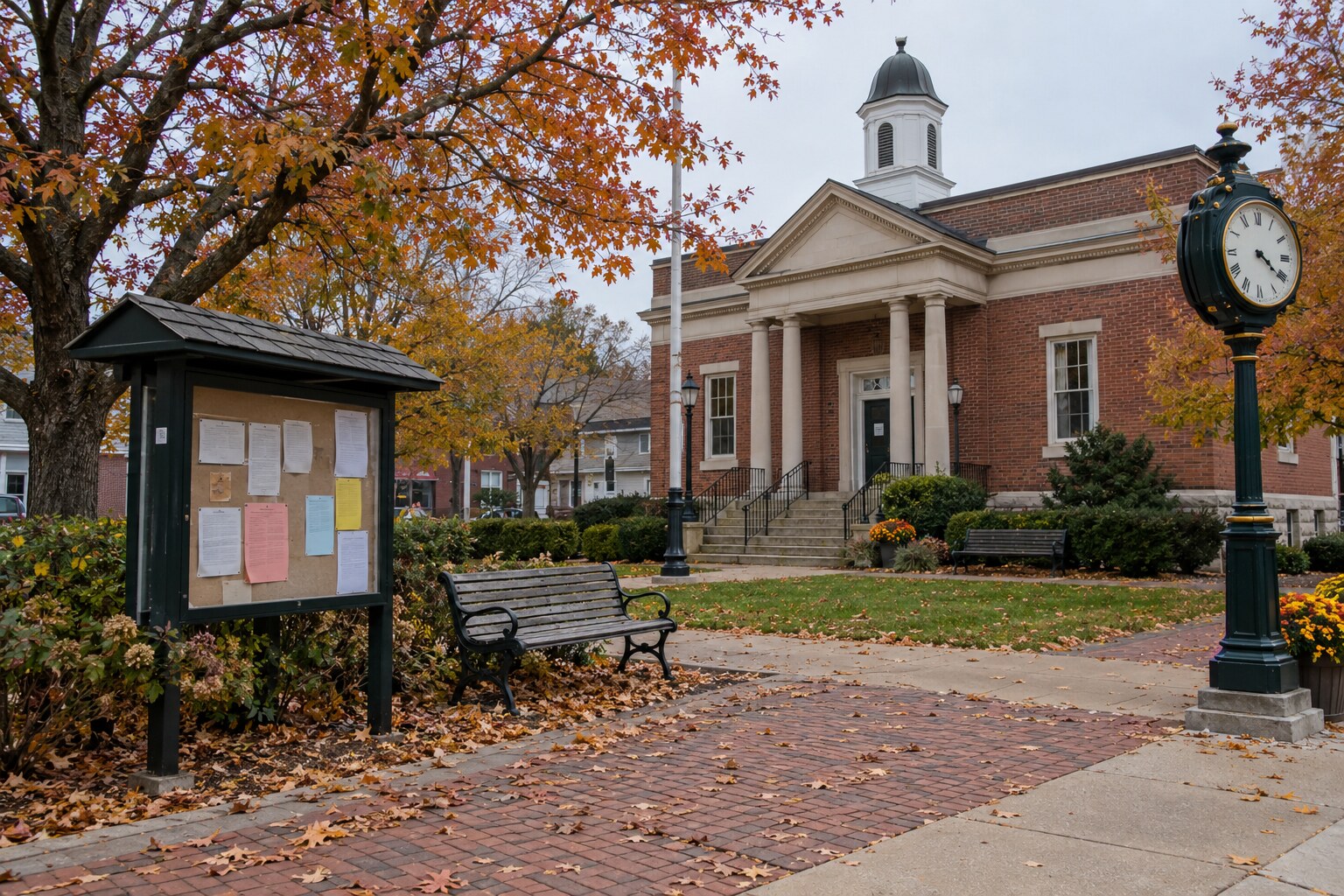
CLEFTON, Pennsylvania — The borough has begun posting municipal notices by date, number and color after residents reported that the names of the seven weekdays no longer carried meaning when spoken or printed inside town. Schools, shops and public offices remain open, and people have continued arriving for work and appointments on time.
Clerk Maureen Saye noticed the problem Saturday while preparing a sanitation notice. She could type the letters in Monday by copying them one at a time, but the completed word looked like an unfamiliar proper name. Two coworkers could read the date and pickup instructions yet could not say which day the heading represented.
By Sunday afternoon, the borough had received 84 similar reports. Residents described the printed names as legible but empty of their usual meaning. In conversation, a speaker could begin a weekday name and then substitute a pause, a gesture or a description such as the day after church. Numbers, months and personal names were unaffected.
The condition has caused inconvenience rather than general confusion. The pharmacy relabeled weekly pill organizers with dates and colored dots. Two churches announced events as one and three days away. The school district sent families a numbered schedule and asked teachers to avoid testing children on calendar vocabulary while classes continue normally.
People can still follow habits linked to the week. Sanitation customers placed bins at the curb on their regular night without being reminded. Payroll staff processed the usual end-of-week deposit, and diners arrived for the fire company's standing breakfast. Several residents said they knew what kind of day it was even though no available word seemed to belong to it.
Visitors and delivery drivers have generally been able to use the names. County health workers checked borough hall, the elementary school and six homes for carbon monoxide and found normal readings. A voluntary clinic reported no weakness, fever, headache or broader language difficulty among 39 residents who were examined.
Word-retrieval problems can follow fatigue, illness or suggestion, said Nisha Bale, a linguist asked by the county to review recordings. Shared vocabulary can also change quickly when a community adopts a convenient substitute. Bale said those explanations do not readily account for residents recognizing letters and schedules while losing only seven common words at the same time.
Borough council labeled October 19 as Day 1 and assigned a color to each of the next six dates. Court notices and utility shutoff letters will use full calendar dates. Saye said the temporary system will remain in place as long as it reduces mistakes and will not be written into the borough code.
The reports appear strongest among people who slept in Clefton after Friday. Three out-of-town guests said the weekday names became difficult Sunday morning. Residents commuting to jobs elsewhere described recovering the words gradually after leaving the valley, then losing them again on the return trip. The county has not established a boundary or advised anyone to relocate.
Children at Clefton Elementary adapted quickly. During the morning calendar exercise, pupils clapped seven beats and supplied the date under each one. Teacher Rowan Pike said several could sing the familiar weekday melody without lyrics. One visiting speech therapist sang the words correctly, but the class heard seven evenly spaced breaths on a recording made in the room.
At borough hall, the new placards were stacked in numerical order before employees carried them outside. The back of each sheet bears a delivery stamp with the same seven-letter word. Saye said she could feel the stamp's raised ink and count its letters but could not copy their shape while looking at them. By closing time, the first sheet was posted beneath the street clock. Residents called it tomorrow's notice, although its printed date was already October 19.