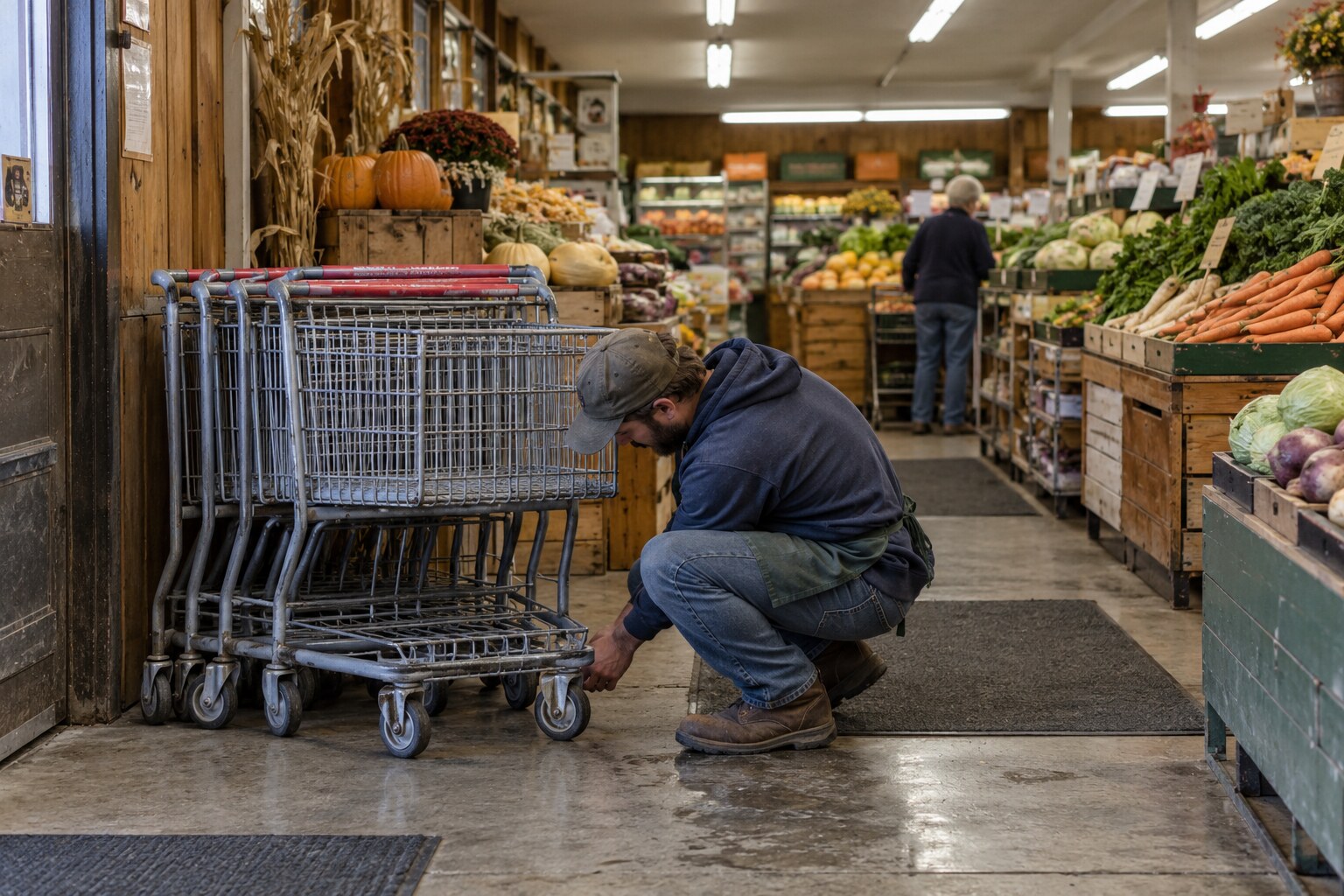
CORAM RIDGE, Pennsylvania — A neighborhood grocery has added hand baskets and asked families to assign one person to each metal cart after carts began stopping or turning when nearby shoppers intended to move toward different aisles. The market remains open, and management says no injuries or product damage have been reported.
Coram Ridge Market operates in a former hardware store with four narrow aisles and a produce room at the back. Owner Niles Perra keeps 18 small carts inside the front door. He said the wheels were replaced last winter and had rolled normally until Thursday evening, when a cart carrying one bag of flour stopped between the dairy case and canned goods.
The shoppers pushing it, spouses Arden and Mel Faye, each thought the other had stopped. Arden intended to turn for coffee while Mel was headed toward onions. When both released the handle, the cart rolled forward on the level floor. It stopped again when they took opposite sides and resumed only after they agreed aloud to buy onions first.
Similar stalls occurred with nine carts over the next two days. One family could move normally while following a shared list, but the front casters turned crosswise when a teenager decided without speaking to return a cereal box. A pair of roommates found their cart drifting toward the soap aisle after each privately remembered they were out of detergent. Neither had mentioned soap before the turn.
Employees cleared debris from the casters, checked the floor slope and swapped wheels among four frames. The behavior did not remain with a particular wheel or cart. Empty carts moved freely when pushed by one person. When two employees held the same handle and chose separate destinations without telling each other, the frame shuddered in place despite both sets of wheels turning.
Perra said the effect has been inconvenient but not entirely unwelcome. Shopping groups began discussing lists more carefully, and several children stopped adding items after learning the cart would not move until an adult agreed. Other customers found the condition intrusive. One woman left her groceries at the service desk after the cart turned toward a sympathy card she had considered but did not plan to buy.
Shopping carts can bind when loaded unevenly or when swiveling casters oppose each other, said Pella Roan, a material-handling technician who inspected the fleet. Tiny differences in grip can also steer a shared handle. Roan said those forces could make disagreement feel mechanical, but she could not account for unloaded carts stopping while their wheels continued rotating against the floor.
The market purchased 30 plastic baskets from a restaurant supplier and taped a one-handler notice above the carts. Customers who need mobility support may still use the store's two seated scooters, neither of which has shown unusual steering. Perra also widened the produce aisle by moving an apple display so a stalled cart is less likely to block the room.
Sunday business proceeded without a closure. Couples took turns pushing while discussing purchases beside the shelves, and employees carried larger orders to cars. Arden Faye returned alone for the coffee omitted Thursday and used a basket. He said the quieter trip cost less but did not tell him whether the cart had settled an argument or merely required the couple to have it.
After closing, Roan nested the 18 carts, looped a cable through their frames and removed the front wheels from the first three for inspection. At 7:43 p.m., the locked line divided at its middle. Nine handles pressed toward the dark produce room and nine toward the front door, stretching the cable tight between them. The wheel-less frames left two bright arcs in the waxed floor before staff separated the rows.