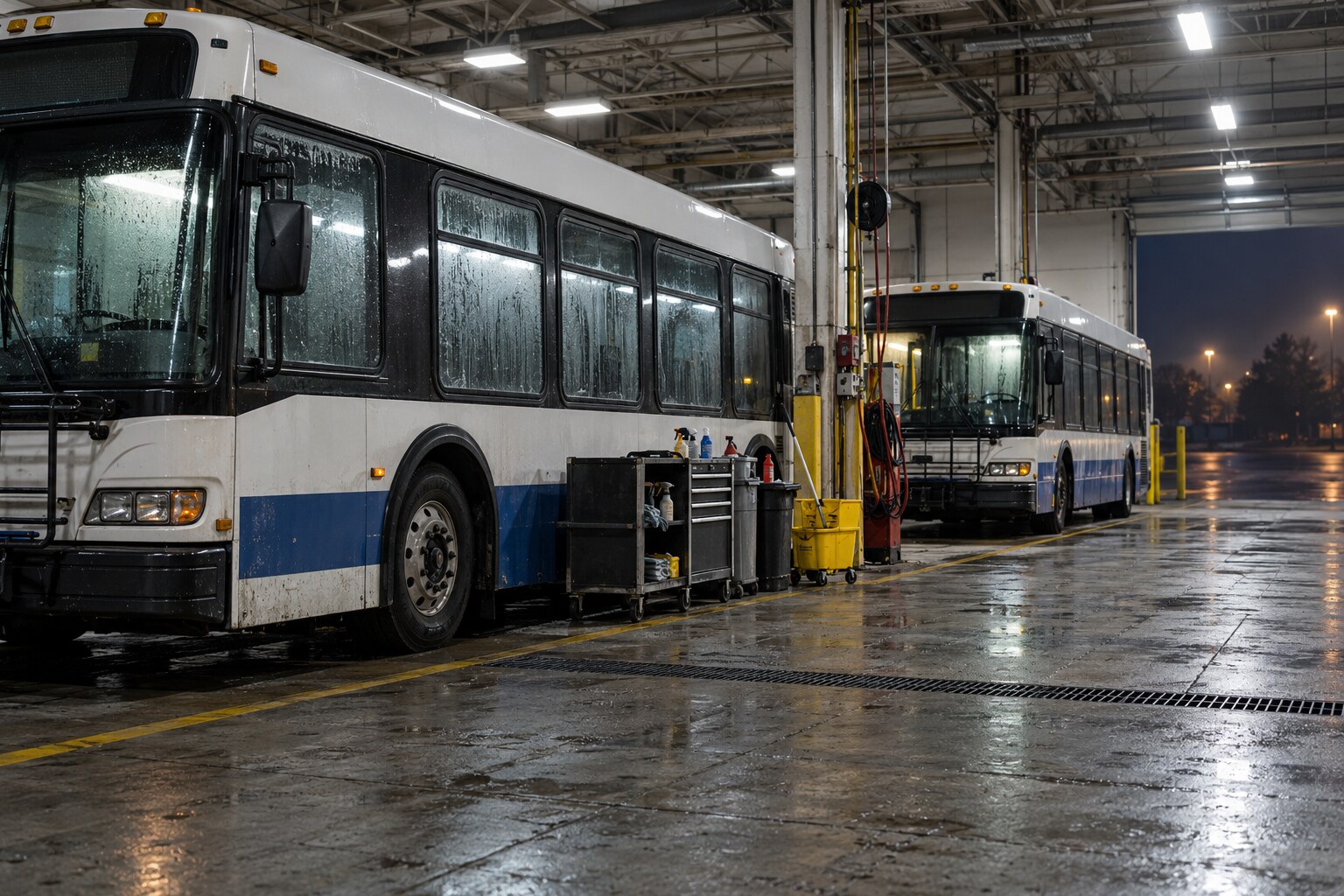
DARROW BEND, Ohio — The regional transit agency has assigned two employees to overnight bus cleaning after handprints and head-shaped marks formed in condensation on empty vehicles before morning service. Routes continue on schedule, though three buses have been moved from the enclosed wash bay to an outdoor inspection line.
The marks first appeared on bus 218 after a routine interior wash Monday. Cleaner Tessa Vell left the doors open for 15 minutes, dried the floors and parked the bus under bay lights. When she returned with a checklist, seven side windows were fogged from within. Each carried the flat impression of a hand or an oval clear patch at seated head height.
Vell wiped the glass and checked the heater, which was off. The impressions returned over the next half hour in a sequence beginning behind the driver and moving toward the rear. No one entered the bus. Garage video shows Vell outside the vehicle while the clear patches appeared one by one on otherwise clouded windows.
The sequence resembled Route 4's morning passenger pattern. Driver Niles Orr identified a palm with a missing fingertip at the seat used by a retired machinist and two small prints where siblings board for school. Staff did not ask riders to provide handprints, but several recognized the shapes when told only that residue had been found near their usual seats.
Agency manager Mina Pell said the new two-person cleaning rule protects staff and strengthens the inspection record. One employee will work inside while another remains at the open door and signs the time each window is cleared. Buses showing fresh condensation after drying will stay out of service until mechanics can check heaters, roof vents and electrical equipment.
Moisture can remain inside wall cavities and condense on cool glass after a bus is washed, said Caro Venn, a fleet-maintenance consultant who examined bus 218. Skin oils also preserve old contact marks that reappear when glass fogs. Venn said repeated cleaning may fail to remove those oils, though that would not ordinarily place impressions on windows riders cannot reach or reproduce them in boarding order.
Two more vehicles showed marks Tuesday night. One had operated Route 4 that day; the other had been assigned to a hospital shuttle. On the shuttle, the impressions gathered near the front seats used by patients with mobility aids. A broad clear band remained at the level where a wheelchair passenger's coat usually rests, though no chair or rider had entered after cleaning.
The change has delayed pullout by as much as 12 minutes, so the agency has moved washing earlier and kept one spare bus fueled. No trip has been canceled. Orr said riders have mostly treated the account as a cleaning issue, and he has discouraged passengers from pressing their hands to windows to see whether a particular mark returns.
Mechanics drained the wash system, tested bay humidity and parked bus 218 outside without washing it Wednesday. Frost formed on the exterior roof before dawn, while the passenger glass stayed clear. At 5:41 a.m., a single palm-shaped patch appeared in the light frost on the outside of the rear window. The print faced inward, with its fingertips pointed toward the floor.
Staff photographed the patch and left the bus outside for the day. The frost melted by 8 a.m., but a clean outline remained through road dust on the glass. Orr drove a spare on Route 4 and counted every regular rider aboard. The rear seat corresponding to the outline stayed empty; its usual passenger had called the agency before dawn to say he would not travel until Monday.