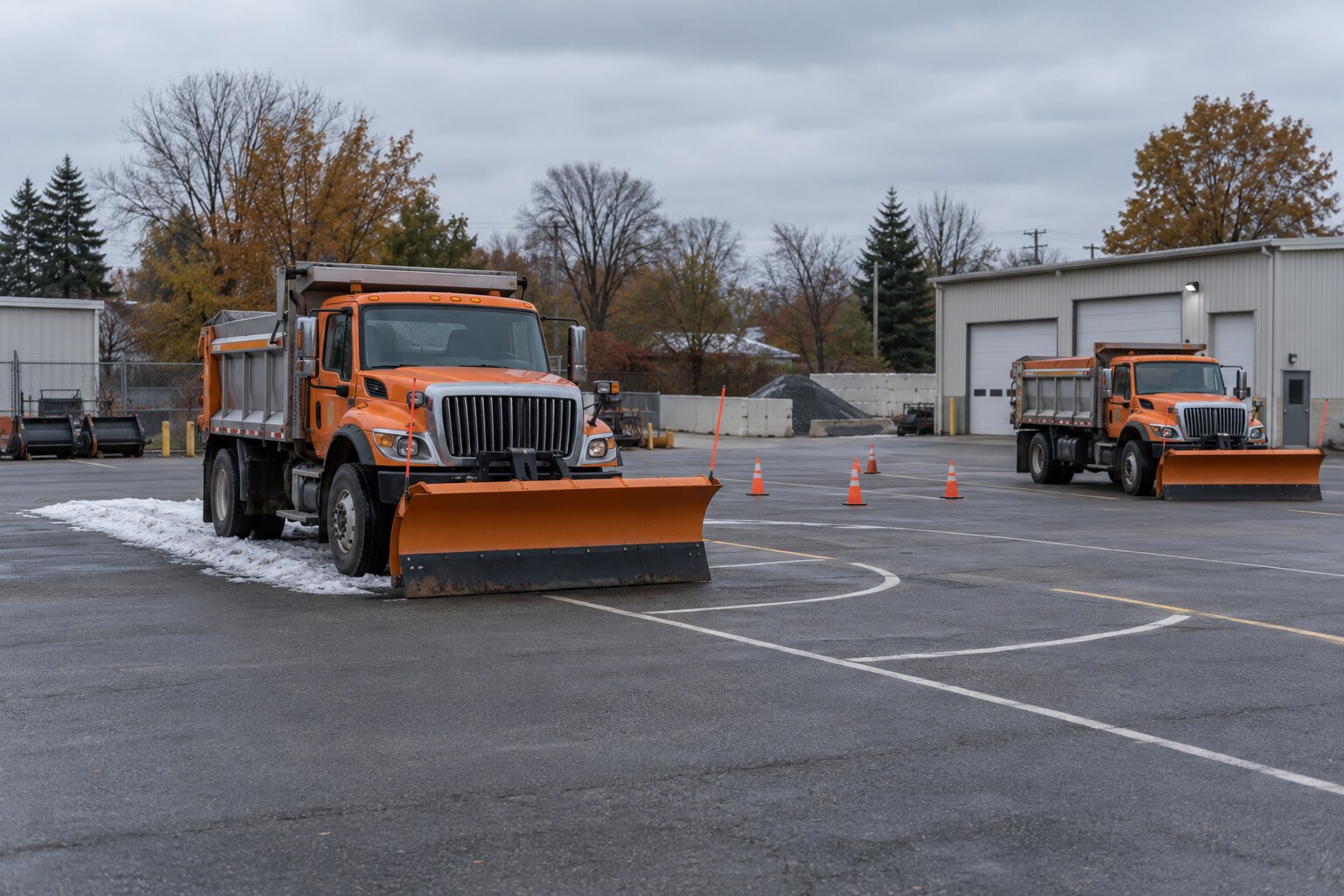
DARROW FIELD, Ohio — The city has moved seasonal snowplow training to a county garage after crews found narrow bands of packed snow behind two trucks during exercises in a dry municipal lot. Streets remain clear, and the change will not affect leaf pickup or winter response schedules.
Public works trains permanent drivers and six seasonal employees each October using cones and painted curves behind its service building. Operators practice backing, blade clearance and turns at low speed without spreading salt. Monday's session began at 8 a.m. under overcast skies with an air temperature of 61 degrees.
Driver Ansel Crewe completed one circuit in Truck 4 and saw a white strip following the inside edge of the route. He assumed a loader had spilled road salt until the truck's rear tires compressed it into treaded slush. A second pass widened the strip and pushed a low ridge ahead of the raised blade.
The material was snow: granular at the pavement, loose on top and cold enough to numb an ungloved hand, according to three employees. It contained no salt. Meltwater ran toward the yard drain and measured 33 degrees while rainwater collected nearby measured 59.
Snow formed only after Truck 4 or Truck 7 traveled the practice line. The other three plows left dry pavement. Both affected trucks had been washed, serviced and stored in the same heated bay as the rest of the fleet. Their beds were empty, and their hydraulic and cooling systems showed no leak.
Employees stopped the exercise because slush made braking inconsistent for trainees. The city closed the rear yard, spread absorbent grit near the drain and moved the afternoon class eight miles east. Public works director Inez Cole said no overtime has been requested and both trucks remain available if actual winter weather arrives.
A refrigeration leak can produce frost near a pressurized line but cannot deposit several hundred feet of snow behind a moving vehicle, said Bram Lott, the fleet mechanic. Exhaust condensation can freeze in severe cold. Lott said neither explanation fits the mild air, dry equipment or the continuous bands across open pavement.
The city collected snow in insulated containers and allowed the rest to melt. Laboratory staff found ordinary water with small amounts of road dust, leaf fragments and pollen. Mixed through one sample were short blue spruce needles. The nearest blue spruce stands outside the police station, about six blocks from the yard.
Crew members disagreed about the snow's odor. Two described diesel and wet asphalt. Seasonal driver Nia Kroll said it smelled like the wool mittens kept in her grandparents' porch, a house she visited as a child and that was removed years later. Cole did not include scent reports in the maintenance order because no common description was established.
At the county garage, both trucks completed the same turns on clean concrete without producing snow. Workers then returned Truck 4 to the city yard on a flatbed rather than driving it through traffic. By late afternoon, the practice strip had melted except for a white patch where Crewe first lowered the blade.
The truck remained parked with its blade raised and engine off. Every nine minutes, the patch extended a few inches across the dry pavement toward it, stopping just short of the front tires before settling into slush. Cole marked the edge with orange chalk at closing and left the yard gate locked. The chalk line was still visible beneath the clear ice Tuesday morning.