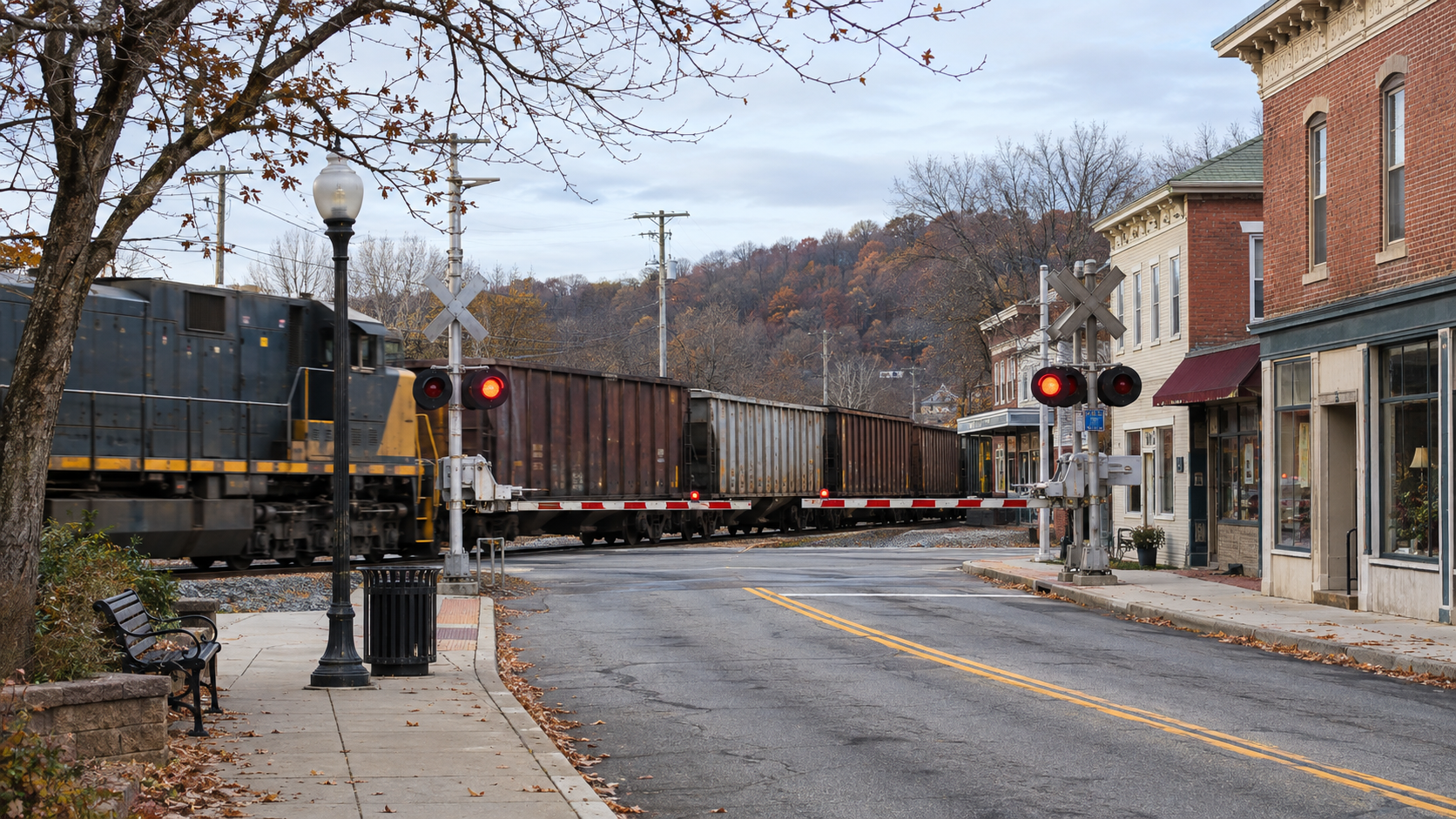
DUNLOW, Pennsylvania — The borough has assigned a monitor to its downtown rail crossing after pedestrians waiting for afternoon freight trains began placing bags, phones and other carried objects in a line along the curb without discussing the practice. No item has been reported stolen, but several were taken home by the wrong person and later returned.
The Walnut Street crossing separates the post office and two blocks of shops from a public parking lot. Freight traffic usually closes it for four to seven minutes in late afternoon. Borough manager Iva Pell said the first line of belongings appeared Monday when 14 people were waiting behind the lowered pedestrian gate.
Witnesses placed grocery bags, a tool case, two phones, a child's backpack and one paper cup beside the yellow curb. They did so calmly and almost at once, leaving the objects in a single row parallel to the tracks. When the last freight car passed, each person picked up an item and continued across without commenting on the line.
Most recovered their own property. A postal clerk carried a student's backpack to work before noticing it, and the student reached school with the clerk's empty lunch bag. Both said the exchange felt correct until they opened the bags. A third pedestrian returned a phone to its owner after finding that his own device was already in his coat pocket.
The behavior recurred Tuesday among a different group. People who arrived after objects had been set down added their belongings without asking why. A visitor from Altoona placed a wrapped birthday gift between two grocery sacks and said afterward that she had assumed the curb was being kept clear, though setting the gift there did not clear it.
Pell asked a public works employee to watch the next crossing and prevent property from being mixed. The borough placed 12 numbered rubber mats behind the gate and asked pedestrians to keep belongings in hand. When the warning lights began, nine of 11 people used the mats anyway. Two who carried nothing bent at the waist and briefly held empty hands above separate spaces.
People often copy an unfamiliar action when others appear confident, particularly while waiting in a group, said Hester Bell, a social psychologist who reviewed witness statements. A neat line and numbered mats could strengthen that response. Bell said imitation was less useful as an explanation for the first group, whose members began from different positions while looking toward the approaching train rather than at one another.
The crossing equipment and freight schedule have not changed, according to the borough's maintenance file. Shop owners reported no announcement, music or unusual odor before the trains. The practice has occurred only for westbound afternoon freight; pedestrians waiting for passenger service at a platform three blocks away have behaved normally.
The monitor now gives each pedestrian a numbered claim card and stands beside the objects until the gate rises. The system prevented mix-ups Wednesday, though it delayed the sidewalk for several minutes after the roadway reopened. One resident declined to set down a box containing her husband's ashes and waited inside a pharmacy until the train cleared.
During Thursday's passage, the 12 mats filled in order even though only 11 pedestrians were present. The monitor kept mat 12 open and watched the group retrieve its property. When the gate rose, the rubber there remained pressed flat at the center as if something rectangular had rested on it.
Pell left the mat in place rather than ask anyone to claim an unseen object. Its surface rose slowly after the sidewalk emptied. By closing, a clean outline remained in the road dust: the size of an ordinary briefcase, with two narrow gaps where handle brackets would have touched the curb.