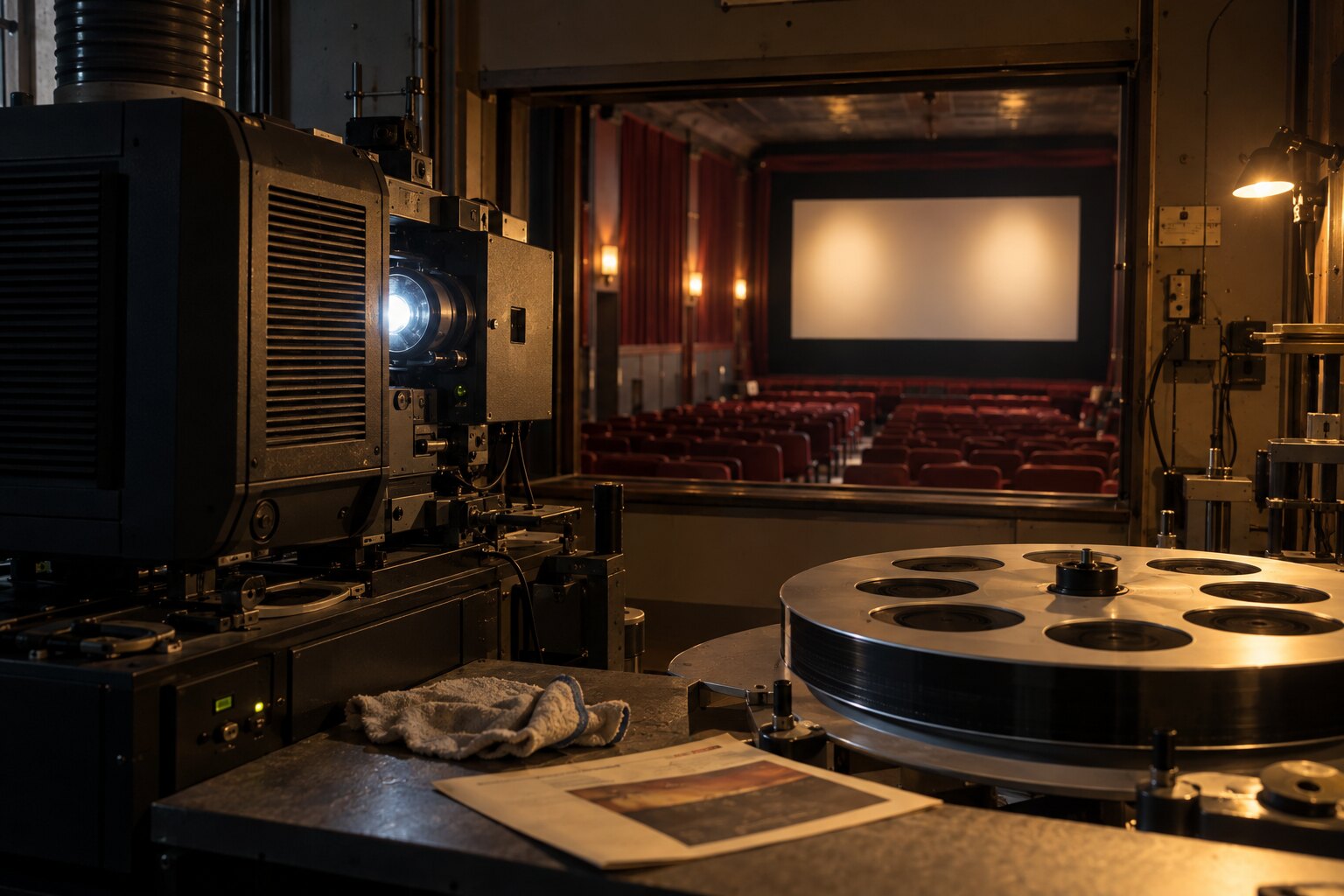
ELMRIDGE, Minnesota — The Mercer Picture House has withdrawn a restored regional film after patrons at two matinees reported seeing unlisted scenes after the closing credits. The cinema has refunded 38 tickets and replaced the weekend screenings with another title. Evening programs and concessions continue as scheduled.
The film, "Long Weather," is a 1968 independent drama about a traveling salesman crossing the Upper Midwest. A distributor supplied a new digital restoration for a three-day repertory engagement. Its published running time is 94 minutes, including credits, and no additional material is described in the program notes.
At Saturday's matinee, house manager Lila Rohn expected the auditorium lights to rise when the credits ended. Instead, several patrons remained seated and watched the screen for roughly a minute and a half. Rohn, standing at the rear door, saw a dim image of an empty kitchen with a clock above the sink. She assumed the restoration included a post-credit sequence.
Patrons did not agree on the room. Two described a narrow bedroom, another a basement laundry area and three a furnished porch in daylight. Retired teacher Calvin Orr said he saw the kitchen of the house where he grew up, including a cabinet his father removed before the family sold it. His wife, seated beside him, saw a motel room she did not recognize.
Projectionist Rena Soto checked the playback log after the show. It records the file ending at 3:46:18 p.m., followed immediately by the programmed lighting cue. Auditorium cameras show the audience sitting in darkness until 3:47:51, when the lights rise manually. The security view does not include the screen, and there is no microphone in the room.
The cinema held Sunday's matinee after testing the file on a booth monitor. Soto and Rohn saw only the final credits and a black frame. During the public screening, 17 of 21 patrons later reported an additional scene. Four said they saw only darkness. The reported rooms again differed, although most contained no people and appeared to be lit by afternoon windows.
Rohn stopped the show before the second feature and offered refunds. She said the complaints were calm but unusually specific. One patron asked why the cinema had filmed his apartment while he was at the movie. Another wanted to know whether the scene of an empty nursery would appear in a later restoration. Staff took names but did not ask patrons to draw the rooms or supply home photographs.
The distributor verified the file's checksum and sent a second copy. Technical director Glen Marek said digital cinema packages can contain alternate reels, accessibility tracks and automation cues, but the projector cannot display different images to viewers in the same auditorium. A failing lamp or color-processing error could alter an image, he said, but would not produce recognizable domestic interiors.
On Monday, the cinema projected the replacement copy for six staff members. Three saw the kitchen Rohn had described, one saw an unfamiliar hallway and two saw the screen go black. A camera mounted in the center aisle recorded black frames during the disputed interval. The camera's audio captured the projector fan and Soto asking whether anyone else could see a door opening.
The picture house has retained the encrypted drive for the distributor and will not advertise another screening. Rohn said the cancellations will cost less than $900 and that patrons may exchange their tickets for any repertory show through October. She declined requests for a private viewing, saying staff cannot verify what the screen is showing to any particular person.
Soto powered down the projector after Monday's test and switched off the booth breaker. For 96 seconds, the screen continued to show the auditorium from the front, including the six staff members looking back at it. In the screen image, one last-row seat remained lowered after everyone stood. The corresponding seat in the room was folded upright; staff left it that way when they locked the building.