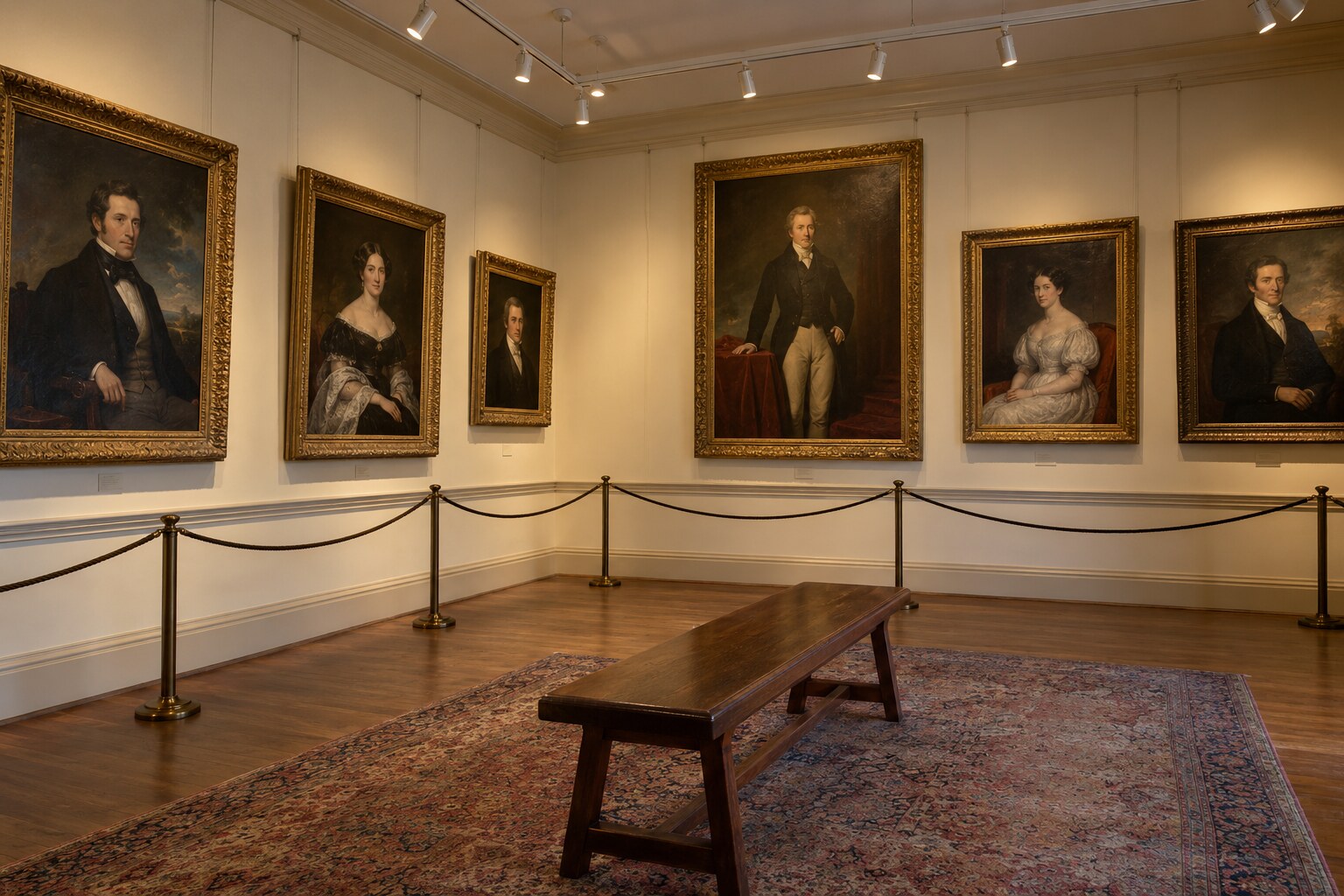
GLEN MARCH, Pennsylvania — The Glen March Historical Society has closed its second-floor portrait room through Thursday after unrelated visitors repeatedly identified an unnamed woman in an 1870s painting as members of their own families. The rest of the museum remains open, and the room is expected to reopen after the painting is moved to conservation storage.
The oil portrait entered the collection in 1911 with furniture from the former Bellweather Hotel. Its accession card describes an unidentified seated woman in a gray dress, probably painted between 1872 and 1880. The canvas has hung among portraits of county judges, merchants and civic groups since the museum opened in its current building.
Docent Clara Wills noticed the pattern September 27 when a visitor addressed the painting as Aunt Rosie and asked why a family picture had been placed in the public gallery. Before staff could review the request, another visitor called the sitter Mrs. Kline, the name of a school secretary he remembered from the 1960s. The visitors did not know each other.
Over the following week, 23 people supplied 19 identities for the sitter. They included mothers, neighbors, former teachers and one woman a visitor remembered seeing on a bus only once. Most said the resemblance was exact rather than general. Their descriptions disagreed about the sitter's age, hair color and clothing, even while they stood together in front of the same canvas.
Museum director Elise Warner asked visitors to write what they saw before discussing it with staff. One described a blue cardigan and wire-frame glasses. Another, viewing the portrait minutes later, recorded a black mourning dress and a scar beside the mouth. Warner and the museum's two docents continue to see a dark-haired woman in a gray high-collared dress with no glasses or visible scar.
Faces are especially likely to produce confident recognition from limited information, said cognitive psychologist Nathan Corwin, who reviewed photographs for the society. Family resemblance can be inferred from posture, expression or age, and one person's reaction can shape another's. Corwin said the written descriptions reduce that influence but do not eliminate expectation created by the gallery setting.
The reports have complicated ordinary museum work. Several visitors remained in the room past closing while attempting to contact relatives. A child became upset when her parents said the sitter was not her grandmother. Staff removed a guest-book page after it accumulated telephone numbers and private medical details from people trying to establish family connections.
The society checked the portrait's frame, varnish and backing and found no projection surface, reflective glass or recent alteration. A 1954 catalog photograph shows the same composition and dimensions. The sitter's face in that image is softened by poor focus, but staff members said it matches the woman they see today.
Warner said the society will photograph the painting under neutral light and ask a conservator to examine the canvas and stretcher. It will not publish the names visitors supplied or attempt to choose one as the sitter's identity. The portrait may return to display after the review, but without a label inviting identification.
Staff removed the painting Monday after the building closed. Wills and Warner wrapped it in acid-free tissue, placed it upright in a locked storage room and covered the two empty hooks in the gallery. Tuesday's school tour used the first-floor exhibits and did not enter the closed room.
Before opening, Wills found six visitors waiting beneath the covered hooks. Each had arrived separately and said a relative had asked to be met there. None could produce a message or call record arranging the visit. When Warner told them the portrait had been moved, all six looked toward the same empty section of wall before giving different women's names.