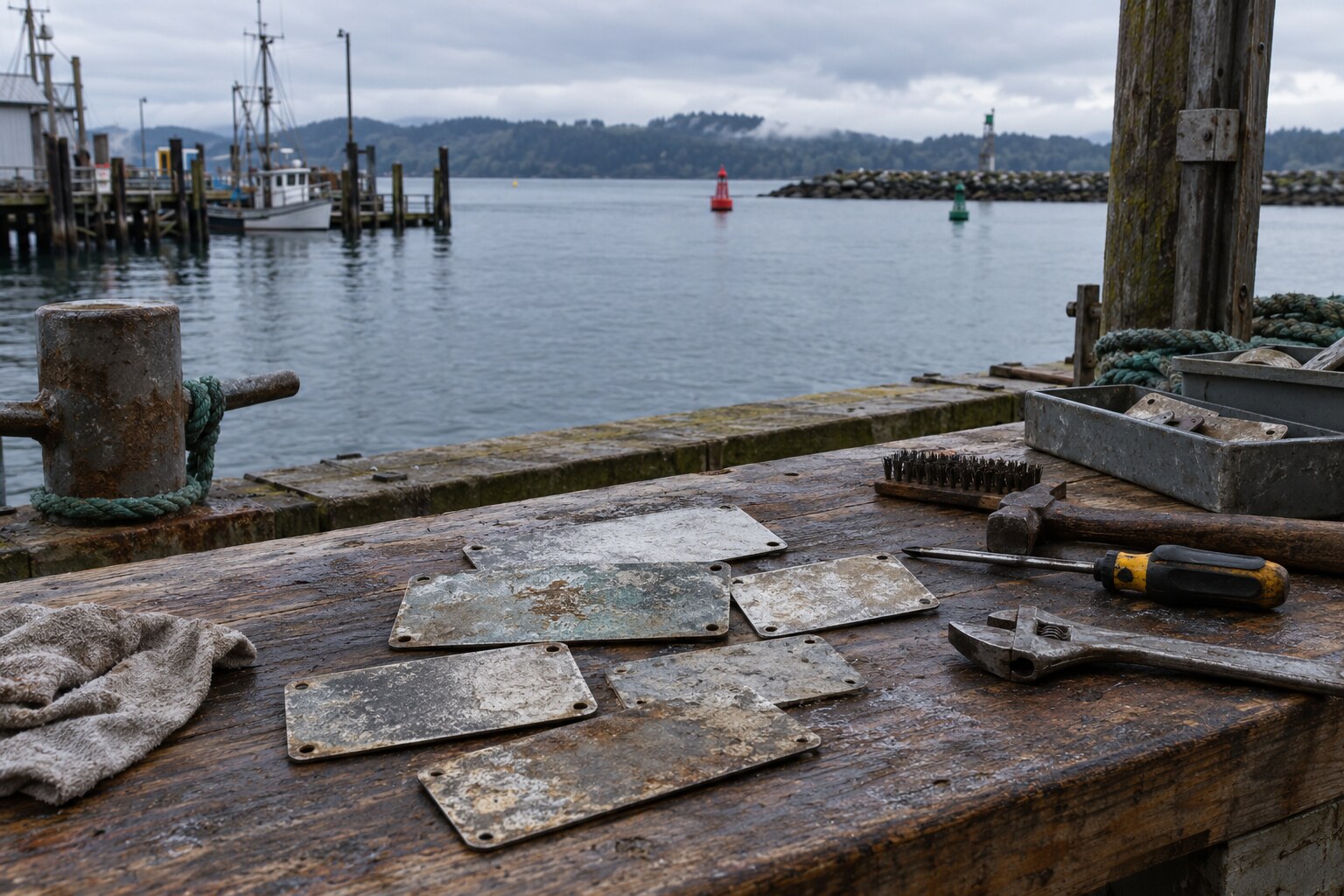
GRAYHAVEN, Oregon — The Port of Grayhaven has delayed routine service on nine harbor markers after seven aluminum identification plates assigned to the markers were found together on a beach north of the maintenance dock. The lighted markers remain visible and their painted channel numbers are intact, port manager Celia Rusk said.
Volunteer beach monitor Neal Ochoa found the plates Tuesday morning arranged along the top of a driftwood log above the tide line. Each plate is about the size of a postcard and carries an internal port asset number, inspection month and load rating. Ochoa photographed them before placing them in a canvas litter bag and calling the port office.
Maintenance records place all seven plates on floating markers between the fuel pier and the outer breakwater. Crews located the markers that afternoon and found the plates missing. The buoys showed ordinary salt wear and bird droppings but no cut metal, torn brackets or fresh tool marks where the plates had been fastened.
The plates are normally held by two stainless rivets driven through reinforced tabs. Port mechanic Jalen Price said corrosion can loosen a rivet over several seasons, particularly where unlike metals meet. He has not seen both rivets leave a plate without enlarging the holes or bending the tab. The recovered plates were flat, and their holes remained round.
The port uses the asset plates during haul-out and purchasing, not for navigation. Rusk postponed Friday's scheduled service because replacement plates might obscure evidence of how the originals came free. The change will cost one day of crane rental and move two battery replacements to next week. Vessel traffic is not restricted.
Ochoa's photograph shows the plates in numerical order, with the harbor-side plate first and the outermost marker last. He said he did not arrange or clean them. The log was wet on its seaward face, but the sand around it held only gull tracks and the narrow paired marks made by black oystercatchers.
Coastal birds move shells, stones and small human objects while feeding, said biologist Maren Holt, who reviewed the photograph at the port's request. Ravens and gulls may carry bright metal, while oystercatchers probe and strike hard surfaces. Holt said none of those birds would be expected to remove several riveted plates and sort them by the positions of offshore markers.
A fixed camera overlooks part of the maintenance dock but not the beach. Footage from Monday night shows the markers' lights blinking normally across the water. Shortly before dawn, a group of dark birds gathers on the rail facing the channel. The resolution is not sufficient to identify the species, and no bird is shown carrying a plate.
Crews checked the remaining two markers Thursday from a small launch. Their plates were secure when tested by hand. Barnacles covered the lower brackets, and one plate required scraping before its number could be read. Price photographed both installations and marked the fasteners with paint so movement can be seen during next week's inspection.
The recovered plates have been rinsed in fresh water and locked at the port shop. Rusk said the district will retain the log photographs and compare the metal for tool residue before deciding whether to reinstall them. She asked beach volunteers to leave any additional hardware in place and photograph its surroundings rather than carry it to the dock.
Marker 09, the outer of the two still carrying its plate, was upright when the launch left. Price's photographs show a band of live barnacles around the aluminum. Directly beneath each rivet, the barnacles had opened a clean vertical seam down to bare metal. By the time the crew returned to shore, both seams were wide enough to admit the tip of a pry bar.