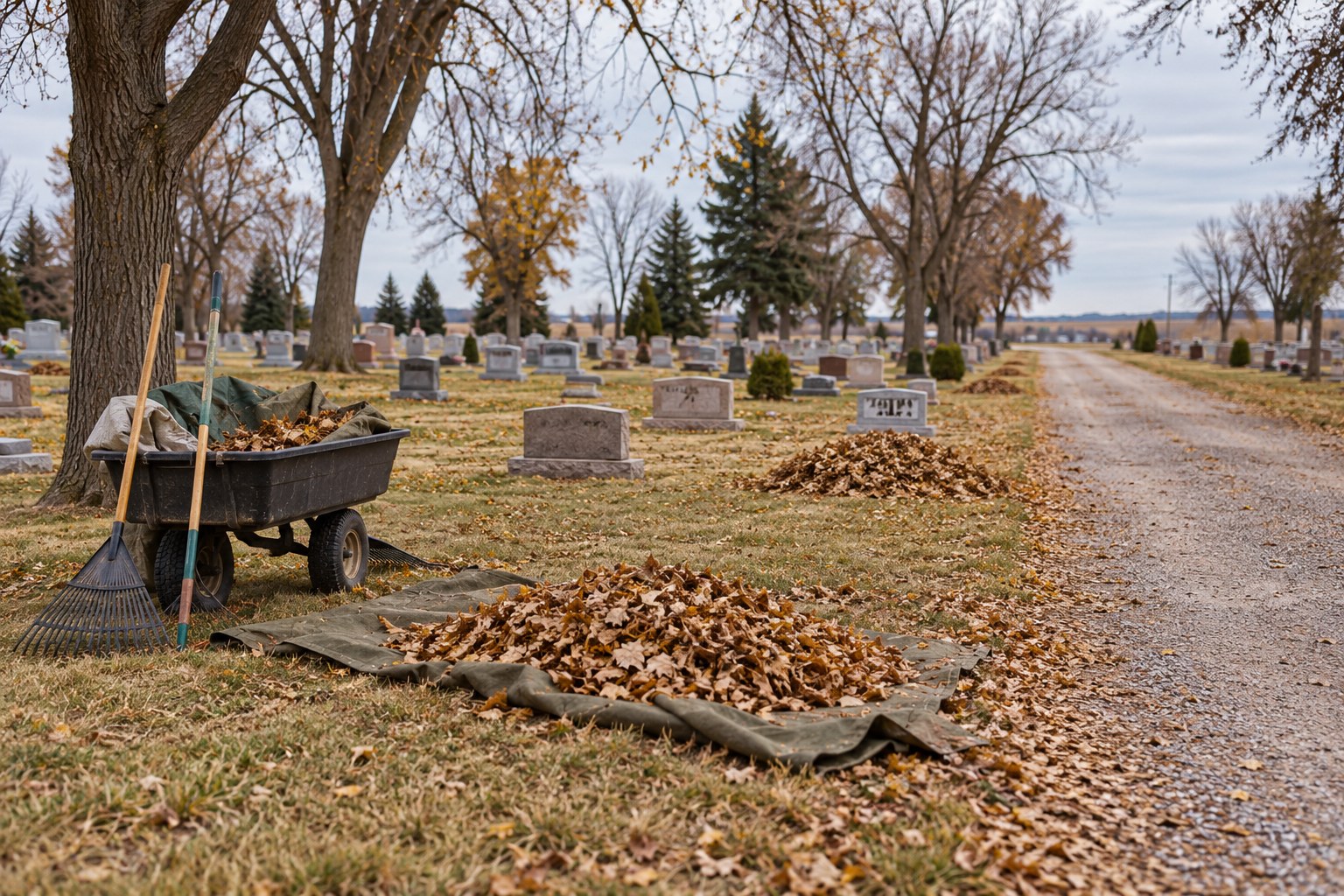
HARDEN, North Dakota — The town has stopped using a leaf vacuum in the oldest section of Harden Cemetery after cleared leaves repeatedly returned in low borders around graves when visitors spoke the names on their markers. Grounds staff will finish the fall cleanup by hand, and the cemetery remains open during regular daylight hours.
The eight-acre cemetery is maintained by the public works department and contains burials dating to 1886. Crews usually blow leaves from the grave rows into two lanes, then collect them with a tractor-mounted vacuum. Foreman Elsie Rusk said Monday's crew had cleared the north quarter before lunch when a visitor pointed out a narrow line of cottonwood leaves around one family plot.
The line followed the outside of three markers and was only one leaf deep. The visitor, Mina Cole, had read her grandparents' names aloud while cleaning lichen from their stone. As she named an aunt buried two rows east, loose leaves moved across short grass toward that marker, turning edgewise against a steady northwest wind and settling around its base.
Workers shut off the blowers and watched from the lane. Cole repeated the first names on five nearby stones. Leaves gathered at four graves, including one whose marker had sunk nearly level with the ground. Nothing collected at the fifth. Cemetery records later showed that stone was a memorial for a railroad worker buried in Montana rather than a grave marker.
The movement did not require a relative or a complete name. Groundskeeper Dale Noll read surnames from a maintenance map and produced smaller borders, while a visitor who used a childhood nickname drew leaves to a grave whose inscription gave a different first name. Names spoken in ordinary conversation outside the fence caused no visible change.
Administrator Nessa Voss suspended powered cleanup because visitors had begun testing markers and stepping across plots to follow the leaves. The town removed two truckloads collected before the event and posted a request that families avoid leaving new decorations until the work is complete. No marker was damaged, and the leaves are ordinary cottonwood, ash and elm from trees on the grounds.
Dry leaves can move in small ground-level currents that differ from the wind measured above them, said Len Marr, an arborist who walked the section Tuesday. Stones, sunken soil and clipped vegetation also create natural traps. Marr said those conditions explained why the same graves gathered debris after raking, but not why separate leaves crossed mowed lanes only while a particular name was being spoken.
Families have responded with restraint. Cole said the borders made several neglected plots easier to see but did not regard them as messages. Another visitor asked workers not to test her son's name for a reporter. The town declined requests to search for missing burials by calling names and said genealogical questions will continue through ordinary cemetery records.
Crews returned Tuesday with canvas sheets and hand rakes. They cleared the north quarter without reading markers aloud, and the grass remained bare through the afternoon. At closing, Rusk noticed that leaves had formed a partial border around an uninscribed sandstone slab near the tool shed. The cemetery map identifies no burial at that location.
Rusk lifted the slab enough to check for a plot number and found a folded paper grocery list beneath it, dry despite damp soil. The list was in the handwriting of former groundskeeper Irene Pell, who died in 2019 and is buried in the south quarter. Rusk placed it in the office lost-property box. By Wednesday morning, a thin line of elm leaves ran from the empty slab to Pell's grave without surrounding any marker between them.