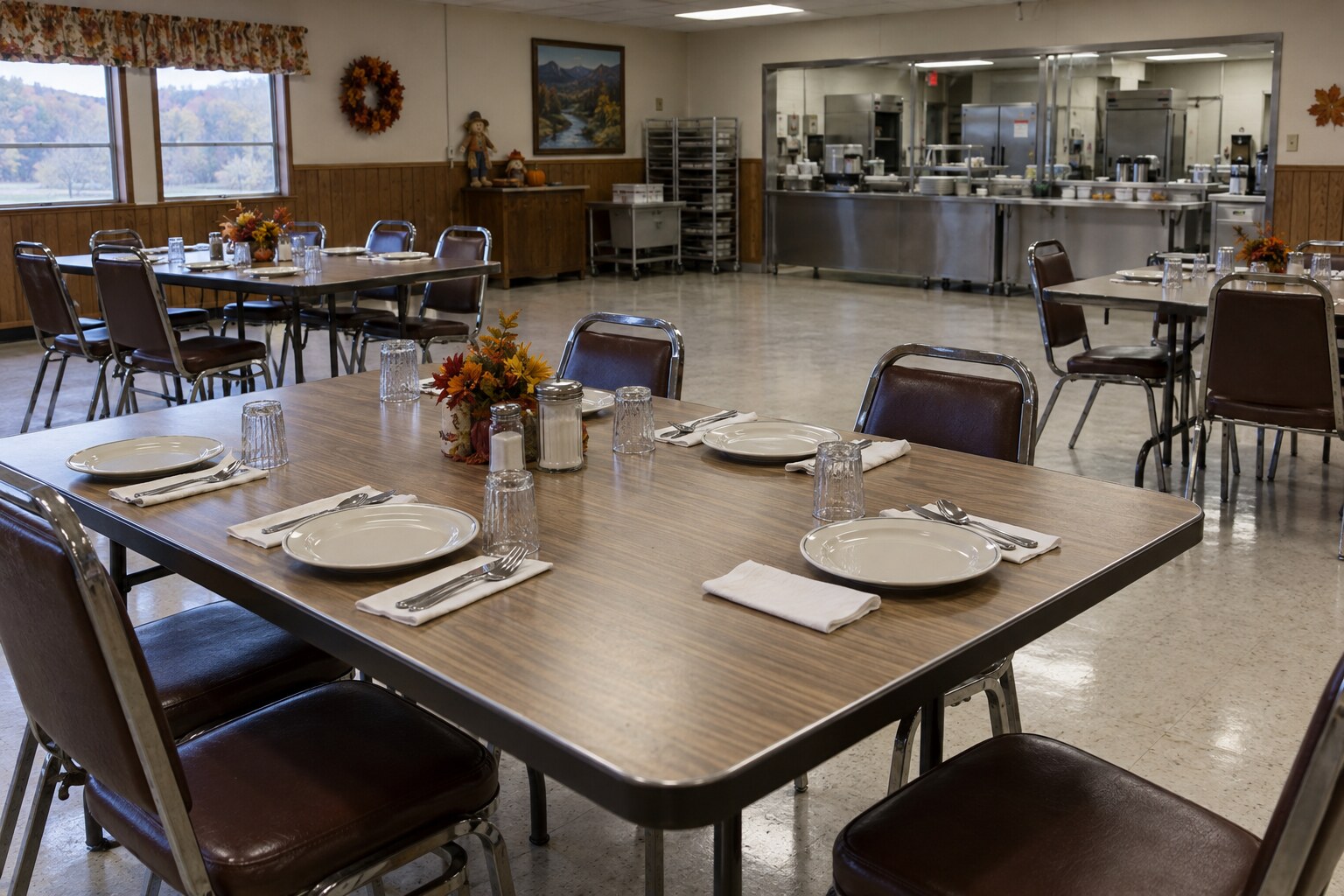
HARKER, West Virginia — The county's senior meal site has returned to assigned seating after lunch guests repeatedly set places for people who were absent, including former patrons who have died. Meals and van service continue on their regular schedule, but staff are placing plates and utensils before the dining room opens.
The site serves about 40 people each weekday in a former school cafeteria beside the Harker County health office. Diners ordinarily collect trays from a service window and choose their own tables. Coordinator Elsie Brann said the first extra setting appeared last Thursday, when four guests moved a chair, plate and cup to the end of table six without speaking to one another.
Each guest later said the place was for Nola Rusk, a retired cafeteria worker who ate there until her death in 2022. Rusk had preferred the end chair because it faced the kitchen. No memorial was planned, and staff had not mentioned her that morning. The four guests knew Rusk from different years and did not usually sit together.
Similar settings appeared during the next four lunches. Two were prepared for patrons home with ordinary illnesses, one for a former van driver now living in Ohio and three for people whose deaths were confirmed in county benefit files. In each instance, diners carried separate items to the same chair as though completing a familiar task. They disagreed afterward about who had begun.
The changes did not interrupt food service until Monday, when cook Mira Pell counted nine more portions served than trays issued. The extra servings included foods associated with the named guests, such as soft carrots for a man who had difficulty chewing and an unbuttered roll for Rusk. Staff cleared the plates unopened, then found spoon marks in the potatoes and crumbs beneath two chairs while the room remained occupied.
County administrator Len Voss said the assigned settings are meant to keep accurate meal counts, not to prohibit remembrance. Federal reimbursement requires the site to document meals served to eligible living participants. The county will cover the cost of any unexplained portions rather than submit them, and no family will receive a bill or benefit notice because a place was set in someone's name.
Group routines can preserve a person's habits long after that person leaves, said Hester Linn, a social-work professor who reviewed staff notes with names removed. A chair, menu or anniversary can prompt several people to remember the same neighbor. Linn said shared memory did not explain why guests who had never met a named person arranged the correct cup or modified a serving according to preferences not posted in the room.
Guests have responded differently to the change. Della Orr said setting Rusk's place felt courteous but not compulsory, and she was annoyed that visitors called it a vigil. Thomas Noll asked staff to remove the empty chair beside him after it was prepared for his wife, who is alive and visiting their daughter in Kentucky. He ate in the hallway rather than sit across from her untouched lunch.
On Wednesday, employees set exactly 38 places from the reservation list and kept spare dishes behind the service window. Lunch passed without an extra plate. Near the end of the hour, six diners folded their paper napkins into narrow triangles and placed them on the floor beside the same wall outlet. None could identify a person associated with the spot, and maintenance records show no table has stood there since the school closed.
Brann collected the napkins before sweeping and sealed them in an unused meal-delivery bag. At 2 p.m., the bag contained seven folded napkins. The additional one was damp along a circular edge and held three cornbread crumbs. The kitchen had served wheat rolls that day, and the county's last cornbread order was the lunch Rusk missed the week before she died.