HOLLOW REED, Ohio — The city water department will conduct a second overnight flush in the Alder Terrace pressure zone after residents in nine homes reported water moving back toward faucets after the taps were closed. Routine samples met city operating standards, and officials said the affected block remains in service while crews inspect valves and household connections.
The reports began Sunday evening after a scheduled hydrant flush reduced pressure for about 20 minutes. Residents expected sputtering and cloudy water as service returned. Instead, several said droplets left in sinks and drinking glasses rose in thin strands toward the faucet spouts after the flow had stopped.
Mina Crowe first noticed the movement while rinsing a blue cereal bowl. She closed the kitchen tap and watched a narrow line of water lift from the bowl to the aerator, carrying a few crumbs with it. The line remained connected for approximately six seconds before drawing entirely into the fixture. The bowl was nearly dry afterward.
Eight neighbors described shorter events at bathroom or kitchen sinks. One resident reported that water climbed from a pet dish on the floor to a laundry faucet more than three feet above it. No one reported illness, odor or discoloration. Two households began using bottled water by choice while the inspection continues.
Backflow can occur when pressure in a building or water main falls below pressure at a connected source, utility engineer Nadine Cole said. Plumbing codes require devices that limit contaminated water from entering the distribution system. Cole said ordinary backsiphonage would move water through a submerged hose or open connection, not across open air to a closed tap.
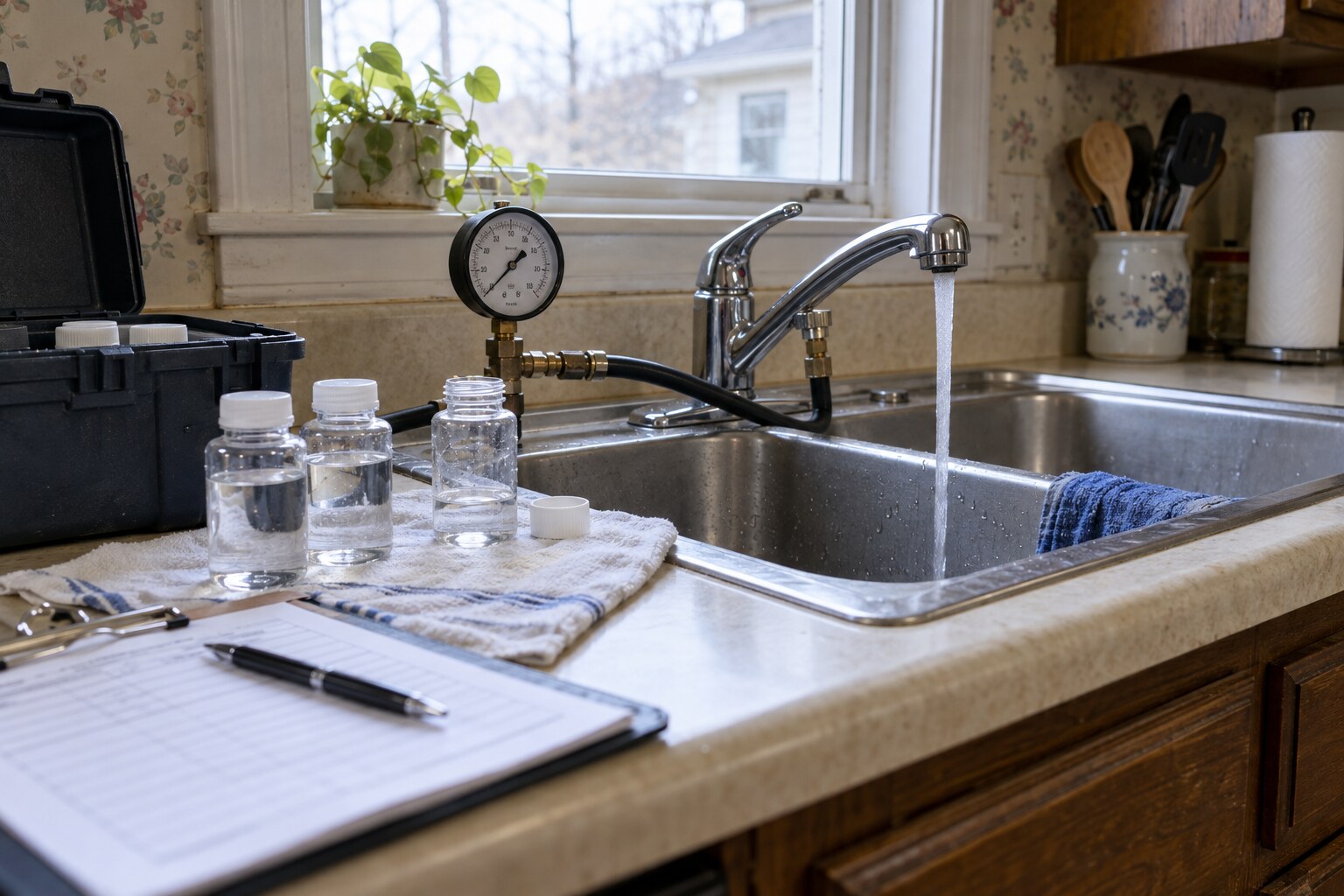
City crews checked the neighborhood's pressure regulator, hydrants and isolation valves Tuesday. Logged pressure remained between 48 and 56 pounds per square inch after the Sunday flush. Inspectors found no broken main, cross-connection or pump reversal, and the elevated tank serving the zone maintained its normal level.
At Crowe's home, a plumber removed the faucet aerator and closed the fixture's hot and cold supply valves. A shallow layer of tap water placed in the basin remained still for 11 minutes. When Crowe entered the kitchen, the water gathered beneath the spout and rose in several threads despite the closed valves.
The threads carried a small amount of blue food coloring added by the plumber. They stopped just inside the dry faucet body, where the coloring was visible on a cotton swab. Water collected from the building's supply lines remained clear. The plumber replaced the fixture and retained the original for the city.
The department plans to flush from the west hydrant after midnight Friday, when demand is lowest, and will station employees at three houses with permission from residents. Crews will record pressure and take samples before and after the work. The city will reimburse reasonable plumbing inspection costs associated with the complaints.
On Wednesday, workers fitted Crowe's removed faucet with solid caps and placed it on a dry tray in the utility garage. It was not connected to a pipe or reservoir. By afternoon, clear water had collected beneath the spout, though the inside of the capped fixture remained dry when inspected.
Cole moved the faucet to a second tray and emptied the first. The remaining water separated into three upright threads, each ending about half an inch below a capped opening. They remained in that position when the garage was locked for the night.