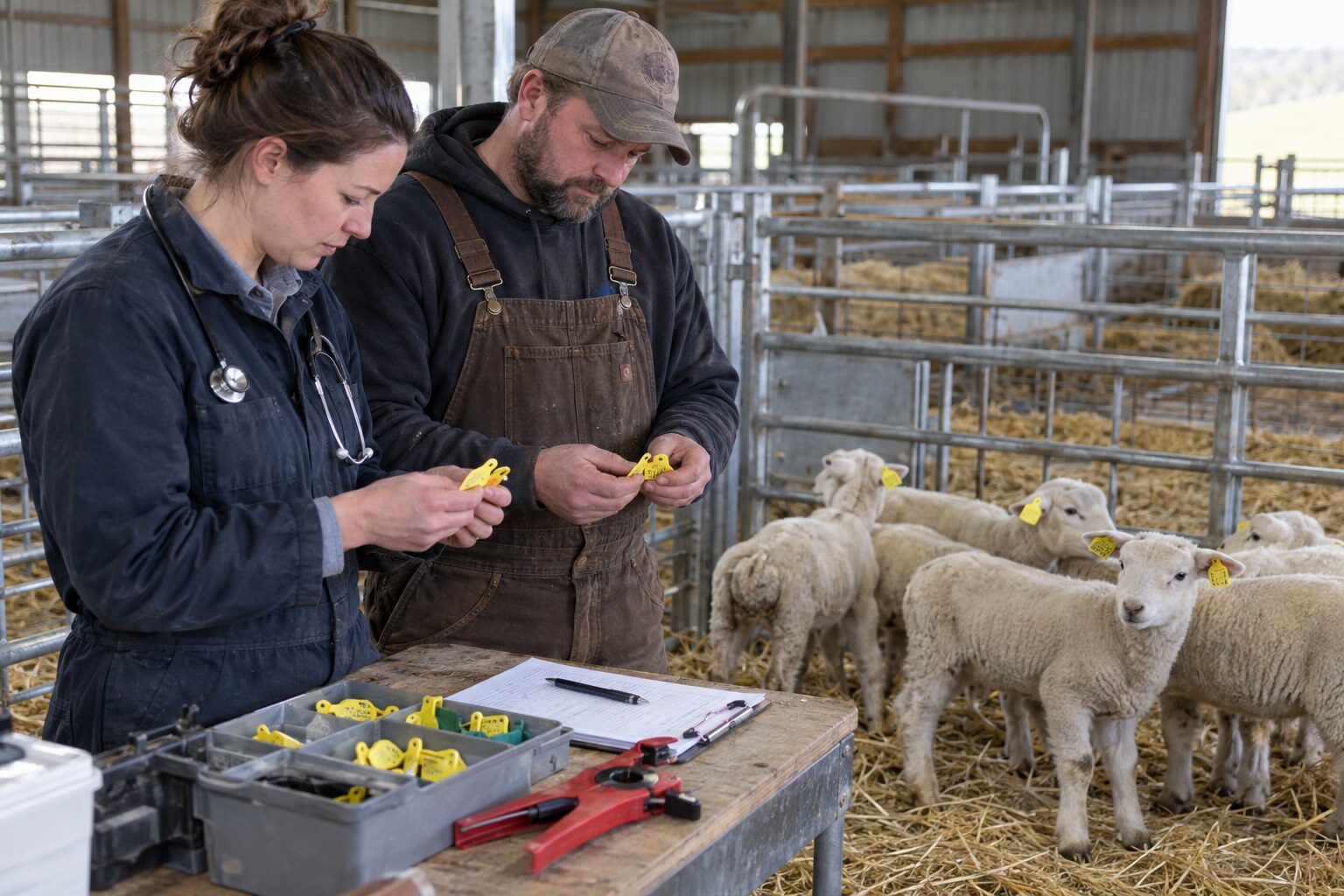
HOLT CROSSING, Nebraska — A livestock cooperative has postponed registration of 12 spring lambs after workers found healed identification codes inside their ears before any tattoo ink or applicator had been used. The animals remain with their owners, and a scheduled feeder-lamb sale will proceed without the affected group.
The cooperative holds two registration clinics each fall for small flock owners who lack handling equipment. Participants submit breed records, receive a sequence of private association numbers and bring lambs through a covered pen for weighing, photographs and ear tattoos. Wednesday's clinic was scheduled to begin at 7 a.m.
Technician Mel Orr noticed the first code while checking a ewe lamb belonging to Clare Doff. Dark green characters reading 481 were visible beneath the skin of the right ear. The area was smooth, fully closed and free of swelling. Doff's unopened packet assigned the same number to that lamb.
Orr stopped the line before opening the ink bottle. Eleven more lambs carried the next numbers in order, ending with 492. The characters varied with the thickness and folds of each ear, as ordinary tattoos do after healing. Three were faint at the edges, and one digit had spread around a small vein.
Owners said the lambs had not been tattooed elsewhere. The cooperative compared photographs from spring health checks and found clean ears in every available image. Number assignments were generated Monday after applications closed, and the association sent the sealed packets to Holt Crossing by overnight courier.
The delay prevents the animals from entering a registered breeding auction next week. Cooperative manager Dale Loomis refunded clinic fees and offered pens at no charge while owners arrange private inspections. He said the marks may eventually prove valid, but the cooperative will not certify a procedure its staff did not perform.
Livestock tattoos can persist beneath wool and dirt when surface ink appears absent, said veterinarian Lena Wold, who examined the group. A healed tattoo may also look newly visible when an ear is cleaned or backlit. Wold said those explanations do not account for current-year lambs carrying a sequence created two days earlier or for the lack of puncture sites in their spring photographs.
Wold washed four ears with alcohol and collected green pigment on gauze, confirming that ink was present rather than a change in blood vessels. The codes remained legible after cleaning. Ultrasound showed shallow scar channels around the pigment, consistent with marks that had healed over several weeks.
The cooperative locked its applicator, number cards and unopened ink in a metal office cabinet. Staff also photographed each lamb beside its sealed assignment packet, then asked owners not to retattoo or alter the marks pending a breed-association review. No other lambs in the barn carried visible codes.
Doff said she plans to keep number 481 regardless of whether the registration is accepted. She described the lamb as healthy and more inconvenienced by repeated handling than by the mark. Two owners withdrew from the breeding auction rather than request replacement numbers; the remaining applications are on hold.
Wold left the used gauze squares to dry separately in clear specimen sleeves. By evening, pigment on three had spread into blurred stains. The fourth retained a sharp reversed 486, the number from a lamb Wold had not cleaned. Its actual ear was in a different pen and still showed 486 in the usual forward orientation.