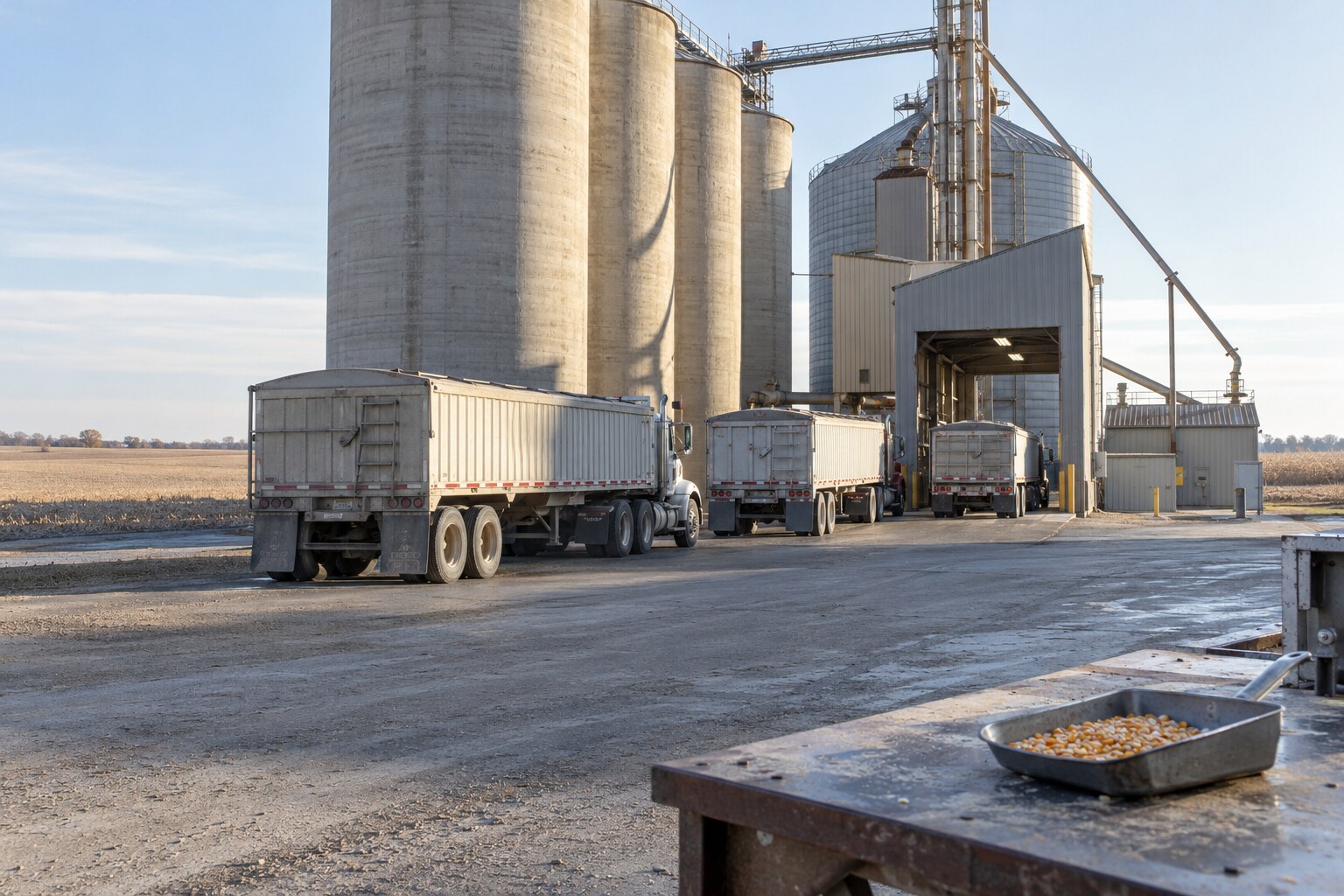
KEARNEY FORK, Nebraska — A farmer-owned grain elevator has returned three corn deliveries after kernels combined for a rail shipment repeatedly separated into distinct farm lots inside its storage bins. The cooperative has accepted other grain normally and says the affected corn is dry, marketable and free of regulated contamination.
Kearney Fork Cooperative received about 18,400 bushels Tuesday from farms operated by Dale Loomis, sisters Mina and Clare Doff, and the Arkell family. Each load met the contract's moisture and grade limits. Because all three growers had sold to the same feed buyer, workers directed the corn through one intake pit and conveyor into bin six.
The first sign of trouble came during routine sampling. Probe cups from the bin's north side contained nearly all of Loomis' darker red-cob hybrid, while the center cups held the Doffs' pale yellow variety. Corn from the Arkell farm, identifiable by hail nicks along many kernels, lay in a narrow band against the south wall.
Manager Ivo Dray first suspected that the deliveries had entered in layers and had not blended. Workers ran 2,000 bushels through the elevator's recirculation leg, a process that ordinarily mixes grain as it falls back into the bin. The discharge stream appeared uniform. Within 17 minutes, sight glasses at three levels again showed separate colors moving past one another without an empty space between them.
Dray stopped the equipment before friction or uneven flow could damage it. Through an inspection port, employees watched individual kernels turn and pass through the surrounding grain toward their respective bands. They moved slowly, often against the downward draw of the auger, and left fines and broken pieces behind in the center.
The cooperative notified its insurer and the feed buyer, then canceled one 25-car rail loading. No price penalty will be charged to the growers while the shipment is held. Dray said the larger cost is labor: crews emptied bin six into three trucks by color and visible damage, then checked each portion against the original scale and quality records.
Corn varieties can differ in density, shape, oil content and surface texture, said Rena Wold, an extension grain specialist who observed the cleanout. Those differences sometimes cause material to segregate during handling. Wold said normal segregation forms broad layers by physical trait, not three coherent lots that recover the weights and minor field damage recorded at delivery.
The returned quantities came within 60 pounds of each farm's inbound weight, inside the elevator's usual handling variance. Genetic spot tests on 30 kernels also placed them with the expected hybrids. That finding reassured the growers about ownership but complicated plans to resell the corn, since the original feed contract allowed the varieties to be blended.
Loomis said he would store his portion on-farm rather than deliver it elsewhere this week. The Doff sisters diverted theirs to a local cattle feeder at the same price. The Arkells asked the cooperative to retain a barrel for additional testing and took the remainder home in two trucks. None reported unusual movement after the grain was separated.
Employees vacuumed the pit, conveyor housings and bin floor before reopening the line. Eighty-six pounds recovered from the intake boot could not be assigned by appearance because it consisted mostly of cracked kernels. Dray sealed it in a sample drum instead of dividing it by estimate. The next four deliveries passed through the equipment without separating.
Wold prepared three one-pint composite samples by taking equal scoops from the returned lots and shaking them together in clear jars. Two remained mixed during the drive to her office. In the third, the kernels had formed three vertical columns by Friday afternoon, each only one kernel wide. When the jar was laid on its side, the columns bent but did not collapse, and loose corn rolled around them.