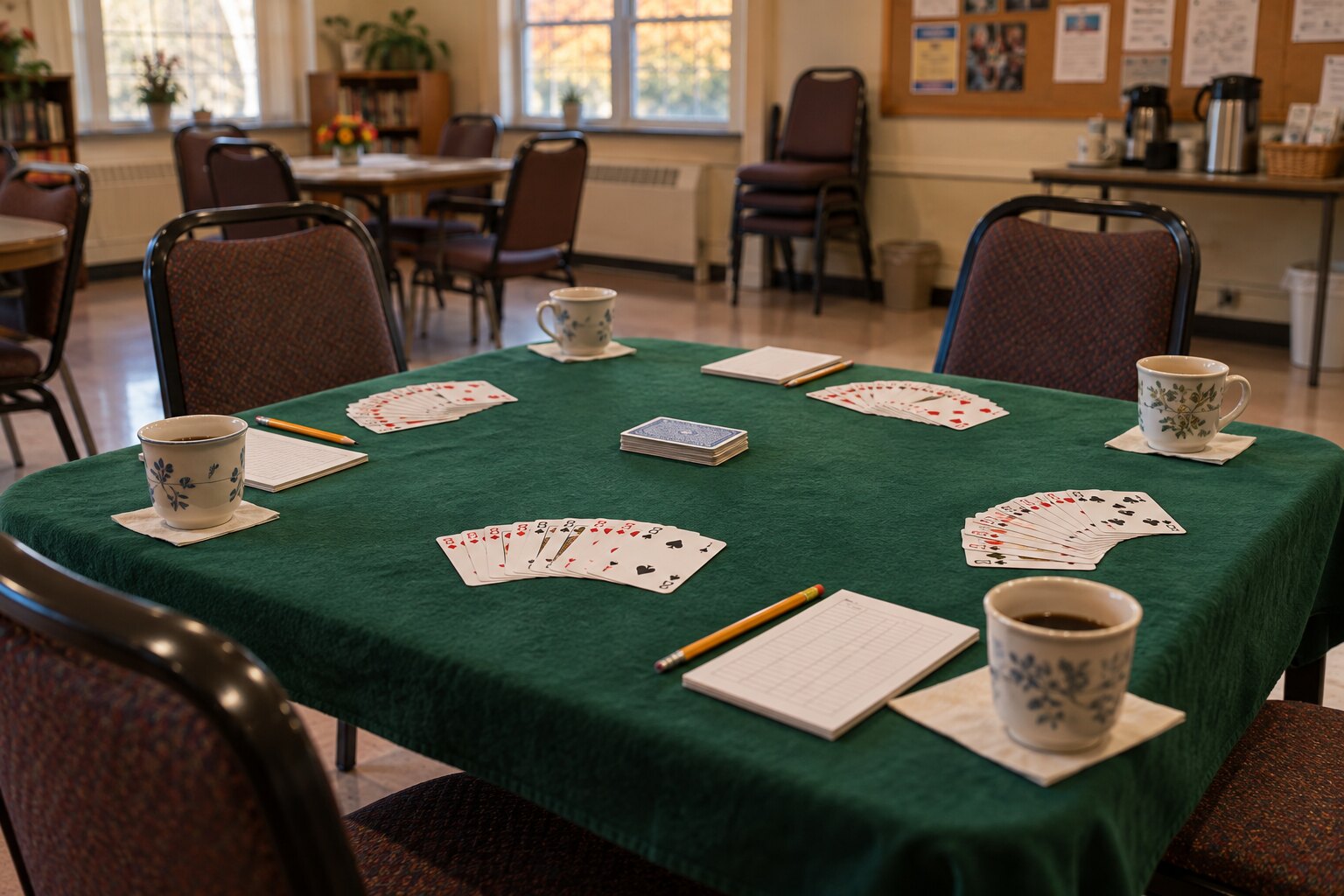
KELLETT, Pennsylvania — The Kellett Senior Center has moved its Thursday bridge club from evening to afternoon after four players said a hand interrupted at the center continued later in their sleep. The change is voluntary and does not affect the center's other card groups. Staff also replaced the club's decks and score pads.
The original game ended early on September 10 when a building alarm sounded during a contractor's test. Players covered their cards and left through the east door as instructed. Center director Paula Meeks locked the room afterward and expected the same four-person table to resume the following week.
The next morning, North-South partners Edith Sorrell and James Pike each called Meeks to report that they knew how the hand ended. Both said play had resumed at a green table during the night. They remembered different surroundings but agreed on the remaining cards, the order of three tricks and a failed contract by one point.
Their opponents, Mae Lind and Arthur Cole, made similar calls before noon. Lind believed she had dreamed the game in her own dining room. Cole placed it in the center's meeting room, except that the windows looked onto a field rather than the parking lot. Neither had spoken with the other players after the alarm, according to telephone records they offered to show Meeks.
When staff uncovered the physical hand, the cards remained in the positions left during the evacuation. The four players wrote down what they remembered before examining them. Their accounts correctly identified 47 of the 52 cards and agreed on every card that had not yet been played. The disputed five were low cards that would not have changed the contract.
Bridge players regularly reconstruct hands from bidding and previous tricks, said club volunteer Nora Bell. The four are experienced and may have inferred more than they realized before leaving. Bell said that explanation became less comfortable when Sorrell wrote down a defensive lead that had not occurred in the interrupted game but that all four remembered from the night.
The club tried again September 17 with a sealed deck purchased that afternoon. Meeks shuffled it in front of the players and ended the session only after all hands were complete. Three participants later reported an additional game in which they held cards from the new deck. Cole said he slept without remembering cards and joked that his partners had finally excluded him from practice.
The accounts caused no formal dispute, but several players objected when remembered scores were added to the club's monthly tally. Meeks removed those entries and asked members to record only games played in the building. Attendance fell from 22 to 15 the following week, largely among people who said the stories made ordinary disagreements about bids harder to settle.
Sleep clinician Mara Leland, who is not treating the players, said shared routines can shape similar dreams without direct communication. A familiar unfinished task is especially likely to recur during sleep, she said. Agreement about hidden cards would be harder to evaluate because the players know one another's habits and had seen part of the deal while awake.
Thursday's first afternoon session ended at 4 p.m. with every hand completed. Staff collected the decks in a locked cabinet, and the four original players went home separately. They agreed not to telephone one another during the night and gave Meeks permission to call Friday morning. All four reported sleeping normally.
Sorrell did find the words 'seven of clubs led' on a grocery receipt beside her bed. Pike had written the same phrase on the back of an envelope. Both placed the notes in separate envelopes before Friday's calls, and neither remembered writing them. Meeks has left the monthly score unchanged and plans to keep the club in the afternoon next week.