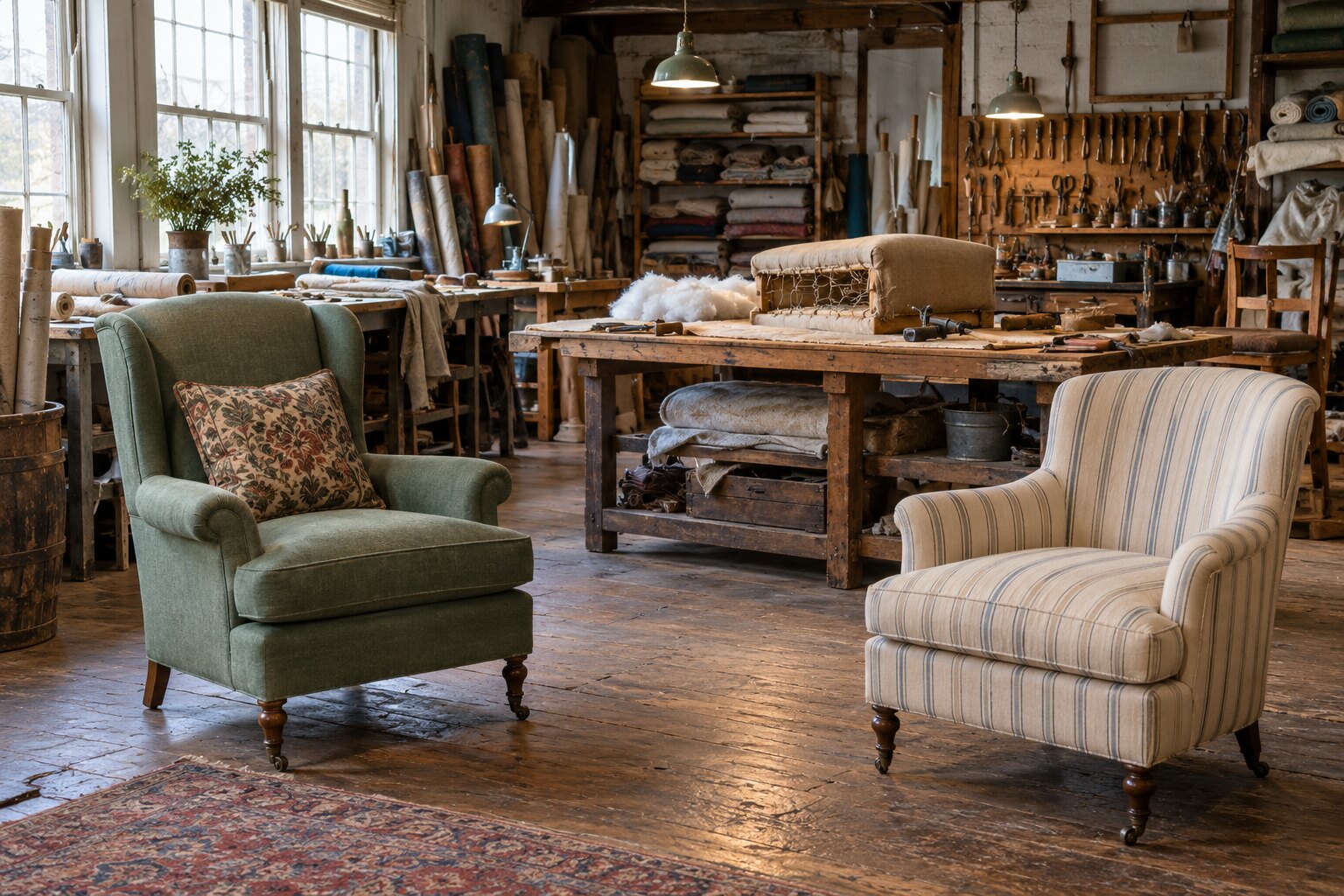
KENDRY, Pennsylvania — A family upholstery shop is delaying delivery of six chairs after newly installed fabric developed wear, lint and seat impressions associated with people who had not yet used the furniture. The business remains open for estimates and repairs but has stopped attaching customer tags to completed pieces.
Morrow & Pike Upholstery occupies a former feed store near the Kendry rail crossing and employs four people. Most work involves replacing foam, springs and fabric on household furniture. Co-owner Lena Pike said the affected orders used different textiles from three suppliers, including wool, cotton velvet and a commercial synthetic blend.
The first change appeared Friday on a dining chair re-covered for baker Amos Rill. The blue seat was clean when apprentice Nia Vos finished the corners. Within an hour, a shallow crescent formed along the front edge and flour collected in the nap, although the chair had remained on a waist-high table in the workroom.
Rill had not visited the shop that day. When Pike called, he acknowledged that he usually sits sideways while icing cakes and braces one flour-covered forearm on the same edge. The old chair had carried a similar mark before it was stripped, but the replacement foam and fabric were new and the wooden frame had been sanded.
Workers moved the chair into the front room and covered it with paper. Five other completed pieces then changed in ways their owners recognized. A reading chair gathered short white dog hairs matching a terrier that is not allowed in the shop. A rocker developed a smooth patch where its owner rubs a wedding band against the arm while talking on the telephone.
The changes did not reproduce every old stain or tear. They followed current habits, customers said. One client had begun wearing a knee brace only after leaving her chair for repair; the new upholstery formed a firm oval depression at the same height as its outer hinge. Another chair held three strands of green yarn from a blanket still being knitted at its owner's home.
Textile conservator Hester Linn examined photographs and two fabric samples Tuesday. New upholstery can reveal irregular springs, transferred fibers or residue left in a frame, she said. Those explanations would not readily account for lint from recent clothing or pressure marks that do not align with the furniture's previous wear. No unusual adhesive or finishing chemical was found.
The delay has left the shop short of storage space during its busiest fall month. Pike is waiving completed-work fees and offering loaner chairs to two older clients. Rill asked to take his dining chair despite the hold, but the shop retained it after the flour line reappeared through the protective paper and across an adjacent unassigned stool.
Employees tested the customer-tag question by placing blank cards on three unfinished chairs. Nothing changed overnight. On Tuesday morning, Pike wrote only a customer's first name on one card and tied it to a newly covered armchair. Before noon, the right cushion lowered and warmed to 91 degrees. The customer later said she favors that side but had not disclosed it during the estimate.
Pike removed all names and order numbers from the furniture and replaced them with colored clips known only to her. The impressions eased but did not disappear. She said the shop will complete work already under contract while keeping the pieces uncovered and separated, then ask customers whether they prefer delivery or a refund.
One chair has no customer. It was recovered from a vacant house and re-covered in plain brown fabric for the shop window. After the other tags were removed Wednesday, its cushion developed two seated hollows, one adult-sized and one small, with a strip of unworn fabric between them. By closing time, the smaller hollow had deepened enough to compress the new springs, and three yellow wooden beads lay beneath the chair.