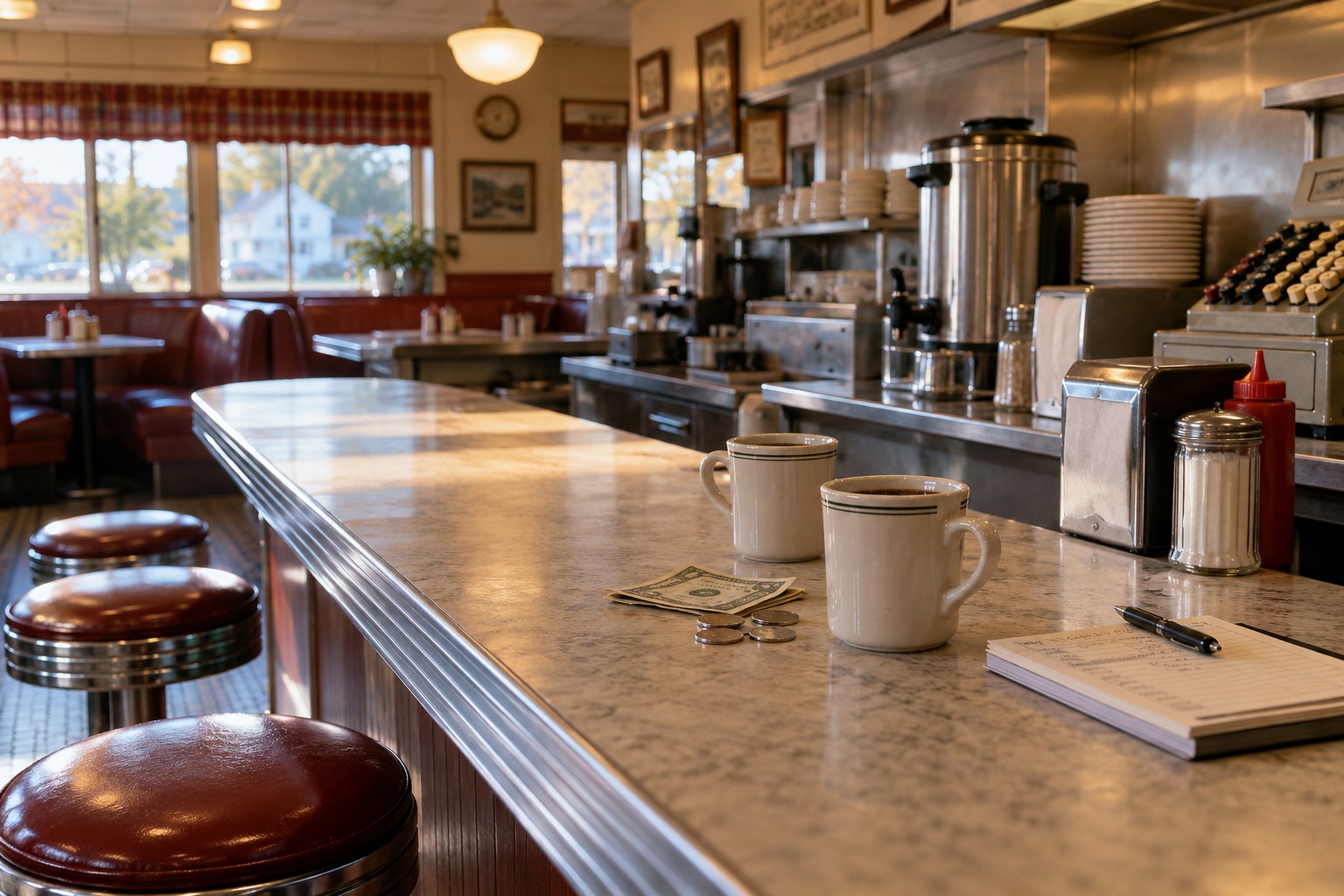
KEPLER, Pennsylvania — A family diner has ended handwritten counter tabs after money left by morning customers repeatedly matched the price of meals ordered by people who entered later. The restaurant remains open, but servers are collecting payment when food is served and are no longer carrying change forward between checks.
Kepler Diner has 12 counter stools and six booths near the borough bus stop. Regular customers often leave cash beside their cups, and servers settle several checks at once before the breakfast rush ends. Owner Mara Voss said the first unusual payment appeared Thursday when a customer left $8.40 more than his coffee and eggs cost.
Server Tessa Orr put the excess under his overturned cup, intending to return it the next day. Seven minutes later, a road worker entered and ordered oatmeal, bacon and milk. With tax, the check was $8.40. Before Orr brought the bill, the first customer's cup tipped upright without spilling, exposing the exact amount in two bills and four coins.
The same sequence occurred nine times before noon. An overpayment would remain beside one customer until another person entered, took a seat and ordered a meal costing precisely that amount. The matches included uncommon combinations, such as a side of sliced tomatoes with hot tea and a child's grilled cheese ordered without the usual pickle.
Customers did not choose from totals shown on the register, and several later diners had not been inside when the money was left. Voss changed the price of pie by 25 cents during a test, then asked a delivery driver to order whatever he wanted. A quarter rolled from beneath an earlier check and stopped against the bills as he added pie to his lunch.
Voss ended the experiment after patrons began trying to influence one another's orders. One man left $50 and asked who would spend it; another refused breakfast because the coins waiting near his stool suggested liver and onions. The diner returned identifiable excess payments, placed unclaimed money in separate envelopes and covered three meals rather than assign the cash without consent.
Cash drawers and informal tabs often produce matching discrepancies over a busy shift, said Iva Bell, a bookkeeper who reviewed the register tape. Servers may remember likely orders and customers may respond to seeing food nearby. Bell said those habits could create apparent predictions, but not exact totals involving later substitutions made after the earlier payer had left.
The change has slowed service slightly and ended a small custom at the counter. Some regulars paid weekly or left enough to cover a neighbor's coffee without saying so. Voss said those gifts are still welcome if the recipient is named, but staff will not interpret unexplained cash as payment for a stranger or post future totals for customers to claim.
On Saturday, Bell counted the drawer with Voss after the doors were locked. Receipts and cash agreed to the cent. They placed three unclaimed envelopes in the office safe and photographed the seals. At 6 a.m. Sunday, one envelope contained $6.15 more than the amount written across it, though the seal and safe log were unchanged.
The first customer that morning asked only for coffee. As Voss set down the cup, a bus passenger entered carrying a paper sack and ordered two boiled eggs, rye toast and a small orange juice to take away. The total was $6.15. Voss charged his card and left the envelope in the safe. When she checked it after closing, the added money was gone, but the photograph still showed the extra bills beneath the sealed flap.