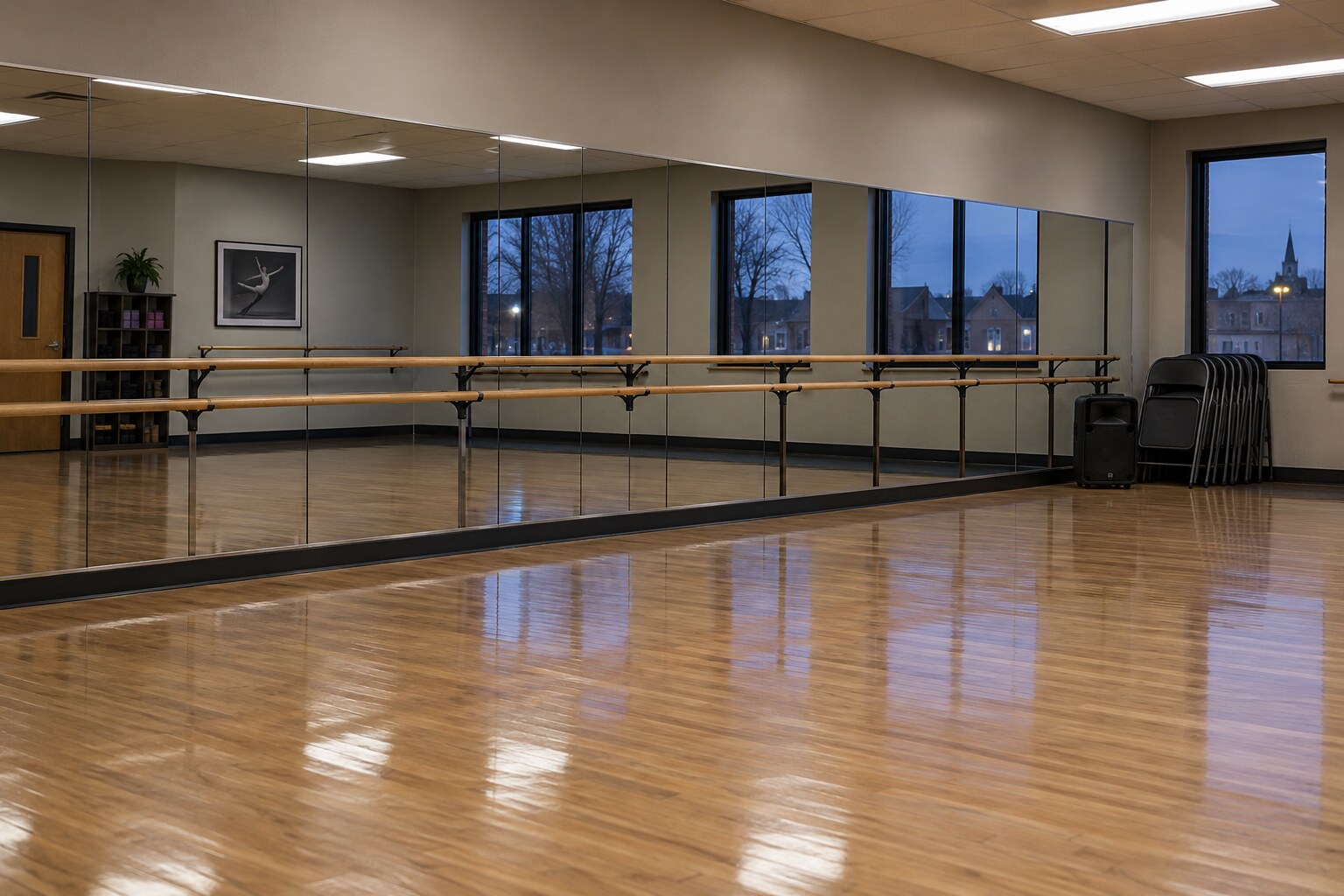
LAKE RILLA, Minnesota — The Lake Rilla Dance Cooperative has moved classes from Studio B to the community gym while a contractor replaces the room's wall mirrors. Students and instructors reported that reflected dancers continued moving briefly after rehearsals stopped. The cooperative's fall recital remains scheduled for October 24.
Studio B serves about 80 children and adults each week for ballet, modern dance and exercise classes. Its mirrored wall runs nearly 24 feet behind two wooden barres. Director Simone Pell said the glass had no known crack, loose backing or distortion before the first report Monday.
During a teen modern class, instructor Cora Lem asked six dancers to stop midway through an eight-count phrase so she could correct their spacing. The students stopped and faced the mirror. Their reflections completed the remaining three counts, including a turn and a low reach, before standing in the same positions as the dancers.
Lem initially believed several students had continued the phrase and that others copied what they saw. A parent recording from a chair near the door captured the group standing still while the figures in the mirror moved. The reflected movements are partly obscured by the dancers' bodies but remain visible between them.
The effect occurred again during an adult class that evening. Pell asked participants to perform an improvised sequence rather than a memorized combination. When the music stopped, seven reflections continued for approximately nine seconds. Each completed movements begun by the corresponding dancer rather than repeating a common routine.
Delayed digital video can create an image that lags behind a person, but the studio uses ordinary glass with no display equipment, electrical connection or projection surface. Glazier Aaron Silt inspected the wall Tuesday and found standard safety-backed mirror panels fastened with clips and adhesive. He reported no flexing or double image.
No participant reported seeing an unfamiliar person in the mirror or losing awareness of their own movement. Two dancers said their shoulders were sore the next morning in places consistent with lifts their reflections completed but their bodies did not. The cooperative offered refunds for missed classes and asked families not to enter the closed room.
Pell held one controlled observation with Silt and two instructors before authorizing removal. The three stood at separate marks and made short movements chosen aloud only after taking position. Each reflection continued from the final posture for a different length of time. Silt's reflection lowered his right arm after he had placed both hands in his pockets.
The contractor covered the mirrors with heavy paper and taped every edge before evening classes began in the gym. The paper showed no image, but shallow creases traveled across it during the first rehearsal, following the height and timing of dancers on the other side of the building. The barres beneath the paper shifted slightly without pulling from the wall.
Replacement is expected to cost about $6,200, including wall repair and new safety glass. The cooperative will use reserve funds and seek reimbursement under its property policy. Pell said the mirrors will not be sold, donated or returned to use elsewhere; the contractor will transport them face-to-face for recycling.
After the room was locked Wednesday, a custodian heard the barres tap the wall in four groups of eight. Through the door window, the paper covering remained in place. Its surface folded inward at shoulder and knee height, then smoothed before the next count began.