LARCHFIELD, Minnesota — The Larchfield City Council has paused a brief opening observance after residents twice recited an additional sentence that does not appear in the city's adopted wording. Meetings will begin with the clerk's call to order and roll call while the council reviews recordings and historical copies of the text.
The observance, known locally as the civic promise, was adopted in 1981 and is read before regular council meetings. Its four sentences ask officials and residents to listen, speak accurately, preserve public property and leave decisions open to review. Participation is customary but not required.
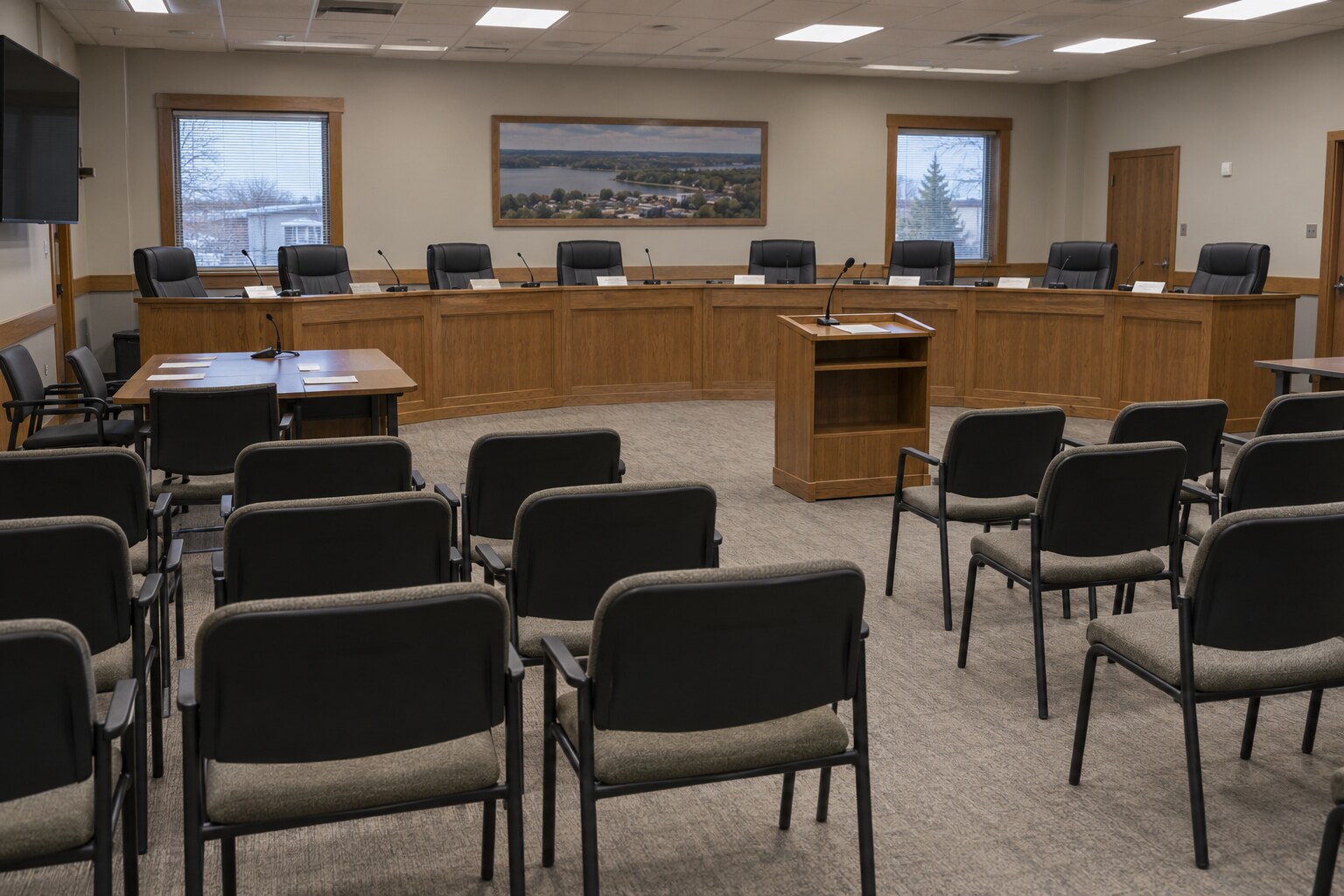
At the September 21 meeting, clerk Heather Lund read the four lines from a card kept at the lectern. After the final sentence, most of the 31 people in the room continued together: 'We leave one place for those who have not arrived.' Lund had not read those words and said she had never seen them on the card.
The phrase was initially treated as a variation used by longtime residents. It was repeated at the October 5 budget workshop, again after the printed text ended. Council video captures the sentence clearly. No single voice can be heard beginning before the others, and several people who were reading from the displayed card joined without looking up.
Residents gave different accounts of where they learned the line. Retired teacher Colin Reese remembered saying it during school tours of city hall in the 1990s. A woman who moved to Larchfield last year believed she had heard it at her first meeting. Two teenagers attending for a civics assignment said the words felt expected but could not recall encountering them before.
City archives contain the adopting resolution, three early drafts and printed cards from four decades of meetings. None includes a fifth sentence. Former clerks contacted by the city remembered minor differences in punctuation but not a reference to an empty place or people who had not arrived.
Shared recitation can encourage people to supply a familiar rhythm or wording without a deliberate cue, said sociolinguist Paige Moravec, who listened to a short recording at the city's request. Once a phrase is discussed, later speakers may also anticipate it. Moravec said the synchronized first occurrence is harder to assess because no recording of earlier meetings has yet been reviewed for the line.
The dispute has delayed no council action, but members received 18 messages asking whether the phrase had religious, memorial or political meaning. Mayor Anton Dale said the city cannot explain or endorse wording it did not adopt. The council voted 5-0 to suspend the observance through October rather than revise it during a budget workshop.
Lund replaced the lectern card with an agenda cover stating that meetings will proceed directly to roll call. The original card has been placed in the clerk's files. It shows ordinary wear and four printed sentences, with no erased line, handwritten addition or impression visible beneath the last paragraph.
At Monday's reconvened workshop, Dale called the meeting to order without the promise. The audience remained seated and silent for nine seconds before Lund began roll call. Business then proceeded normally, including discussion of snowplow fuel and a library roof contract.
After adjournment, 11 attendees separately asked Lund why the additional line had been read despite the suspension. The meeting video contains only the nine seconds of room noise. In her handwritten minutes, Lund had placed the sentence between the call to order and roll call. She crossed it out after reviewing the video and said she does not remember writing it.