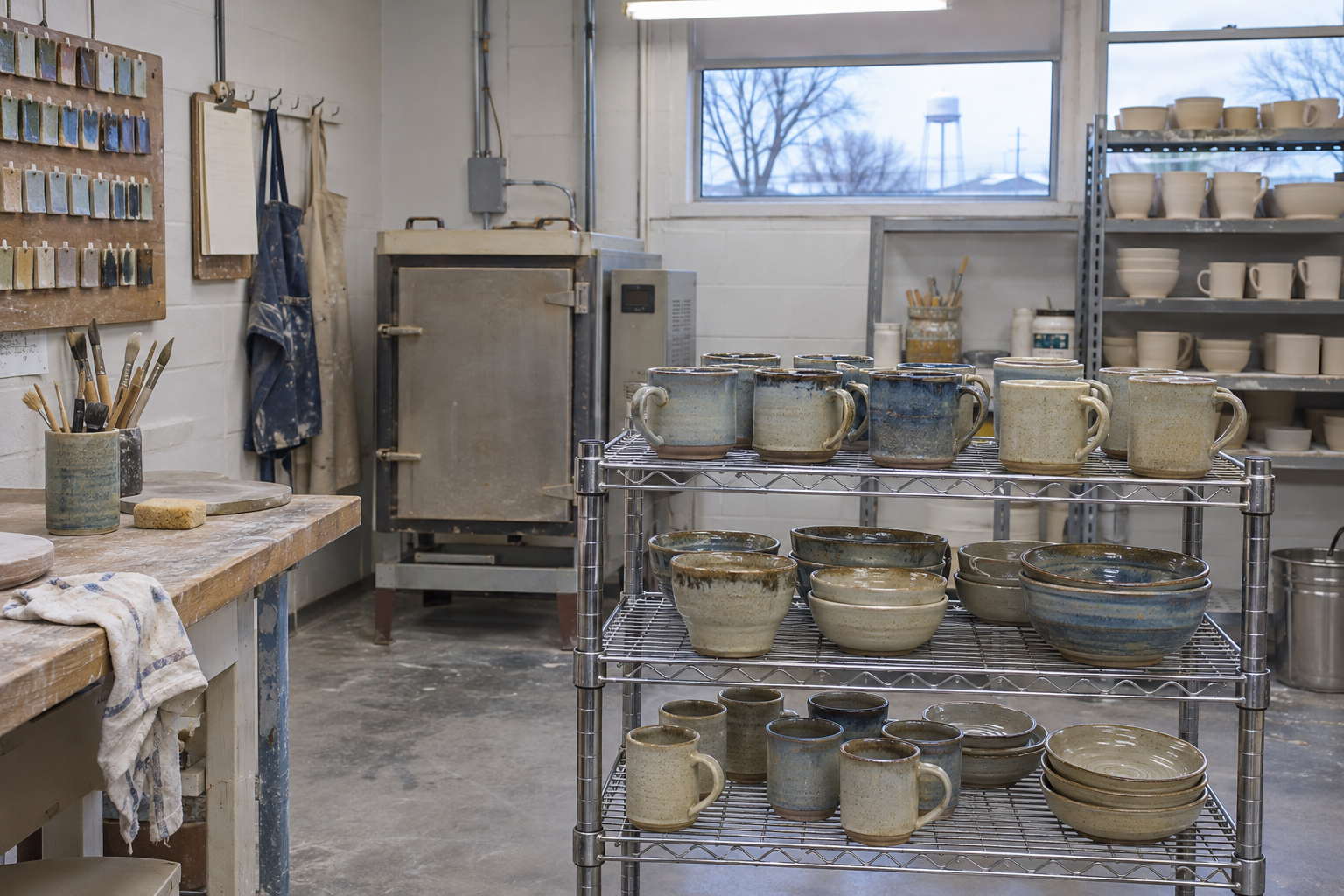
LARKSPUR, Nebraska — A member-owned ceramics studio has held an overnight kiln load after new cups and bowls emerged with chips, stains and repairs associated with years of household use. The cooperative postponed its Saturday sale and is refunding deposits on 11 commissioned pieces while the equipment is inspected.
Larkspur Clay Cooperative operates from a former feed office and fires work made by 38 members. Manager Tessa Orr said the electric kiln reached its programmed temperature Monday night and cooled without an alarm. When she opened it Tuesday morning, the first shelf of stoneware looked used rather than newly glazed.
A blue mug had a pale crescent inside where tea might have stood repeatedly. The bottom of a serving bowl was scratched in tight circles, and a casserole lid carried a brown stain around its steam hole. One cup had been mended across the handle with two small metal staples, although it entered the kiln in one piece and no metal repair was part of the firing.
The changes did not resemble kiln damage, which usually produces sharp cracks, warped clay or glaze running onto a shelf. Edges on the held pieces were rounded as if handled for years. A white bowl had a shallow spoon groove on only one side. Its maker, Cal Voss, is left-handed and said the wear fell where his spoon rests when he eats cereal.
Members were asked to identify their work before discussing the marks. Some found no connection. Others recognized ordinary habits: a thumb-polished patch on a soup cup, a ring left by a sink mat and a chip in the same place where a family set had broken. Potter Mina Cole found flour pressed into the unglazed foot of a mixing bowl commissioned as a wedding gift. The recipient does not bake and has not seen the piece.
Orr closed the sales room after visitors began asking to reserve particular objects or bring family photographs for comparison. The cooperative separated the load by shelf, photographed every piece and offered members clean boxes for work they wished to remove. No one is being required to keep or accept an altered commission.
Heat, ash and uneven glaze chemistry can age a ceramic surface rapidly, said Irena Bell, a kiln technician who inspected the equipment. Metal from shelves may leave dark points, and crazed glaze can hold dust after cooling. Bell said those processes would not polish handles, deposit food residue beneath an intact glaze or install a staple through fired clay without leaving a fresh break.
The hold affects 67 pieces intended for a holiday market and two restaurant orders. Members voted to pay November rent from the cooperative reserve rather than reopen the sale with the held work. A second kiln in the teaching room remains unused until Bell checks its controller, wiring and ventilation.
Not every mark suggested damage. A small pitcher made by apprentice Lena Rusk had a smooth patch beneath its handle and a faint water line inside. Rusk said it felt familiar in her hand despite being the first pitcher she had completed. She chose to keep it but asked the cooperative not to photograph the inside, where the line rose slightly while she held it.
At closing, Orr removed all pieces from the kiln and left the shelves bare. The repaired cup remained on a separate steel rack with its maker's permission. By Wednesday morning, the staples had dulled and the handle had worn smooth around them. Fine clay dust beneath the cup showed it had not shifted, but the rack carried a fresh circular coffee mark directly below it.
Orr wiped the rack with distilled water and placed the cloth in a sample bag. The cup was dry and smelled only of fired clay. The stain returned through the clean steel before noon, dark at one edge as though the cup had been set down by a left hand.