MARLOWE, Pennsylvania — A family funeral home has changed the seating arrangement in one visitation room after mourners and staff repeatedly adopted small gestures associated with a man many of them had never met. Services continue by appointment, and the family involved asked that the visitation not be treated as a public demonstration.
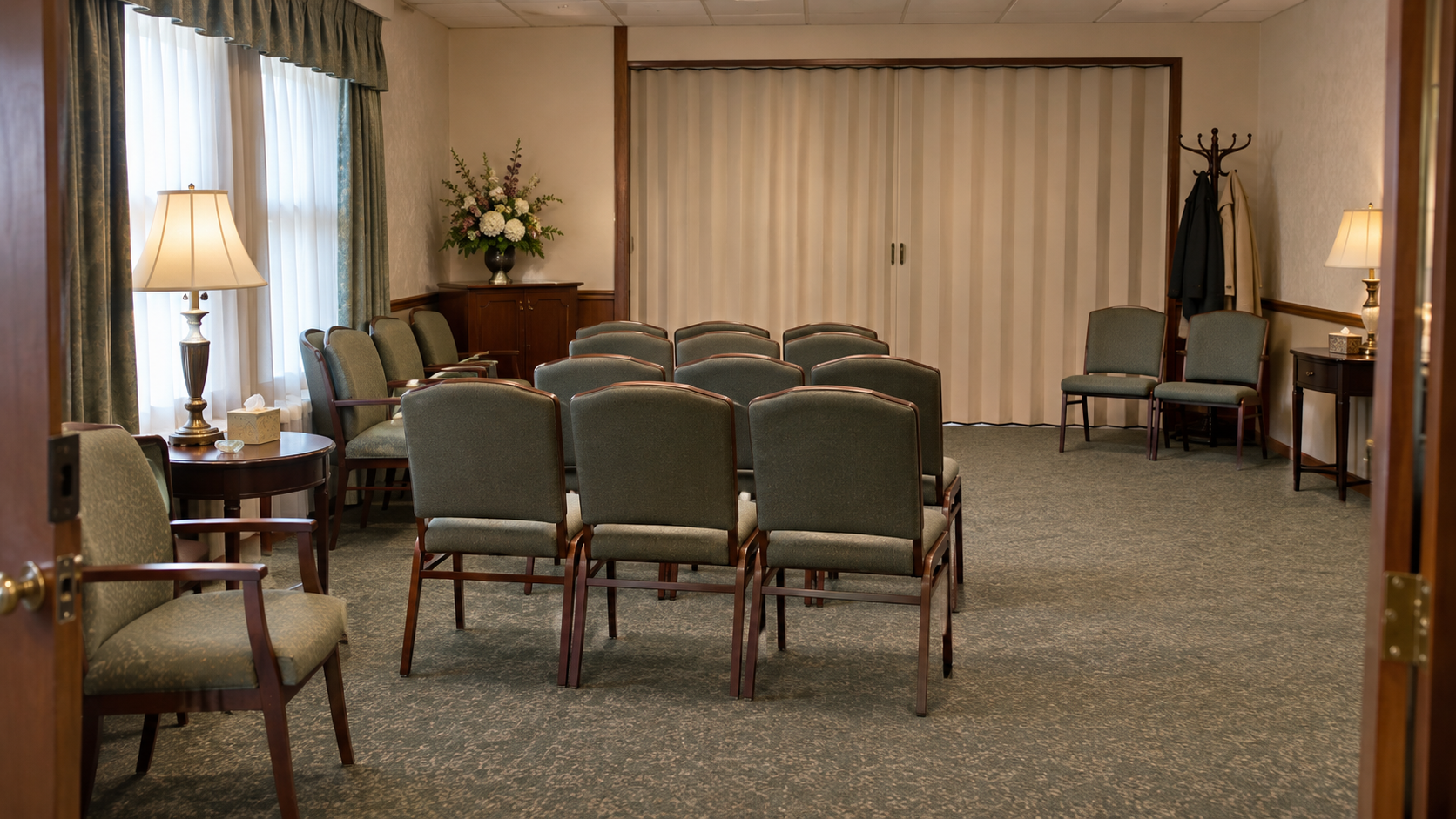
Marlowe & Sons prepared its east room Monday for Edwin Noll, 74, a retired cabinetmaker. The room held 28 upholstered chairs in four rows, along with family photographs and two small tables of woodworking items. Funeral director Iva Cole said the first unusual gesture appeared before the family arrived, when an employee sat briefly to check the sightline.
The employee crossed his ankles, pressed his left thumb into his right palm and tilted his head toward the aisle. Noll's daughter said her father sat that way whenever he listened carefully. The employee had not met Noll or seen video of him, and the portrait at the front showed only his face and shoulders.
During the visitation, nine people used the same posture. Some were relatives, but three were neighbors' spouses who had never spoken with Noll. A delivery driver waiting for a signature sat in the back row and began rubbing his wedding ring with two fingers, another habit the family recognized. He stopped outside the room and could not recall doing it.
The gestures did not pass visibly from one person to another. Several began while the room was quiet or while the nearest chairs were empty. Visitors seated elsewhere in the building behaved normally. Standing guests sometimes pressed a thumb into the opposite palm but did not copy the full posture until they sat down.
Cole removed two rows and opened an adjoining room so visitors could stand or sit separately. She asked staff not to prompt anyone, photograph gestures or invite people to test a particular chair. The Noll family continued the visitation and kept the woodworking display in place, saying the movements were familiar but not a message they wished to interpret.
People often mirror posture and hand movements without noticing, especially during emotionally focused gatherings, said Hester Bell, a grief counselor who reviewed written accounts with names removed. Family members may also recognize an ordinary motion more readily after a death. Bell said those effects could spread through a room but would usually require someone present to model the behavior.
The service had practical complications. One guest with arthritis held the posture until her hand cramped, and an employee moved her chair without asking her to repeat it. Two relatives chose the adjoining room. Noll's daughter declined an offer to place her father's own chair near the photographs, saying borrowed bodies were already enough to manage.
After the family left, attendants stacked the rear chairs and vacuumed the carpet. Short curls of pale wood appeared beneath seven seats. Noll had worked mostly in walnut, but his daughter identified the shavings as maple, the wood he used for toys made for his grandchildren. No woodworking had taken place in the funeral home.
Cole placed the shavings in separate envelopes with the chair numbers and cleaned the room again. By morning, a single maple curl rested on every seat that remained in the east room, including two chairs brought from storage after the visitation. The adjoining room contained none.
The funeral home moved Tuesday's appointment to the west room and left the east room locked. Through the glass panel, staff could see the curls gradually uncoil as the building warmed. At noon, each straightened strip bent once near the center, like a finger closing into a palm.