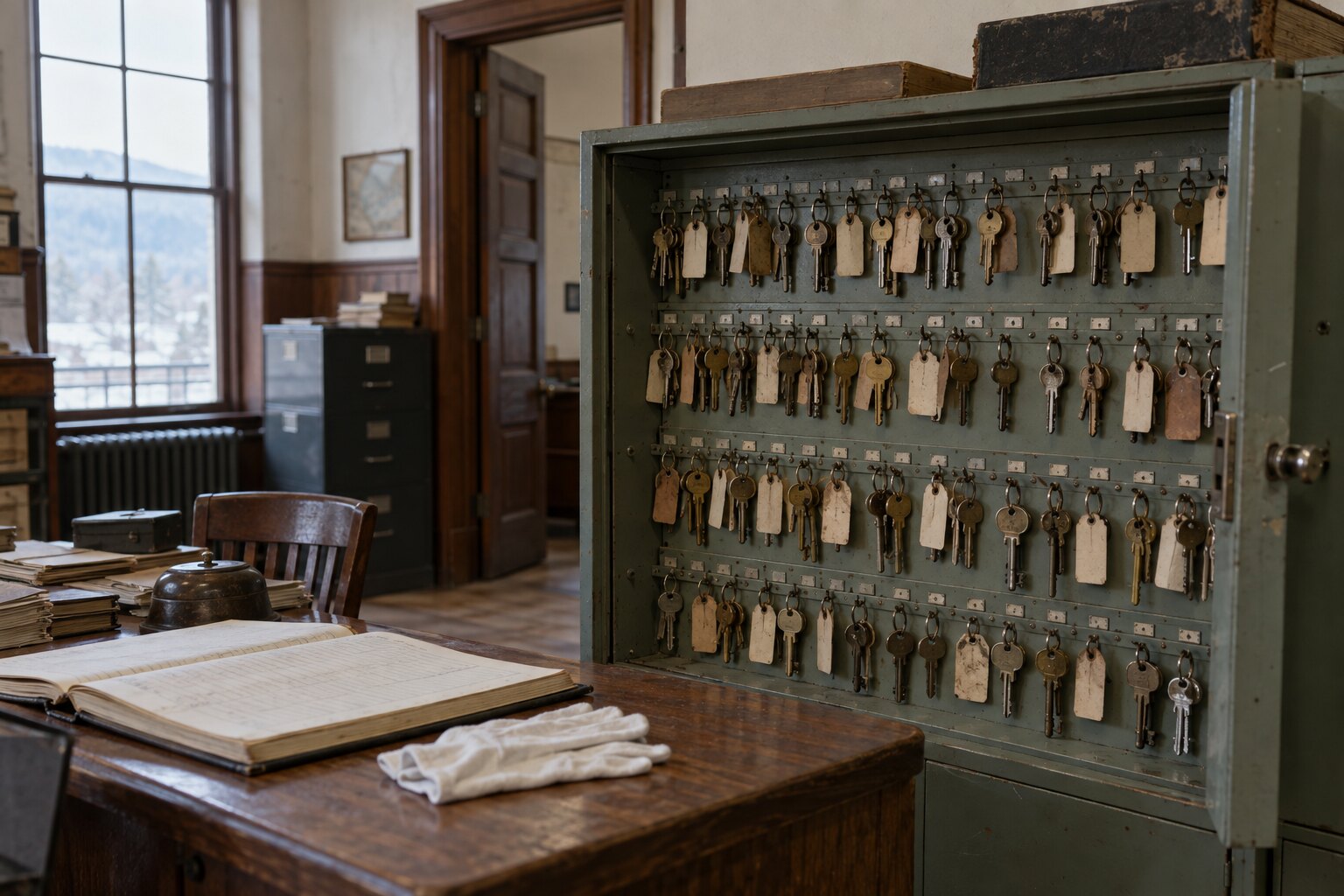
MARROW, West Virginia — The Ash County Commission has withdrawn a cabinet of obsolete keys from Saturday's surplus auction after four keys opened locks at private homes. County employees had prepared the cabinet for sale during renovation of the courthouse basement. The remaining furniture, shelving and office equipment will be offered as scheduled.
The gray metal cabinet contains keys gathered from county offices over several decades. Many carry paper tags naming former storage rooms, desks or vehicles. Others have only a stamped number. County Clerk Dena Rusk said the cabinet had not been used for routine access since at least 2003 and was moved twice without a complete inventory.
A photograph posted with the auction notice prompted eight residents to call the clerk's office. Most recognized a tag bearing a family name or a street once used for tax foreclosure files. Rusk initially believed the keys had been kept after the county returned property to its owners, an old practice she said would account for some private addresses in the cabinet.
The county arranged supervised tests rather than release the keys. Locksmith Wade Kern and a sheriff's deputy accompanied residents to six houses Tuesday. Four keys turned exterior locks. Two opened front doors, one opened a detached garage and one opened a kitchen door whose deadbolt had been installed during a 2021 renovation, according to the homeowner's invoice.
No resident reported a missing key. Three of the houses have changed owners since the dates written on the tags, and none of the current owners had given a key to the county. The fourth property was never involved in a foreclosure or building inspection that required county access, owner Evelyn Saye said. Her key was tagged 'records annex, west closet' in handwriting the clerk could not identify.
Kern said common residential keyways can accept many blanks, but the cuts still must align with the pins inside a particular lock. An old key can open a newer lock if it was deliberately keyed to match or if wear creates unusual tolerance. He found no sign that the four tested locks had been forced or filed. He advised each household to replace or rekey the cylinder.
The commission authorized up to $2,400 for that work and for examination of the other keys. Rusk said residents who believe a tag refers to their property may submit a photograph of the lock but should not remove it or bring it to the courthouse. The cabinet is now secured in the evidence room, although no criminal case has been opened.
Records reviewed by the Register show the county bought the cabinet in 1976 for the former road department. A 1988 inventory lists 41 vehicle and building keys. The next surviving inventory, prepared after the courthouse flood of 1997, describes the cabinet as empty. Rusk said water damage may have destroyed an intervening list, but the cabinet itself shows no flood line.
Saye watched while Kern tested the tagged key at her house. It entered the newer kitchen lock without resistance and turned the deadbolt twice. Her contractor confirmed that the cylinder arrived sealed with three factory keys, all of which Saye still has. She chose to have the lock changed that afternoon and asked the county to retain the old cylinder.
Kern cut a replacement from the measured depths of the county key before the cylinder was removed. The duplicate entered the lock but would not turn. He made a second copy on another machine with the same result. Kern said a worn shoulder or slight twist in the original could explain the difference, though neither was visible on his bench gauge.
The original was returned to its paper tag and sealed in a clear evidence sleeve. At Wednesday's commission meeting, Rusk held the sleeve against the removed cylinder without opening it. The deadbolt turned once on the table while the key remained inside the plastic. The commissioners ended the demonstration and voted unanimously to keep the cabinet out of the sale.