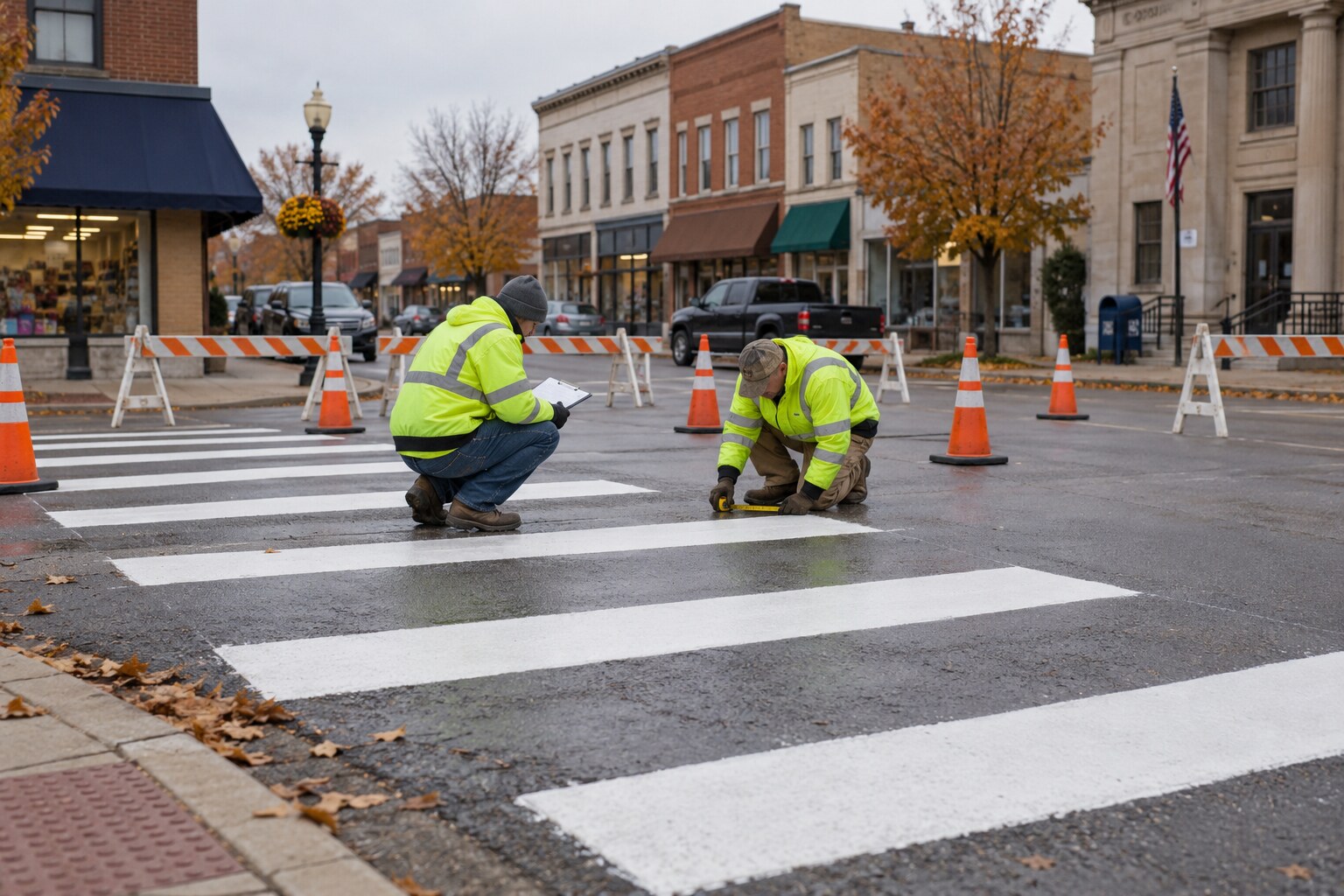
MASON VALE, Ohio — The city has delayed reopening a downtown crosswalk after fresh pavement markings developed scuffs, heel impressions and narrow wheel tracks while the intersection remained closed to pedestrians. Vehicle traffic continues through Oak and Third streets under temporary signals, and the city expects the crossing to remain barricaded through Wednesday.
The $18,600 project replaces ladder-style markings installed in 2021 and adds curb ramps beside the post office. Crews milled the old stripes Friday, poured white thermoplastic bars early Monday and placed linked barricades at all four corners. The material passed temperature and thickness checks before workers left it to cool.
Street foreman Leda Orr noticed the first marks shortly before noon. A gray path had appeared through the white surface from the pharmacy corner toward the post office ramp. It included alternating heel and toe wear, two parallel lines consistent with a stroller and a round impression at regular intervals where someone might have set a cane.
No one had crossed the work zone. A city camera shows the barricades in place from the time the markings were poured, and workers remained at the intersection while the material cooled. The camera records no person entering the roadway. Its view also shows the white bars gradually losing gloss along the same path without a shadow or object passing over them.
By midafternoon, four more routes had formed. One ended at the bus shelter, one crossed diagonally toward a closed bakery, and another doubled back in the middle of Third Street before continuing to the post office. Fine black grit collected at the edges as it does on older paint, though the surrounding pavement had been swept before installation.
The delay has moved the eastbound bus stop half a block and requires post office customers to use a signalized crossing at Walnut Street. The pharmacy is delivering purchases to customers who cannot manage the longer route. City engineer Pilar Hess said the inconvenience is preferable to opening markings that may have bonded poorly or become slick.
Thermoplastic can discolor or abrade when pavement contains moisture, oil or loose aggregate, said Naren Bell, a traffic-materials contractor who examined the site. Heavy trucks can also flex asphalt beneath a marking without touching it directly. Bell said those failures usually affect broad sections or follow tire lanes rather than producing separate outlines of shoes, small wheels and a cane tip.
Workers cut two test squares from the worn bars and found the material properly bonded to dry pavement. The scuffed areas were thinner by as much as a sixteenth of an inch, comparable to several months of pedestrian use. Lab swabs contained road dust, rubber and traces of ordinary sidewalk salt despite no salt application at the intersection this fall.
Residents watched from behind the barriers as the crew covered the crossing with plywood sheets Monday evening. Several recognized habits in the routes but not particular people. Postal clerk Mina Cole said the diagonal path matched customers hurrying from the former bakery, which closed eight years ago, while the doubled-back route resembled people who remember too late that the nearest mailbox is inside the post office.
Hess said the city will replace the affected bars rather than preserve the wear and will keep the camera running until the crossing opens. Overnight, the plywood remained secured and no one entered the barricades. When workers lifted it Tuesday morning, the original tracks had deepened and a new line of clean impressions crossed them, each shaped like a shoe sole stepping carefully over something already worn into the road.