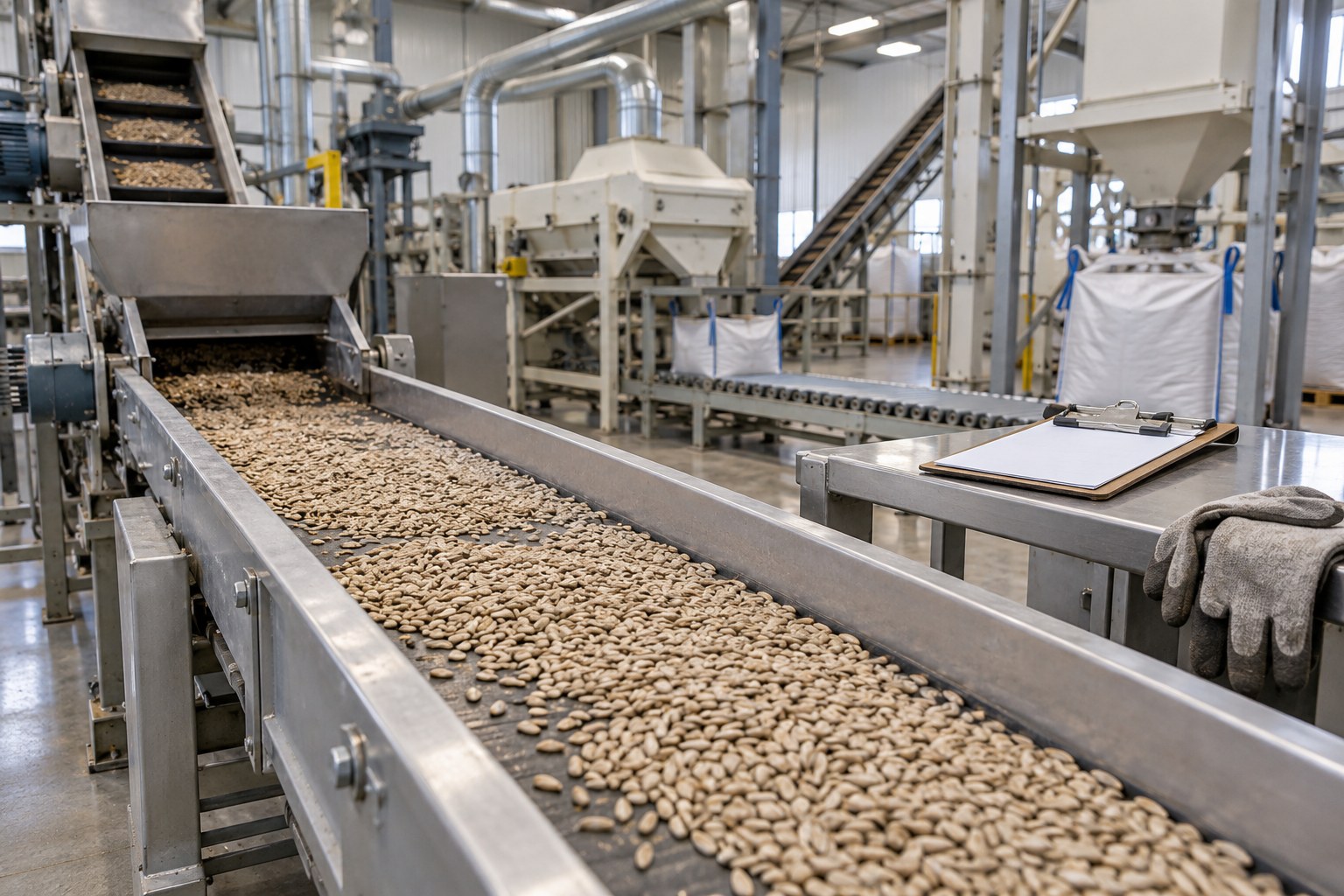
MERCY SPUR, Nebraska — A sunflower seed plant has stopped calling employees by name over its production floor after cleaned kernels rotated on idle conveyor belts toward the workers being addressed. Two finished lots are being held for inspection, though the cooperative said the seed remains dry and shows no sign of contamination.
Mercy Spur Seed Cooperative cleans, grades and bags planting seed from farms in three counties. During a maintenance stop Friday, 17 employees stood beside line two while mechanic Cal Rusk tested an air separator. Supervisor Mina Orr called packer Lena Voss to the control panel, and loose kernels across the stopped belt turned their pointed ends toward her.
The motion passed through several hundred seeds in a narrow wave. None rolled more than half an inch, and seeds touching the belt rails pivoted in place. When Voss walked behind the separator, the pointed ends followed her until she left the room. They then settled in mixed directions without the belt or fan restarting.
Workers repeated the call with three volunteers. A spoken first name caused kernels on open belts, sample trays and the floor sweep pile to orient toward the corresponding person. Surnames worked when they identified one employee in the building. Nicknames produced no response unless the worker regularly answered to them on shift.
Plant manager Dale Cole stopped the tests after two employees declined to participate and others began calling names from different corners. The cooperative covered exposed seed, swept the floor by hand and shifted instructions to numbered radio call signs. Production resumed on line one Saturday using a lot that had remained sealed during the event.
Sunflower kernels can rotate when vibration, static charge or directed air acts on their uneven shapes, said Nessa Bell, an agricultural engineer who inspected the equipment. The maintenance stop left compressed-air valves open, and workers moving nearby could transmit vibration through the steel floor. Bell said those forces would not ordinarily select one person's changing position after a name was spoken.
The held lots amount to 38,000 pounds intended for spring contracts. Buyers have been notified of a delay, and hourly employees remained on paid work during the inspection. Cole said the plant will test germination and purity as usual but will not market the event or sell small samples to people asking whether the seed recognizes them.
Employees described the movement as more intrusive than dangerous. Voss said she disliked seeing floor sweepings follow her around the room but was more concerned about coworkers testing names without permission. The cooperative added a rule against using family members' names and asked staff not to bring photographs or recordings onto the floor.
Bell disconnected the separator, grounded the conveyor and placed 200 kernels on a rubber mat in the break room. Names spoken there produced no movement. When the tray was carried back across the production threshold, the kernels turned toward Cole before anyone spoke. He had entered through a side door and was standing behind an opaque dust curtain.
At the end of Saturday's shift, employees clipped their numbered call cards to the inspection rail and left together. Seventeen small groups of kernels lay beneath the cards, each pointed toward the door used by the worker assigned that number. Beneath one unassigned card, a separate group faced the locked sample archive. Cole said the archive contains retained seed but no workspace, and no employee was inside when he checked it.