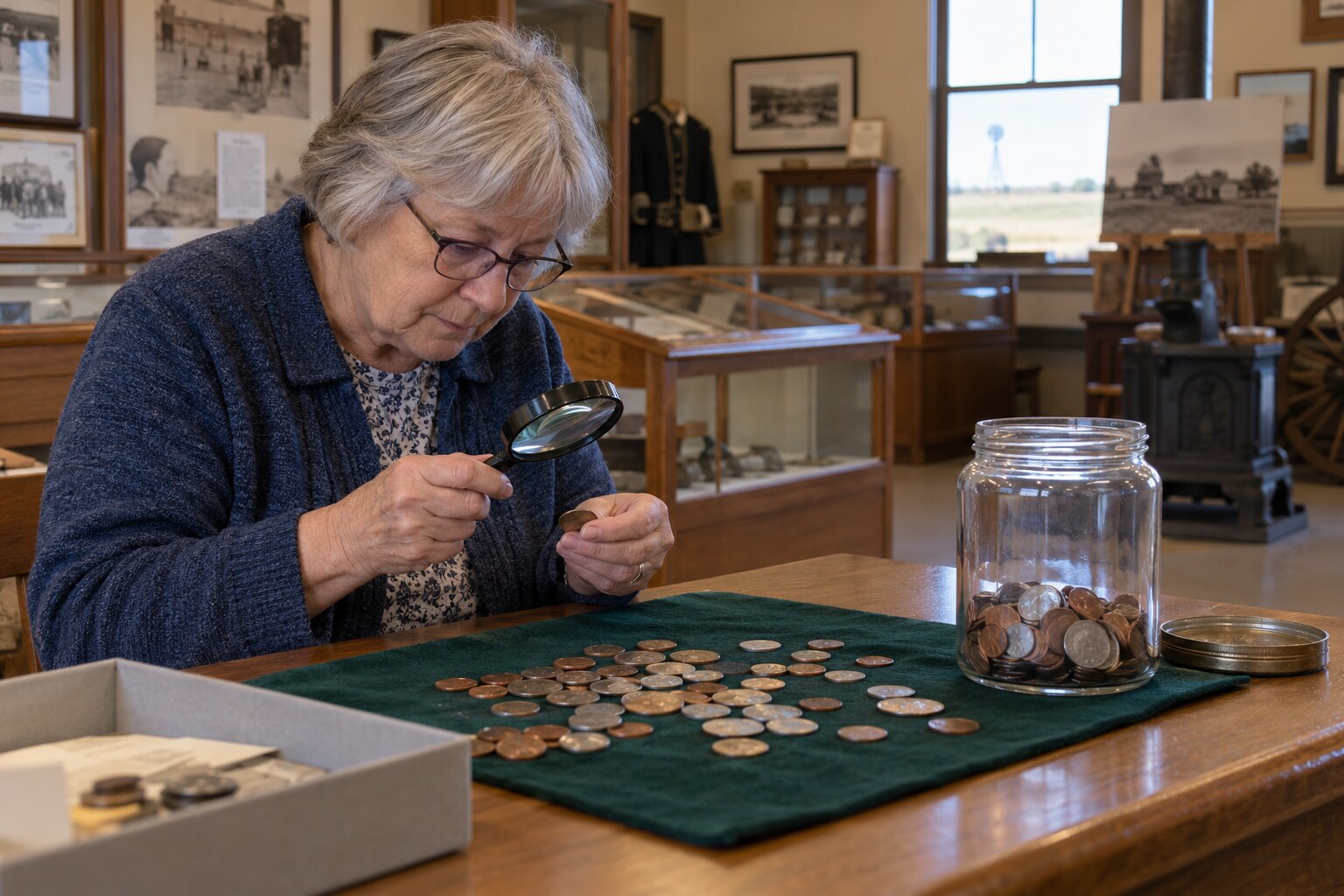
MESA LAKE, North Dakota — The county historical society has removed a hands-on coin display after visitors reported that dates on pennies, nickels and quarters changed to years associated with memories they described while handling them. The museum remains open, but donations are being accepted by card or in sealed envelopes until the jar can be reviewed.
The display was added for Saturday's local-history day and invited visitors to compare recent pocket change with coins used in Mesa Lake stores during earlier decades. A glass jar held about $63 contributed by board members and guests. Volunteers placed magnifiers beside it and asked people not to remove money from the table.
The first change involved a 2019 quarter held by retired teacher Alma Rusk. While discussing the winter she began teaching, Rusk watched the final two digits become 74. The portrait, lettering and scratches did not move. When she handed the coin to volunteer Nessa Vell, the date returned to 2019 before changing to 1986 as Vell described opening the museum's first exhibit.
More than 20 visitors tried other coins before staff closed the table. A nickel became 1952 while one man recalled his parents' wedding and 2003 when his daughter held it. Two pennies showed years before their current shield-back design existed. The metal did not soften, and visitors could not feel the numerals changing beneath their fingers.
Society director Iva Pell said the activity began as curiosity but quickly became intrusive. People asked relatives to hold coins while naming deaths, marriages and accidents. One visitor who could not recall the year of a house fire became upset when three coins displayed different dates supplied by family members. Pell ended the demonstration and returned admission fees to anyone who wished to leave.
A coin's date can appear different under uneven tarnish or magnification, said dealer Tomas Wren, who examined six pieces after the museum closed. Altered and novelty coins also circulate. Wren said these examples retained ordinary weight, edge wear and metal composition, but several carried dates inconsistent with their design, including a shield penny marked 1961 and a state quarter marked 1977.
The society photographed each coin beside an identification card, then assigned two volunteers to view them separately. Their written dates disagreed on 31 of 46 coins. Digital photographs also changed: a file made while Rusk held the quarter shows 1974, while the same file viewed after the coin was sealed shows 2019. The file's creation time and other pixels remain unchanged.
The display had been expected to fund archival boxes for the winter. Board treasurer Mara Cole said the society will treat the full amount as restricted until contributors can request its return. Because individual donations were not recorded, staff will honor good-faith claims up to the amount a visitor says was given. No coin will be sold or added to the permanent collection.
Several residents asked the museum to reopen the table by appointment. Pell declined, saying the society collects accounts of the past but does not require visitors to prove personal histories to a piece of metal. She moved the jar to a locked cabinet and posted a brief notice that the interactive portion of the exhibit had ended.
Custodian Len Marr did not handle the coins and asked not to be shown their dates. As he carried the display case to storage Monday evening, the loose coins in the sealed jar shifted onto their edges without falling against one another. They remained upright while he crossed the room, their dated faces turned away from him. After the cabinet was locked, one coin slowly settled flat. The others were still standing when staff opened the museum Tuesday.