MILLHAVEN, Minnesota — The Millhaven Community Choir has postponed its fall concert by one week while members revise the closing piece, after singers repeatedly entered on a vocal line that does not appear in the score. The change affects one Saturday performance at the municipal auditorium. Tickets will be honored on the new date, and the rest of the program remains unchanged.
The disputed passage occurs in the final minute of a short work commissioned for the town's centennial in 1989. The published arrangement divides the choir into soprano, alto and a combined tenor-bass part. During rehearsal last Tuesday, director Lenora Pike stopped the ensemble after hearing another line beneath the written chord. She asked anyone singing from memory to mark the place and begin again from the preceding page.
On the second attempt, the same lower melody returned. No member acknowledged adding it. Pike divided the choir by section and rehearsed each group alone; all three read their printed parts correctly. When the full group resumed, eleven singers later said they found themselves following the additional line without deciding to leave the page.
The choir is an amateur organization with 34 active members. Some read music fluently and others learn from rehearsal recordings. Pike said unplanned harmonies are common when singers know one another's habits, especially in a familiar room. What led her to delay the concert was not the extra harmony itself, but the members' inability to sing it on request outside the ensemble.
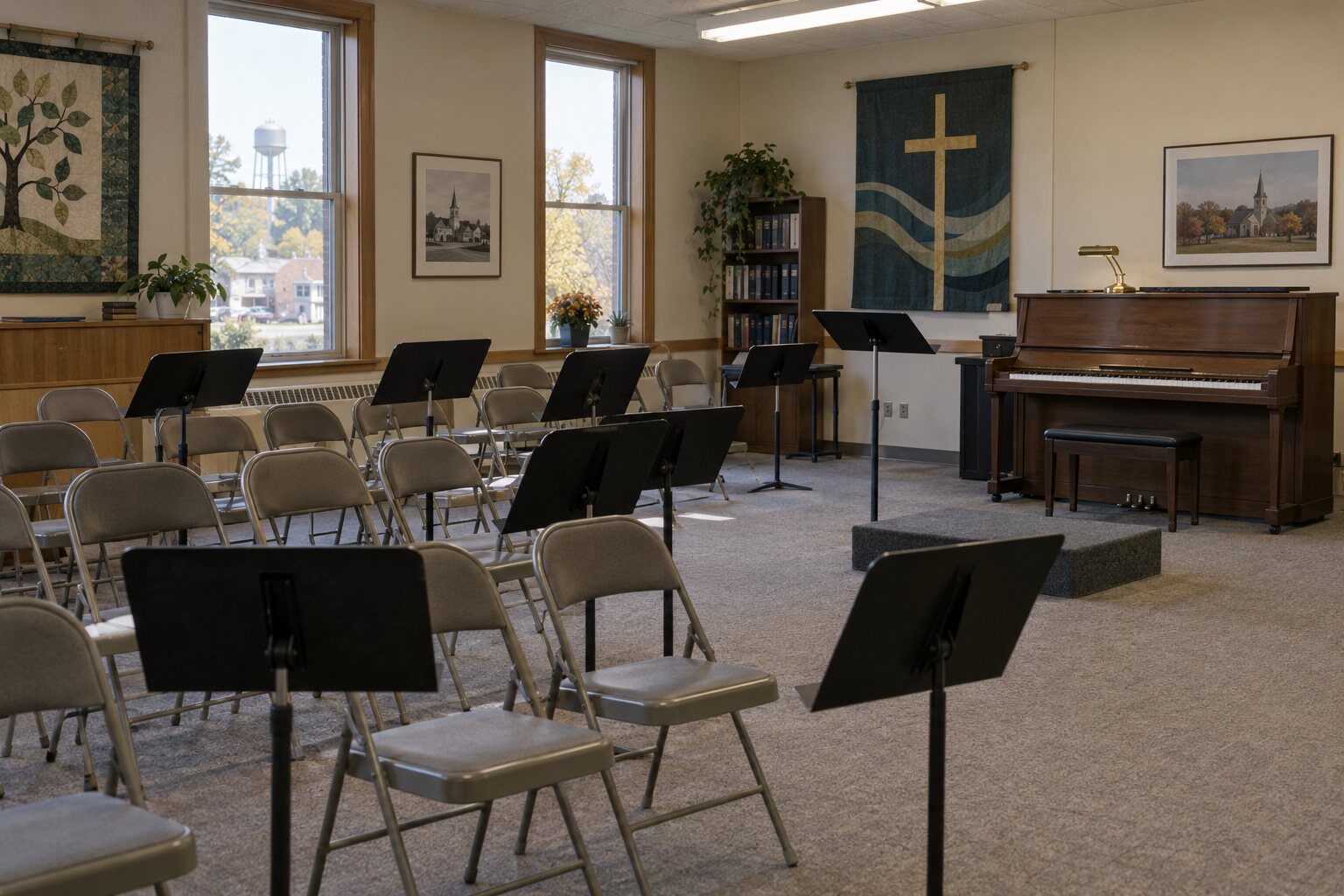
The Register attended a rehearsal Monday at the parish hall where the choir practices. Pike began with scales, then worked through the disputed ending in sections. Nothing unusual was heard during the sectional work. When all 29 singers present began together, a narrow descending line entered after the word 'home' and continued for six measures. Several members looked down from their folders while singing it.
Pike stopped the group before the final chord and asked the singers to write the notes they believed they had used. The resulting pages did not agree. Some marked four descending notes, others a repeated interval, and seven wrote that they could hear the line but had not sung it. Choir accompanist Marvin Rohe said his hands remained on the printed piano reduction, which contains no independent part at that point.
A rehearsal recording made from the back of the room contains the written choir and an intermittent tone close to the pitch described by Pike. Audio technician Celeste Ward cautioned that the phone compressed the sound and may have combined nearby voices into a false line. She offered to record the next rehearsal with separate microphones, but said individual tracks would still not establish what any singer intended to produce.
The delay has practical costs. The auditorium charged the choir $180 to move its reservation, and a school string quartet cannot appear on the replacement date. Board treasurer Anika Bell said members voted to pay the students their original honorarium. The centennial piece will remain on the program if Pike can prepare a version the singers can follow deliberately.
Retired music teacher Paul Gentry, who sang in the 1989 premiere, reviewed the original score and the composer's handwritten corrections. He found no missing page or optional fourth part. Gentry remembered the ending as difficult but ordinary. He said the present line does not resemble an alto error or the piano bass, and declined to name it from a phone recording.
At the close of Monday's rehearsal, Pike collected every marked score and issued clean photocopies for home practice. Members were asked to sing only what appears on the page. Three people remained in the hallway while the chairs were stacked. As the custodian turned off the rehearsal-room lights, all three quietly repeated the descending line. Asked which section had given them the notes, each said they had been waiting for someone else to finish humming.