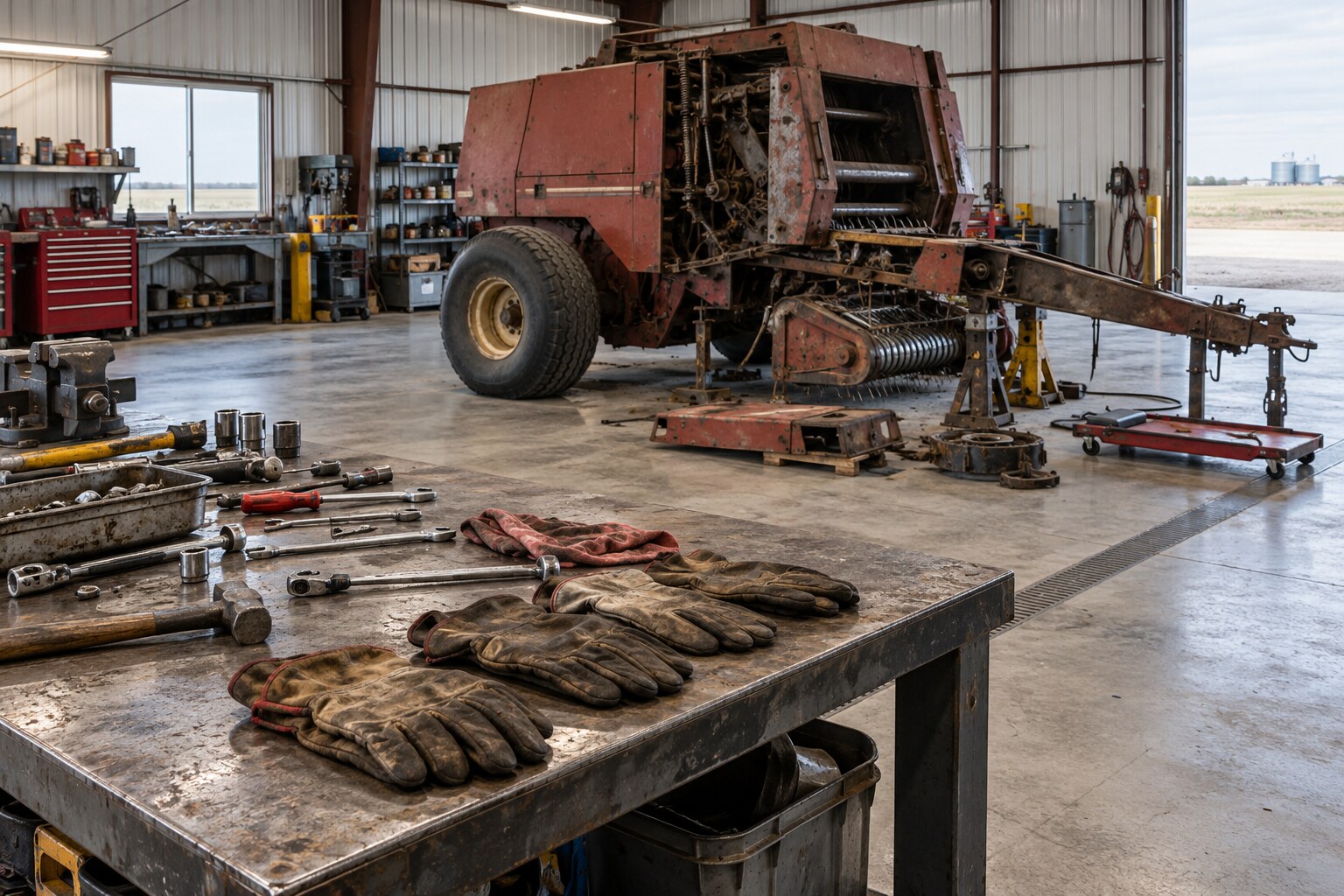
MINDEN SPUR, Nebraska — A farm-equipment shop has replaced its shared work gloves and begun reviewing 14 recent repairs after employees said several old pairs enabled them to perform procedures they had never learned. The machines involved remain in service, and the shop has reported no failures or injuries.
Venn Implement keeps loaner gloves beside the wash sink for drivers, seasonal workers and mechanics whose own gear is wet. Most accumulated over years as employees left or bought new pairs. Shop manager Ross Venn said no names were recorded, though the gloves showed distinct repairs, shortened fingers and wear marks from particular tools.
The review began during an urgent repair to a 1971 square baler. Parts clerk Mina Olt, who has not worked as a mechanic, put on a russet pair to help hold a work light. She then asked for two wrenches and reset the machine's knotter timing without consulting a manual. The baler completed 240 test knots without a miss.
Olt said she could not describe the adjustment afterward. While wearing the gloves, she knew where to brace her wrist, how far a worn cam could travel and which bolt would feel tight before it seated. After removing them, she could identify the parts but could not repeat the sequence. Her hands remained sore in places where the gloves had old calluses.
Other employees recognized the repair as the method used by Arlen Choate, a mechanic who retired from the shop in 2003 and died nine years later. His daughter said he favored russet gloves and had shortened the right index finger after an injury. Venn said the pair may have been Choate's, but the shop has no inventory proving it.
The effect was not limited to one pair or one worker. An apprentice wearing black gauntlet gloves brazed a hairline crack inside a corn-head gearbox without scorching the nearby seal. A delivery driver in a gray pair adjusted an obsolete diesel governor by listening through a wooden dowel. Both jobs were later inspected by certified mechanics and left unchanged.
Employees did not report names, voices or memories attached to the work. They described pressure in the palms and a preference for tools they would not ordinarily choose. Mechanic Tessa Brill said the gray gloves kept turning her left hand toward a drawer that once held gauges discarded before she joined the shop. When she found a comparable gauge in storage, her hands completed the adjustment before she understood the reading.
The shop's insurer asked Venn to stop assigning work on the strength of the gloves and to document who inspected each repair. Occupational safety consultant Pilar Ahn said even correct work presents a liability when an employee cannot explain or reproduce the procedure. She recommended treating the episodes as an unknown impairment rather than as training.
That decision has frustrated some customers waiting through the late harvest. Farmer Cal Ose said the knotter repair saved him a week when no replacement assembly was available. He also supported the review after Olt could not show him what she had done. “Good work ought to be teachable,” Ose said. The shop has offered free follow-up inspections on all 14 machines.
Venn sealed nine old pairs in clear parts bags and placed them in a locked steel cabinet. Employees received new gloves in standard sizes, and the shared bench was cleared. Choate's daughter declined the possible pair, saying she remembered her father destroying worn gloves so nobody would trust leather that had become too thin.
At lunch Wednesday, apprentice Lark Benn removed her new gloves before eating and began bending a length of baling wire beneath the table. Brill noticed that Benn's bare fingers were making a five-loop splice formerly used on canvas elevator belts, equipment the shop has not serviced since 1996. Benn finished the splice neatly, set it beside her plate and asked who had put it there.