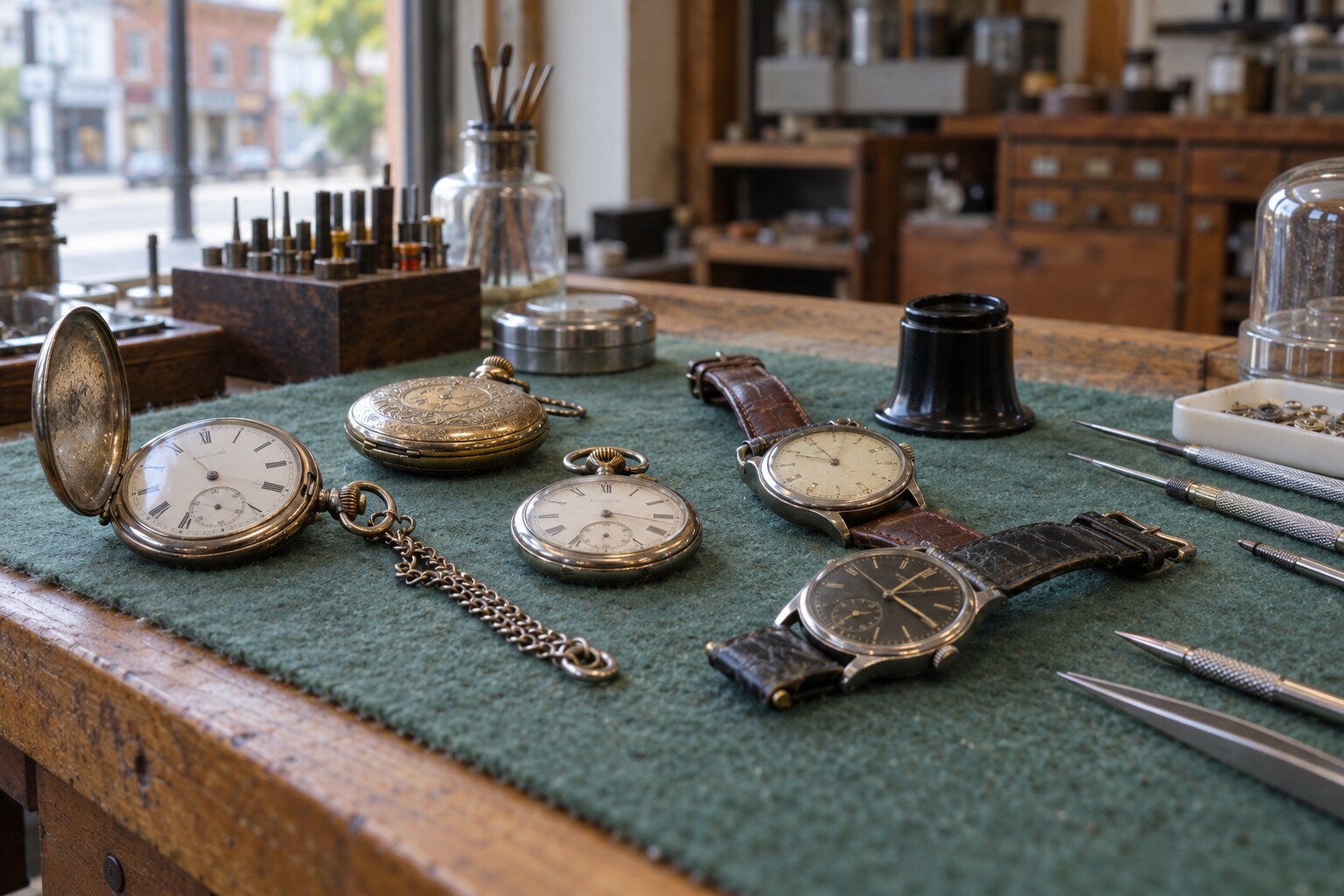
MORROWFIELD, Pennsylvania — A downtown watch shop has returned 11 mechanical watches from a family estate after relatives said the repaired pieces stopped at times connected to private memories of their former owners. Penn Street Watch & Clock refunded the cleaning charges and has declined further work on the collection, owner Samuel Dace said.
The watches belonged to Leon and Margaret Harmon and several members of their extended family. They had been stored together in a cedar chest after the Harmons' house was sold. Estate executor Helen Cross brought them to the shop in September so working pieces could be divided among three adult children and two grandchildren.
Dace cleaned the movements, replaced two cracked mainsprings and installed new crystals on three wristwatches. Each piece then ran within ordinary tolerances for at least 48 hours on a padded bench. None contained an alarm, electronic component or unusual engraving beyond initials and service dates.
The first complaint involved Leon Harmon's stainless wristwatch. His daughter Mara Cross wound it at the counter, and the hands stopped at 6:17 after less than a minute. She identified that as the time a basement boiler burst during a Christmas gathering in 1994. Dace restarted the watch, which ran normally until Cross held it again.
Other relatives reported different times on different watches. A small gold watch stopped at 10:42 for Margaret Harmon's sister, who associated the time with a late telephone call after their mother's death. A railroad watch settled at 2:08 for one grandson and 4:31 for another. Both men said the times were familiar but declined to describe them for the estate file.
Mechanical watches can stop when the case is tilted, warmed by a hand or exposed to magnetism, said horologist Priya Solberg, who is not affiliated with the shop. Old oils and worn pivots may also produce intermittent faults after a movement appears stable. Solberg said those problems would not ordinarily cause several movements to select repeatable minute positions for particular handlers.
Dace tested the collection with four people who did not know the Harmon family. The watches continued running. He then placed the pieces behind glass and asked relatives to choose one without touching it. Two watches stopped while family members stood at the counter, though Dace said the test was informal and the pieces had already developed uncertain service histories.
The delays complicated an otherwise modest estate. Cross had planned to distribute the watches according to age and appraised value. One sibling instead asked for the watch that stopped at the time of a childhood accident, while another objected that assigning the pieces by remembered events would turn family grief into evidence. The watches account for less than $4,000 of the estate's estimated value.
Penn Street returned the watches in separate boxes Friday and provided a written record of the repairs. Dace marked the movements as operational at return but did not certify their timekeeping. Cross said the family will keep the boxes closed until a probate meeting later this month. No watch will be sold while the distribution is disputed.
Margaret Harmon's plain silver wristwatch was the only piece accepted immediately. Her widower's sister, Ruth Harmon, said it repeatedly stopped at 7:03, the time Margaret came through the kitchen door after her weekday shift at the county laundry. Ruth described the time as unimportant except that the household could set supper by it for nearly 30 years.
Ruth placed the watch on her mantel Friday without winding it. At 7:03 Saturday evening, she heard its movement begin from across the room. The second hand advanced for seven minutes and stopped at 7:10, when Margaret normally finished washing and came to the table. The crown remained fully down. Ruth said she will keep the watch where it is and has not wound it.