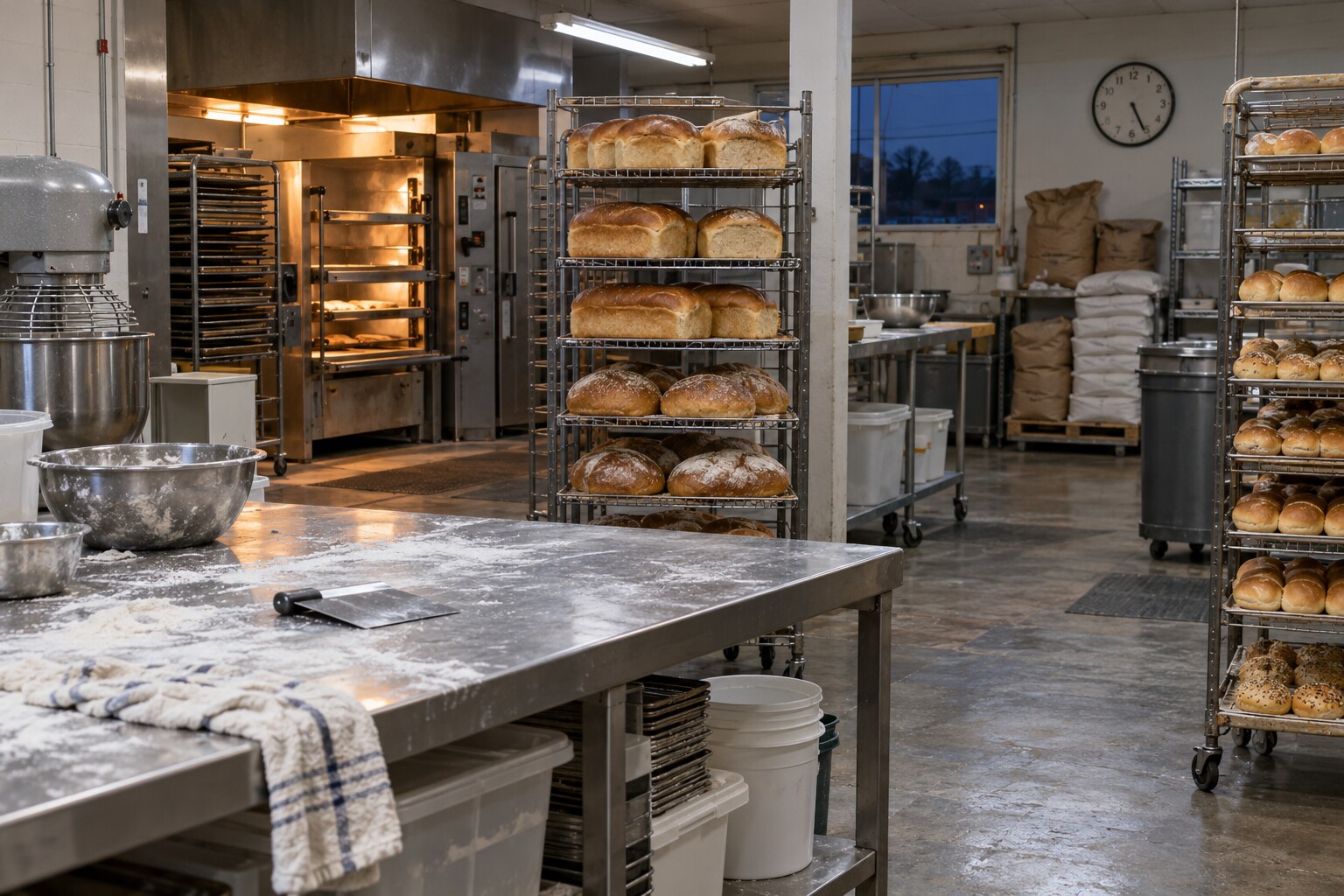
NETTLE CREEK, Nebraska — A family bakery has shortened its overnight production shift after three employees slept for nearly two hours while separately experiencing what they described as the same completed work period. When they woke, the scheduled bread was cooling on racks, although cameras showed no one using the mixers or ovens.
Nettle Creek Bread supplies two groceries, a school cafeteria and several restaurants. Its Sunday production list called for 96 sandwich loaves, 14 rye rounds and 12 trays of dinner rolls. Owner Maren Till said the shift began normally at 10 p.m., with employees weighing flour and preparing yeast before the first mix.
At approximately 12:40 a.m., bakers Luce Hamner, Dev Orra and Whitney Sael sat at separate tables during a scheduled break. Each later said the room became unusually quiet, but none remembered deciding to sleep. The bakery camera shows them lowering their heads within about 20 seconds of one another and remaining seated until 2:31.
All three recalled continuing to work. Hamner remembered mixing the rye dough, Orra divided rolls and Sael loaded the deck oven. Their descriptions agreed on minor interruptions, including a dropped scraper, a jammed rack wheel and a delivery van passing the rear door at 1:18. The van appears on exterior video. Nothing inside the production room moves when it passes.
When the employees woke, every item on the list had been baked in the expected quantity. The loaves were evenly colored and carried the shallow scoring patterns each baker ordinarily uses. Ingredients had been consumed from open bags and measured bins, but the floor, tables and tools remained as they had been before the break.
Till discarded products intended for the school and notified commercial customers before morning deliveries. The bakery offered replacements from a daytime batch and refunded two prepaid orders. County environmental health staff advised that food made without an observed handling record should not be sold, regardless of its appearance or internal temperature.
Sleep can incorporate workplace routines with convincing detail, especially among employees accustomed to repetitive overnight tasks, said Margo Ehn, a sleep clinician who reviewed the workers' accounts with their permission. Ehn said fatigue could explain a shared period of sleep and similar dreams. It would not account for finished bread unless another person entered or equipment operated automatically.
The bakery's ovens require manual loading and were not fitted with delayed-start controls. Temperature logs show both deck ovens remained below 90 degrees during the period. A portable thermometer placed inside one warm loaf at 2:38 read 184 degrees. The fire suppression monitor recorded no heat event or exhaust-fan operation.
Police reviewed exterior doors after Till requested a trespass check. The rear and customer entrances stayed locked, and flour dust across the emergency exit threshold was undisturbed. No theft or property damage was found. The bakery's insurer asked Till to retain the video, ingredient records and several frozen loaves but has not classified the event as a covered loss.
The three employees returned for daytime duties and reported no illness. Each had soreness in the hands and shoulders consistent with a full production shift. Orra also found a narrow oven burn on the cuff of his work shirt, though the skin beneath it was unmarked and the camera shows him seated away from the ovens.
Till will schedule two shorter shifts and keep a supervisor present overnight while the equipment is inspected. The retained loaves were sealed in a chest freezer Saturday. By Sunday morning, the freezer was still at zero degrees and the packaging was frosted, but the bread inside could be pressed flat through the plastic and slowly rose again when released.