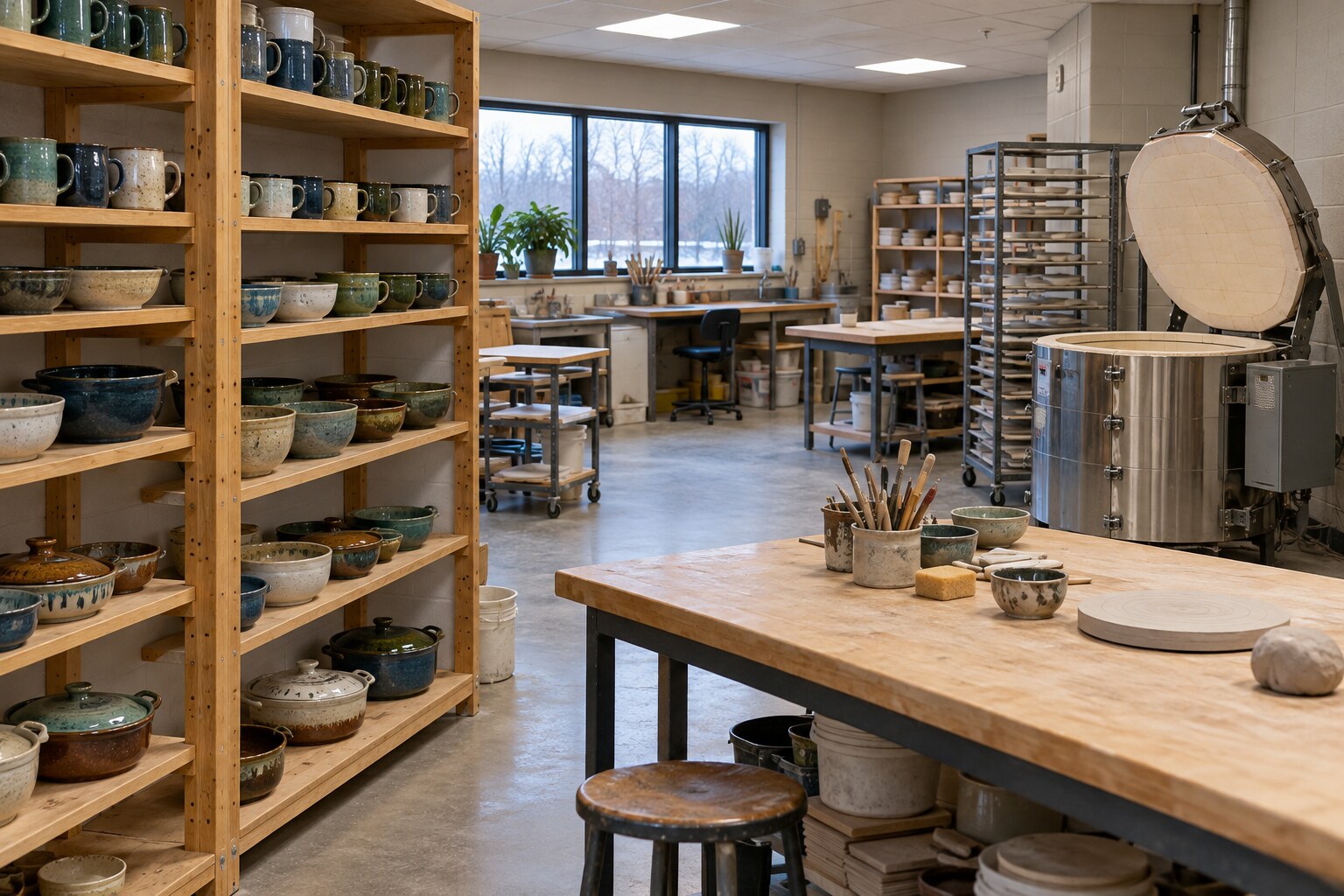
NORLEY, Minnesota — A community ceramics cooperative opened its annual fall sale Sunday after setting aside 19 bowls, mugs and lidded dishes that carried the aromas and tastes of meals despite having held no food. The studio is offering refunds on work from the same kiln load while a ceramic engineer reviews its clay, glazes and firing records.
Norley Clay Cooperative occupies two former classrooms in the town's recreation center. Members began arranging 240 pieces for the sale Friday evening when instructor Lorna Ahn lifted a stoneware bowl and smelled browned butter and sage. The bowl was dry, room-temperature and newly washed with unscented detergent after firing.
Ahn asked three members to examine it without describing what she noticed. All named the same smell. When water was poured into the bowl, it tasted faintly of squash soup and retained the flavor after being transferred to a glass, according to the members. Health officials advised them not to repeat the test and recommended that affected pieces be withheld from use.
The vessels do not carry one shared scent. A blue mug made by college student Priya Sorn smelled of cardamom tea with milk. Sorn said she had intended to prepare that tea for her father during his October visit, which was canceled after a flight delay. She had not discussed the plan at the studio and had used the same clay and glaze on two cups fired in August without unusual results.
Other members described tomato sauce, scorched rice, fried lake fish and a birthday cake with almond icing. The impressions were specific enough that two makers recognized recipes from their families. Several pieces carried nothing identifiable. A set of four nesting bowls gave off the odor of wet wool, and its maker said no meal came to mind.
Studio director Edwin Pell said the affected work came from a single electric firing completed Wednesday. The kiln reached 2,232 degrees and cooled on schedule, according to its controller. No food is permitted in the glazing room, and the building's cafeteria has been closed for renovation since June. Cleaning supplies, glaze ingredients and clay batches are stored in separate cabinets.
City sanitarian Maris Cole found no residue on the worktables or kiln shelves and no evidence that anyone applied flavoring after the firing. She collected swabs and water samples but said the county laboratory is designed to detect known contaminants, not to evaluate a reported taste without a chemical source. She asked the cooperative to label the pieces as nonfunctional until testing is complete.
The sale proceeded with unaffected work moved to the recreation center lobby. Purchasers received care cards and the kiln date for each piece. Proceeds support free youth classes and replacement kiln elements. Pell said delaying the full sale would have left several members unable to cover material fees, while offering the reviewed vessels would have treated an unexplained condition as a novelty.
For some members, the withheld work has been difficult to dismiss. Retired nurse Alice Ruun made a small covered dish for a neighbor recovering from surgery. When the lid is lifted, Ruun said, it smells like the chicken and dill dumplings her late sister prepared on Sundays. Ruun knows the recipe but has not cooked it since her sister died, and the dish was never taken home.
Ceramic engineer Hal Brevik will inspect whether porous clay, carbon deposits or volatile compounds could account for the reports. He said a properly fired stoneware body should not hold cooking odors that were never introduced. The cooperative has retained the full kiln load, including pieces with no scent, along with sealed clay and glaze samples from the same batches.
After the sale closed, Pell placed the covered dish in an empty metal cabinet and locked it. Forty minutes later, the cabinet was warm near the middle shelf though the room and the dish remained cool. When he opened the door with Cole present, a dusting of flour marked five fingertips on the cabinet floor. Ruun's dish was still glazed shut at one edge, as it had been when it left the kiln.