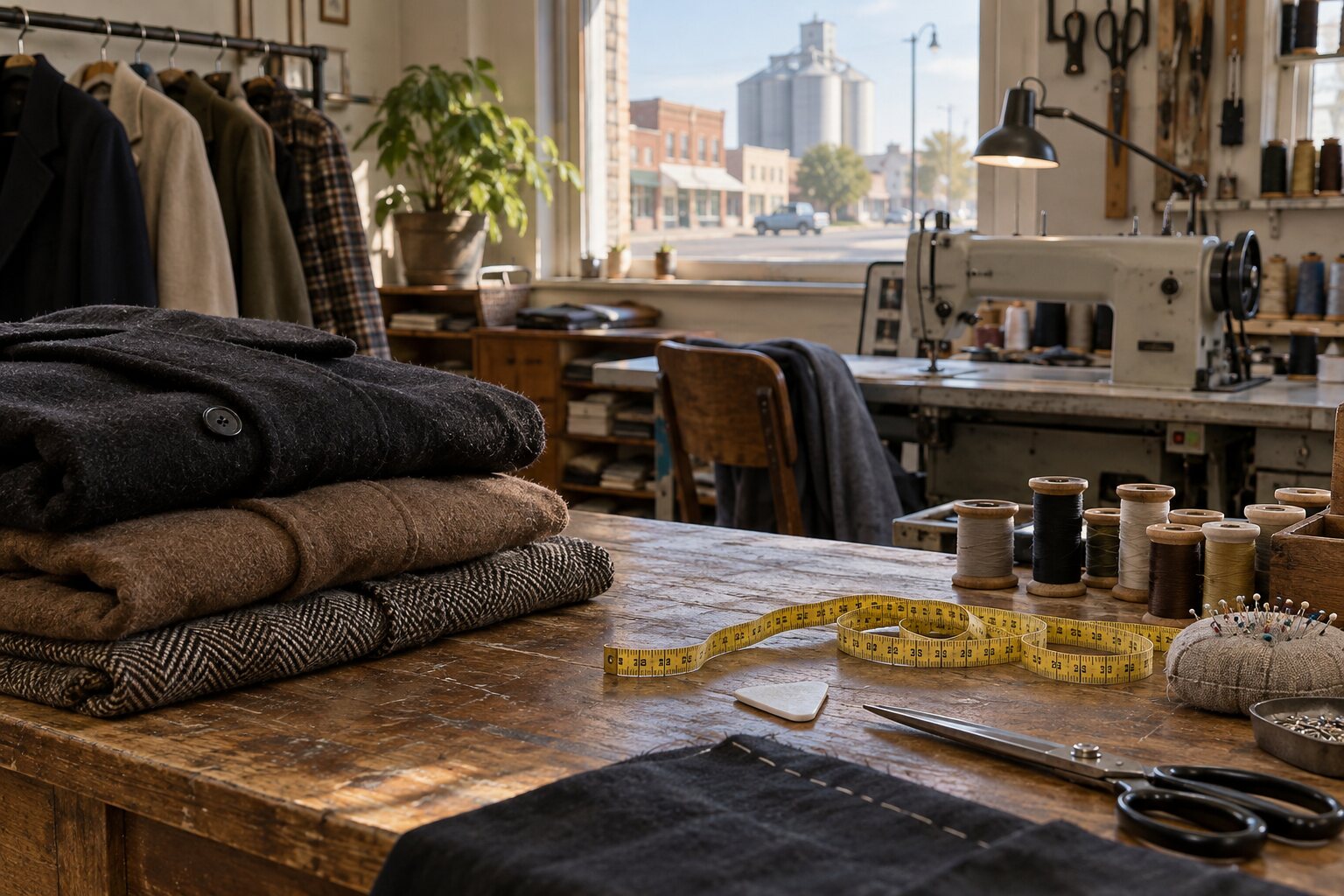
NORTH PLATTE, Nebraska — A downtown alterations shop has asked six customers to inspect garments that appear to have been mended before employees began the work. Prairie Hem remains open, but owner Dalia Mercer has stopped accepting rush repairs until she can separate completed jobs from clothing that arrived in its original condition.
The first garment was a brown wool coat left Friday for a new lining. When Mercer removed it from the intake rack Monday, she found the torn cuff closed with small cross-stitches and the loose button secured. The lining had not been touched. The shop's work ticket lists both minor repairs, but Mercer said the marks beside them were still blank.
Five more pieces on the rack had similar work: a reinforced pocket, a shortened strap, two repaired hems and a child's jacket with a split seam closed beneath one arm. None of the jobs matched the colored thread loaded in the shop's three machines. Mercer and employee Sonya Brill said they had locked the workroom Saturday afternoon and did not enter on Sunday.
There is no sign of a break-in, according to the building owner. The rear door uses a shared hallway, and two other tenants hold keys to the exterior entrance, but the shop itself was locked when Mercer arrived. She has not filed a police report because nothing was taken and the garments were not damaged. She notified her insurer and photographed each item before contacting its owner.
The repairs are competent but inconsistent. Some use machine stitching, while others were made by hand with cotton thread Mercer no longer stocks. Tailor Abram Koenig examined the coat at the Register's request and said the cuff had been darned from inside, a slower method that leaves little visible work on the surface. He could not determine when the repair was made.
Customer Ellen Voss said the cuff had been torn for at least two winters. She recognized the crossed pattern as the way her mother repaired work clothes, though she did not consider that proof of who made it. Her mother died in 2018, and the sewing basket from her home is kept by Voss's sister in Wyoming. Voss agreed to leave the coat at the shop until the insurer responds.
Other customers described no such connection. A ranch employee whose canvas jacket was repaired said the new seam was tighter than he preferred. The parent of the child's jacket said she had expected an ordinary machine stitch and did not know anyone who sewed the small overlapping loops now beneath the sleeve. Both asked Mercer to keep the original repair rather than remove it.
Mercer compared the thread with remnants saved from prior jobs. One gray strand matched a spool bought at an estate sale last year, but the spool is still wrapped and stored in a glass cabinet. The blue cotton used on the child's jacket is a size common before polyester blends became standard, Koenig said. Similar thread remains available through specialty suppliers.
The shop has installed a temporary camera facing the work rack and will place each new garment in a numbered cloth bag. Mercer said the added steps will slow routine hems by about a day. She will not charge for the six unexplained repairs, although four customers have asked her to proceed with the work they originally ordered.
On Tuesday afternoon, Mercer opened the brown coat to prepare the lining estimate. Sewn flat inside the repaired cuff was a paper thimble pattern cut from a grocery advertisement. The paper was brittle and carried a price for coffee that neither Mercer nor Voss remembered seeing in recent years. Voss took a photograph and asked that the pattern remain where it was. The coat is still hanging on the intake rack, its unfinished lining visible through the open front.