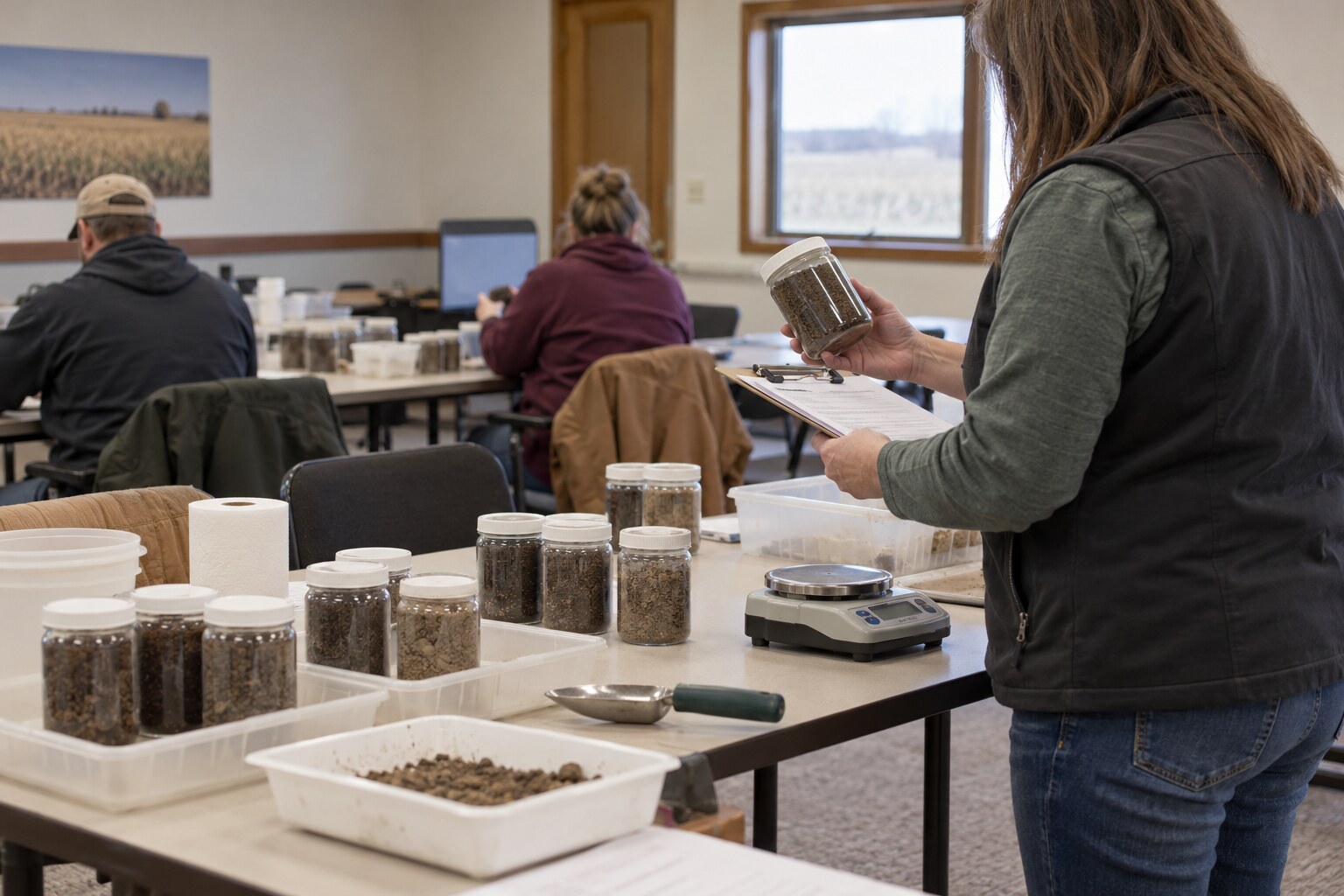
ORIN FORK, Nebraska — The county extension office has postponed a soil-health workshop after dry field samples produced rain inside sealed jars and overflowed across two meeting tables. The office says the water is not contaminated, but moisture readings from the affected samples can no longer be used for fertilizer or planting recommendations.
The Monday class was intended to help 27 growers compare soil structure after harvest. Participants brought quart and half-gallon jars filled from the top six inches of their fields, then delivered them to the office Friday for weighing and labeling. Extension educator Caro Venn stored all 42 jars in plastic trays inside a locked meeting room.
Shortly before the workshop, Venn saw a gray layer form above the soil in jar 8. Droplets appeared against the lid, fell in a narrow shower and darkened the sample without running down the glass. Within a minute, five more jars held moving clouds no wider than a hand. Their lids remained sealed and cool.
The first jars absorbed the water they produced. Jar 31, filled with compacted loam from a dryland corn field, continued raining until water reached the lid and forced itself through the threads. Staff collected about 1.6 quarts before the shower stopped. The jar contained less than a quart of empty space when delivered.
Participants were moved to the hallway while employees unplugged a projector and covered outlets. No one reported a shock or injury. The office canceled the demonstration rather than allow farmers to open samples that no longer represented field conditions. Registration fees will be applied to a November session or refunded.
The showers differed from jar to jar. Sandy samples released hard, brief drops that pitted their surfaces. Clay from a low field formed fog and a steady drizzle. Farmer Mel Orr said water from his jar smelled like dust after a June storm and carried two pale grass seeds of a kind growing along his south fence, though he had removed surface vegetation before sampling.
Warm air inside a sealed container can condense when the glass cools, said soil scientist Tessa Lorne, who examined the room. Organic material also releases water as it breaks down. Lorne said both processes move moisture already present in the sample; neither would normally produce more liquid than the jar's air and soil could hold or create visible falling droplets without wetting the glass first.
Routine testing found ordinary well-quality water with suspended soil minerals matching the respective farms. The samples contained no refrigeration pellets, absorbent gel or hidden inner containers. Room humidity rose during the event but returned to normal after staff moved the jars into separate lidded trays.
The delay leaves several growers without planned organic-matter comparisons before fall tillage. Venn offered to resample fields this week, but some farmers declined because recent rain would make the results difficult to compare with Friday's dry conditions. Others asked to keep the water. The office retained all liquid under the same temporary numbers as the soil.
By afternoon, the samples looked dry again and weighed within two ounces of their recorded intake weights. Jar 31 returned exactly to 4 pounds 2 ounces after staff had bottled its overflow. Venn repeated the weighing on two scales and added both readings to the custody sheet rather than adjusting the original entry.
At closing, the 42 jars sat under individual clear covers in the equipment room. A light rain began outside shortly after 5 p.m. None of the samples changed except one taken from a fallow field west of Orin Fork. Its soil lifted in small dry bursts against the glass while the roof above it grew quiet, leaving a sharp rectangular patch with no rain on the office shingles.