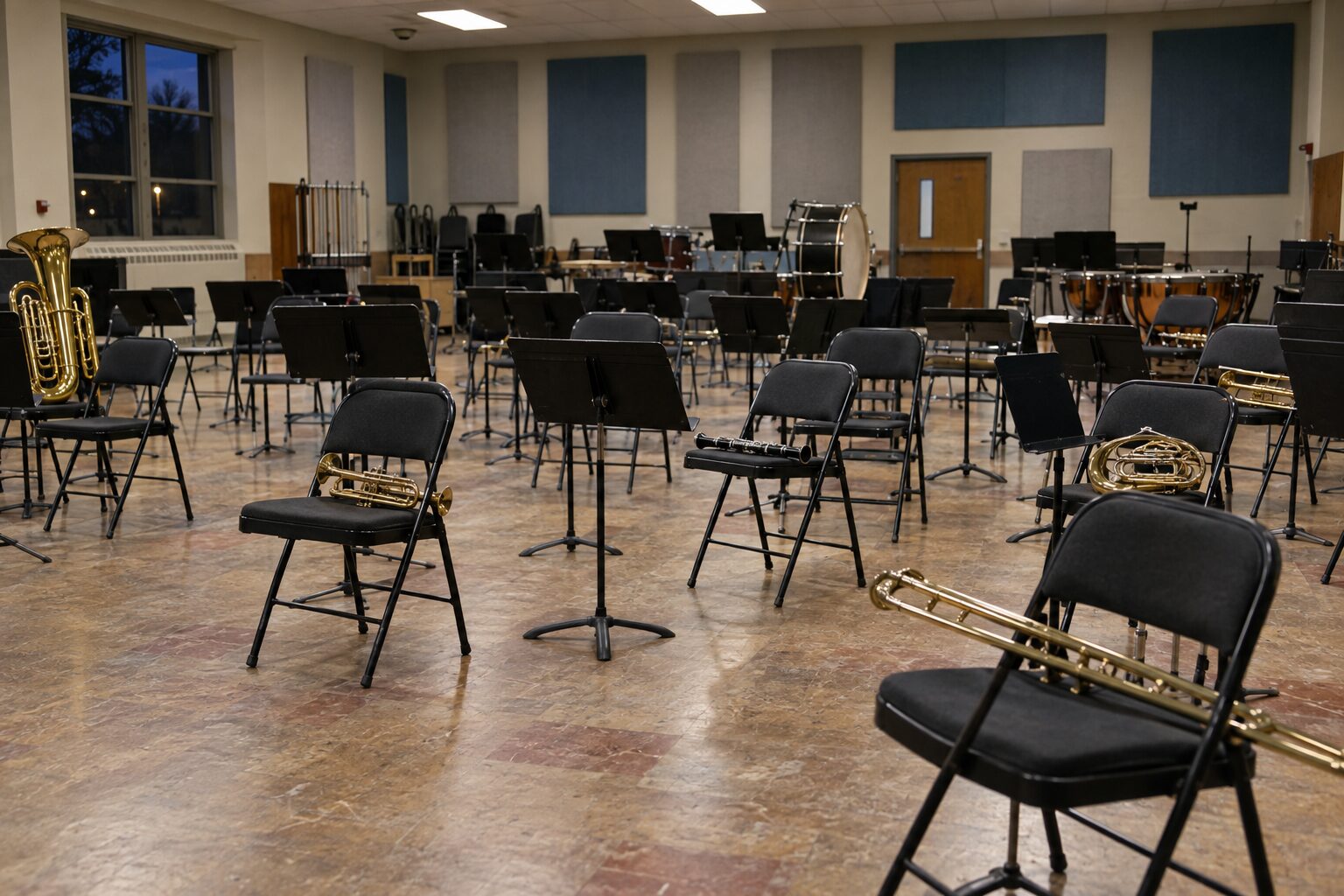
PINE ROOK, Minnesota — The Pine Rook Civic Band will move its next rehearsal to the high-school music room after players said a closing chord continued inside the municipal hall after they lowered their instruments. The ensemble's October 10 concert remains scheduled for the town auditorium, pending an inspection of the brass section and the rehearsal room's ventilation system.
The sound began near the end of Monday's practice during a slow arrangement of a state folk tune. Conductor Helen Voss cut off the final chord and saw the woodwinds and percussion stop together. The four trumpets, two trombones, horn and tuba also left their players' mouths, but a low blended tone remained in the room.
Voss initially thought an air handler or electrical transformer had started. She asked the musicians to stay quiet while custodian Omar Lind shut down the room's two ceiling units. The tone continued without a break and faded after about a minute. Players described pressure in their teeth and instrument mouthpieces but no pain or hearing loss.
The Pine Rook band is a volunteer group with 31 members ranging from high-school students to retired teachers. It rehearses in the former council chamber on Monday evenings and borrows some instruments from the school district. Members have played in the room for 14 years without a similar problem, Voss said.
Two musicians believed someone had continued playing as a prank. Video from a phone propped near the percussion section shows every player holding an instrument away from the face while the sound remains audible. The recording captures a stable low pitch and the squeak of chairs but does not identify where the tone originated.
Instrument repairer Calvin Ng examined the band's shared tuba, horn and two trombones Tuesday. Loose braces, stuck valves and sympathetic vibration can allow metal tubing to ring briefly after a note, he said. They do not normally sustain breath-driven tones once air stops moving. The instruments showed ordinary wear and no hidden reed, speaker or air canister.
Ng returned the instruments to their open cases and asked the players to reproduce the chord one at a time. None produced more than a short metallic resonance after the note ended. When all four instruments were sounded together in his workshop, they stopped normally. He recommended cleaning and new valve felts but did not remove them from service.
The interruption cost the band about 25 minutes of rehearsal and left two pieces unfinished. Voss said the alternate room is smaller, so musicians will rehearse in sections and postpone a planned open house. The concert program will not include the folk arrangement until the closing chord can be rehearsed without confusion.
Building staff inspected the municipal hall Wednesday morning. They found no fan running, audio equipment connected or utility vibration entering the wall. A piano tuner struck several notes while Lind listened from the corridor. The room returned to silence each time, though the brass storage cabinet vibrated lightly when the original ending was played on the piano.
Voss collected written accounts before members discussed the incident further. Most placed the tone below the played chord; three heard it above, and five heard no continuing note at all. Those five nevertheless reported feeling the floor or their front teeth vibrate after the cutoff. No member described words, melody or a request to continue playing.
The instruments are now stored in separate rooms at the high school. Lind said the rehearsal hall has been quiet during daytime use and will remain available for council committees. He has left the ventilation fans running overnight because the tone is less noticeable with ordinary background noise. When he switches the fans off to lock the building, the empty brass cabinet resumes humming at the pitch the band did not play.