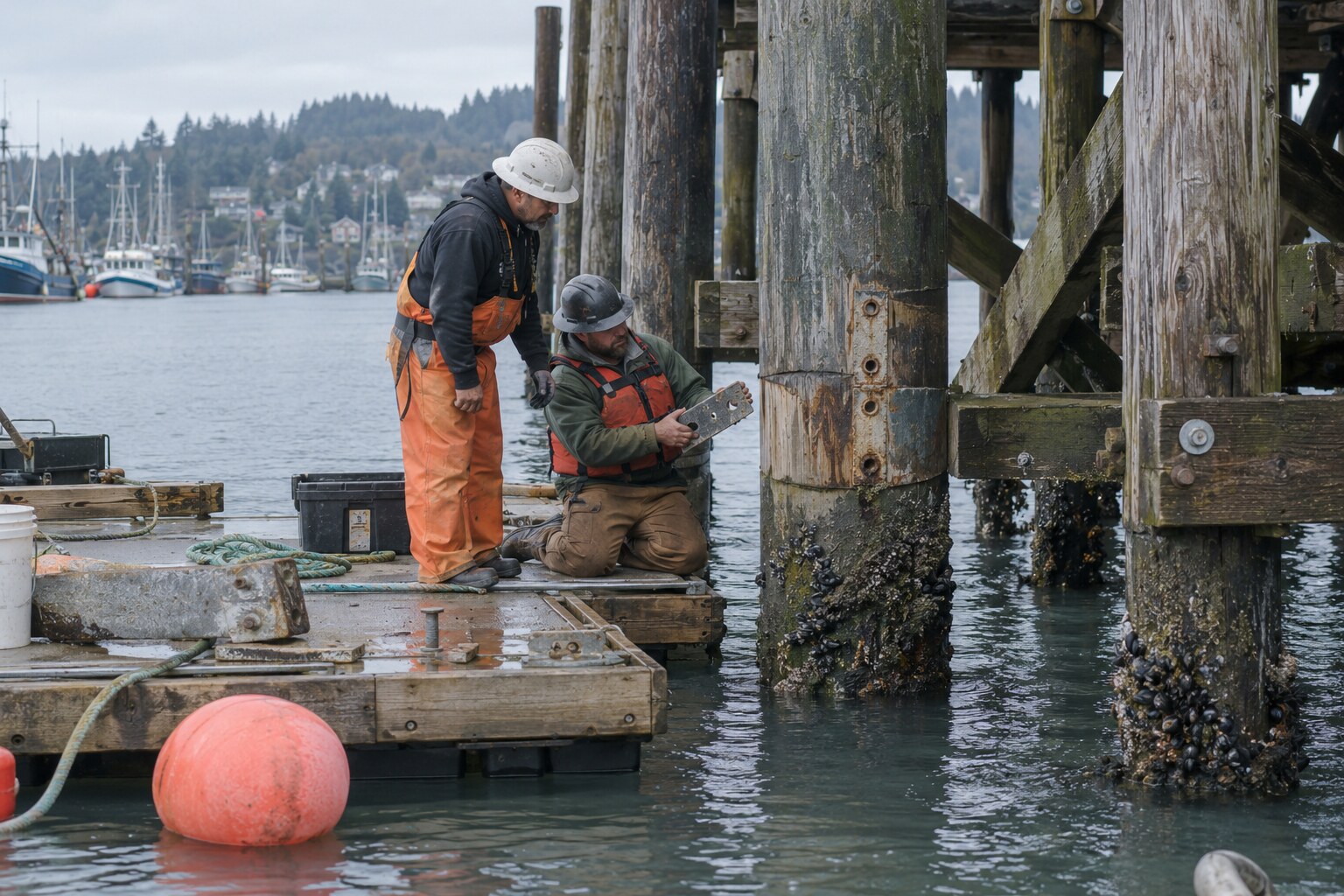
PORT ASTER, Oregon — The port has delayed repairs to its public launch pier after mussels, barnacles and dense fibrous growth formed hard plugs in bolt holes left open overnight. The launch ramp remains available, but pedestrians and boaters must use a temporary float on the east side while engineers inspect the living material.
The $74,000 project replaces 28 corroded steel fasteners and four brackets that connect the pier deck to its timber pilings. A maintenance crew removed the first six bolts Thursday at low tide, measured the openings and secured the work area. Replacement hardware was scheduled to arrive Friday morning from a supplier 40 miles inland.
When workers returned, each empty opening held a smooth cylinder of shell and pale brown fibers. The plugs matched the removed bolts in diameter and length, including flattened sides where corrosion had narrowed the metal. Small mussels faced outward at the heads, while barnacle plates filled the deeper portions against the wood.
Foreman Tessa Orr first treated the material as ordinary fouling pushed into the holes by the rising tide. She cut one plug free with a narrow saw. It came out as a single piece and carried a spiral ridge corresponding to the threads of the former bolt, though no threaded marine organism or adhesive had been applied.
The remaining plugs held the bracket tightly enough that the deck did not shift under a hand test. Orr stopped work rather than treat that support as structural. The port closed the pier to foot traffic, posted attendants at the launch and moved two seasonal crab skiffs to a neighboring berth without charging a relocation fee.
Mussels and barnacles readily colonize pilings, and their attachment fibers can occupy cracks and hardware gaps, said marine biologist Len Voss, who examined the site. Mature shell growth takes longer than one tidal cycle. Voss said a mixed colony might compact inside an opening, but it would not ordinarily reproduce the dimensions and worn thread pattern of hardware removed hours earlier.
Samples from two plugs contained common bay mussels, acorn barnacles, tube worms and bacterial film. Several shells had growth rings suggesting more than one season, while tissue inside them remained moist and responsive. The timber around the holes showed no hidden cavity large enough to store the organisms before the bolts were removed.
The delay affects a popular autumn launch used by recreational crabbers and a kayak club. Port manager Mina Kell said access should resume this week after temporary steel plates are installed from above the tide line. She declined requests to leave the living plugs in place as a demonstration, saying the pier must be supported by materials that can be rated and inspected.
At Saturday's low tide, workers removed a second plug and left the opening covered with fine mesh. Mussel fibers extended through the mesh within three hours but withdrew when the replacement bolt was inserted. The other four plugs remained in place without expanding into neighboring wood or disturbing the bracket.
Orr sealed the two removed specimens in separate clear bags and placed them beside the corresponding bolts in the locked project cabinet. By Sunday evening, both plugs had dried and their shells no longer closed when touched. During Monday's inventory, pale attachment fibers from one specimen had passed through the bag's heat-sealed edge and fastened themselves around the old bolt. The second plug had attached to the unused replacement beside it.