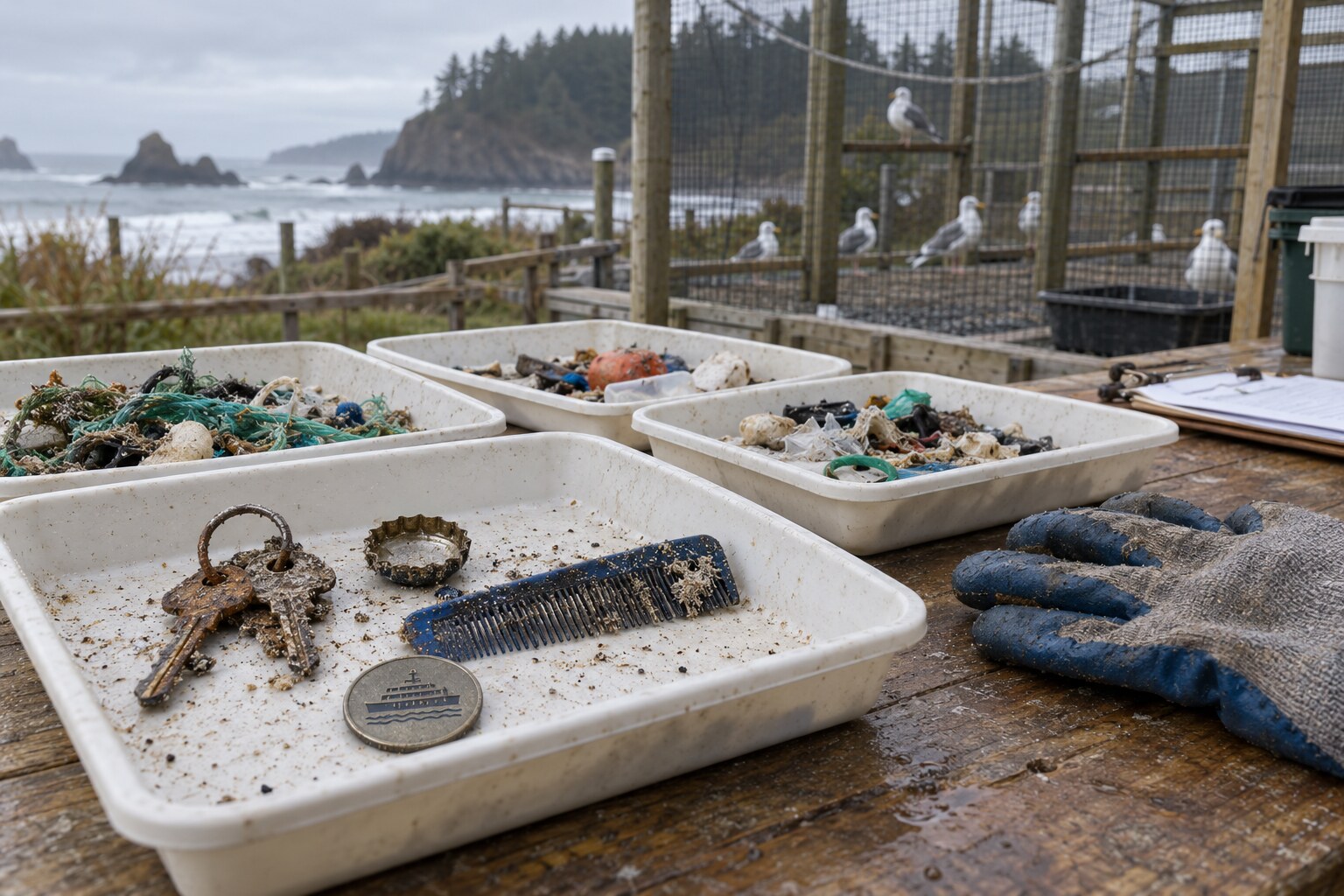
PORT LINDEN, Oregon — A coastal wildlife center has suspended public viewing of its gull enclosures after recovering birds began carrying keys, jewelry and other small objects to visitors who said they had lost them in places the birds could not have reached. Animal care and scheduled releases continue, but the center is asking people not to bring photographs of missing property.
Port Linden Wildlife Care is treating six adult western gulls for fishing-line injuries and exhaustion. Their open-air pens face the beach but are covered with netting and double entry doors. Volunteers provide food in shallow pans and remove ordinary debris, including shells, bottle caps and pieces of rope that birds collect within the enclosures.
The first disputed item appeared Saturday, when a gull carried a brass mailbox key from its water pan and set it at visitor Mara Venn's feet. Venn said she had lost the key in a grocery parking lot 18 miles inland in July. A hardware store mark and a chip of green nail polish matched photographs she kept for her landlord. The center returned it after recording her name.
During the next two visiting periods, four birds produced 11 more items. They included an earring lost at a wedding in Salem, a child's plastic barrette last seen in a school gym and a corroded socket from a fisherman's home workshop. None was listed among the objects removed from the birds at intake, and staff said the items were not present during morning pen checks.
The birds did not respond to every visitor. Some brought bits of shell or kelp that no one claimed, while others ignored people standing beside the fence. When a claimant recognized an object, the gull generally released it and stepped away. One bird retained a silver ring until its owner described where it had been lost, then pushed the ring through the feeding hatch without approaching her hand.
Center director Nessa Cole closed the viewing path after callers began offering lists of valuables and requesting appointments with particular birds. She said the animals are being prepared for release, not used as a recovery service, and public attention was interfering with feeding. Items without an established owner are being logged as ordinary found property and kept outside the animal clinic.
Gulls are observant, mobile and capable of associating people with food or objects, said Len Marr, a coastal ornithologist who reviewed the enclosure. They also carry durable material from rooftops, lots and shorelines over considerable distances. Marr said those habits could explain surprising recoveries near the coast, but not objects lost inland before the injured birds entered care or the apparent matching of strangers to specific items.
The center searched nests, drains and bedding, then ran a magnet beneath the water pans. Staff found common coins, hooks and rust fragments but no hidden cache. Intake radiographs show no metal inside the birds, and none has regurgitated an object. Three volunteers now inspect each enclosure together and photograph the empty pans before opening the visitor-side doors.
Two gulls were released Wednesday without a public gathering. They circled the center once, crossed the dunes and continued south. Cole said the remaining four will leave when their flight and feeding checks are complete, even if the objects continue. Claimants may collect documented property during office hours, and the center will transfer unclaimed material to the city after 30 days.
At Thursday's pen check, a volunteer found a worn metal ferry token balanced on the empty perch used by one of the released birds. The local ferry stopped accepting that issue in 1988. No visitor has claimed it, but the center's oldest volunteer recognized a crescent-shaped cut on its edge from a token she kept as a child. Her token remains framed at home, she said, and she declined to remove this one from its tray.