PORT ORLA, Oregon — The Orla Inlet Shellfish Cooperative has held a shipment of market-size oysters after workers at an inland packing room found the animals opening and closing in unison with tides at the beds where they were raised. State inspectors said routine water-quality results remain within harvest standards and no illness has been reported.
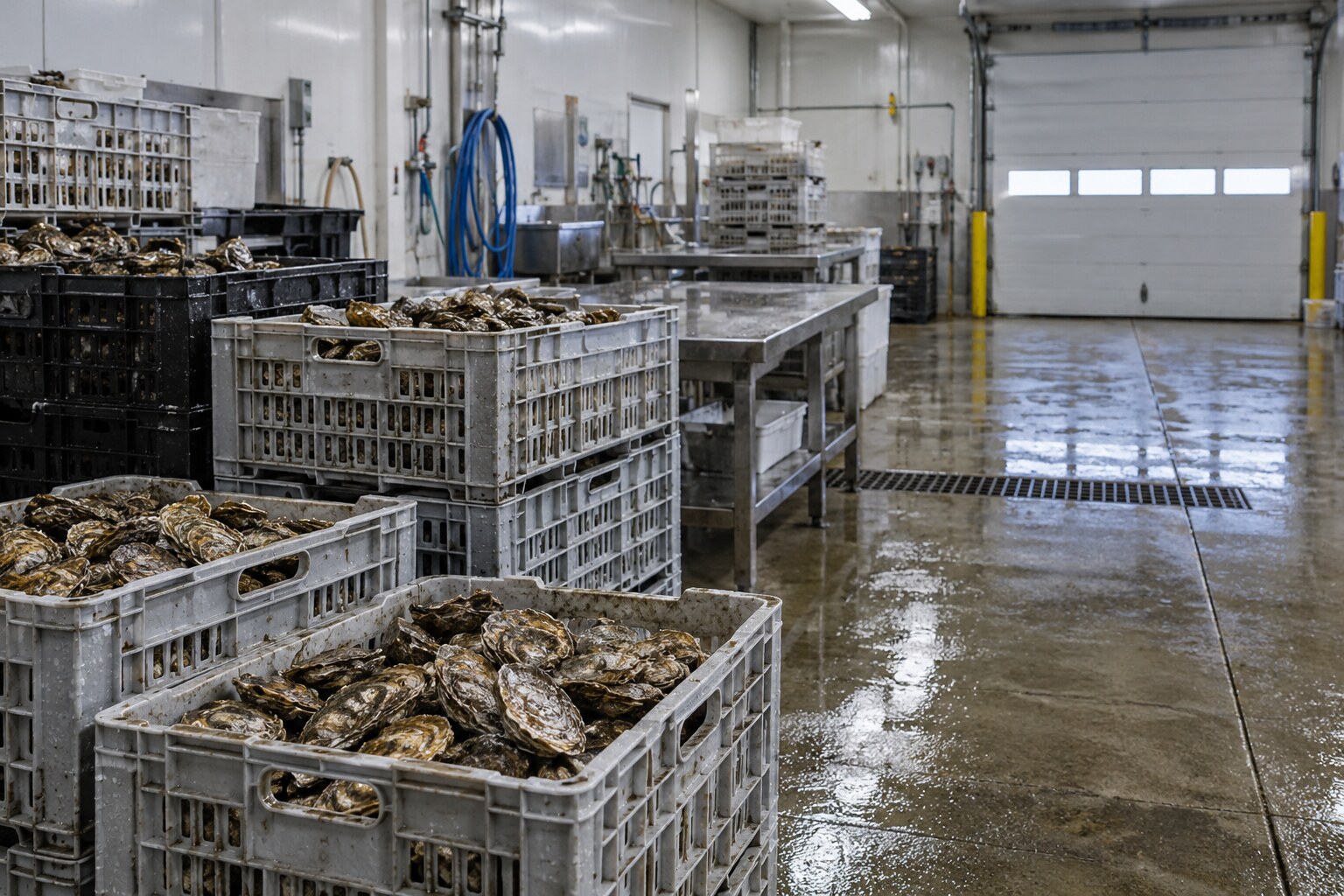
The 1,860 oysters were harvested Friday from three leases on the south side of the inlet and trucked 74 miles to a refrigerated room near Riverton. They were washed, counted and stacked in ventilated plastic crates at 38 degrees. The shipment was scheduled for restaurants and seafood counters in Oregon and northern California.
Packing worker Joel Serrano first heard the crates shortly after noon Saturday. He described a sequence of light, closely spaced knocks moving from the bottom crate to the top. When workers uncovered one stack, hundreds of upper shells were raised by approximately the same amount. They closed together less than a minute later.
The movement returned at 6:23 p.m., within two minutes of high tide at the south inlet gauge. It continued for about 17 minutes as the gauge fell. Oysters in separate stacks opened in alternating groups, producing a sound workers compared to rain beginning on a metal awning. The packing-room floor and tables did not move.
Oysters can remain alive out of water for days when they are kept cool and moist. They close their shells to retain water and may respond to temperature, handling, vibration and changes in light. Marine biologist Sela Ng said some shellfish retain daily rhythms after removal from the shore, though individuals collected from several depths would not ordinarily begin and stop as a single group.
Cooperative staff checked the refrigeration fans, compressor and loading-door seals. None cycled at the reported times. A vibration monitor placed on the nearest table recorded normal equipment activity during Sunday's high tide, while video showed the shells moving. Workers standing beside the crates felt no repeated vibration through the floor.
The cooperative transferred 60 oysters to an aerated seawater tank using water mixed to the inlet's measured salinity. Another 60 remained dry in a crate, and a third group was delivered to a state laboratory. All three groups opened within the same four-minute period Monday afternoon, though the laboratory is 112 miles from the coast and used a different refrigeration system.
Holding the shipment will cost growers an estimated $8,400 if the oysters cannot be cleared by Wednesday. Cooperative manager Tessa Imori said restaurants have been offered product from unaffected leases and members will be paid from a reserve fund while the review continues. No public harvest closure has been requested.
State shellfish staff collected tissue and water samples and will test for known toxins, low oxygen and disease. Initial visual examinations found no unusual mortality, odor or discoloration. The oysters close firmly when handled and otherwise meet size and condition requirements, inspector Malcolm Orr said.
At Imori's request, workers divided the remaining shipment into six rooms and covered two crates with insulated lids so neither light nor the refrigeration fans would change around them. At the predicted low tide Monday night, the uncovered shells closed first. The covered crates followed closely enough that staff could hear the knocks through two inches of foam.
Workers shucked a 12-oyster sample Tuesday morning for tissue testing and arranged the empty lower shells on a stainless tray. The shells contained no hinge muscle and could not close. At 10:46, as the inlet gauge began to rise, water left from rinsing them gathered along each hinge in a narrow dark line. The twelve lines advanced across the tray together and stopped on the side nearest the coast.