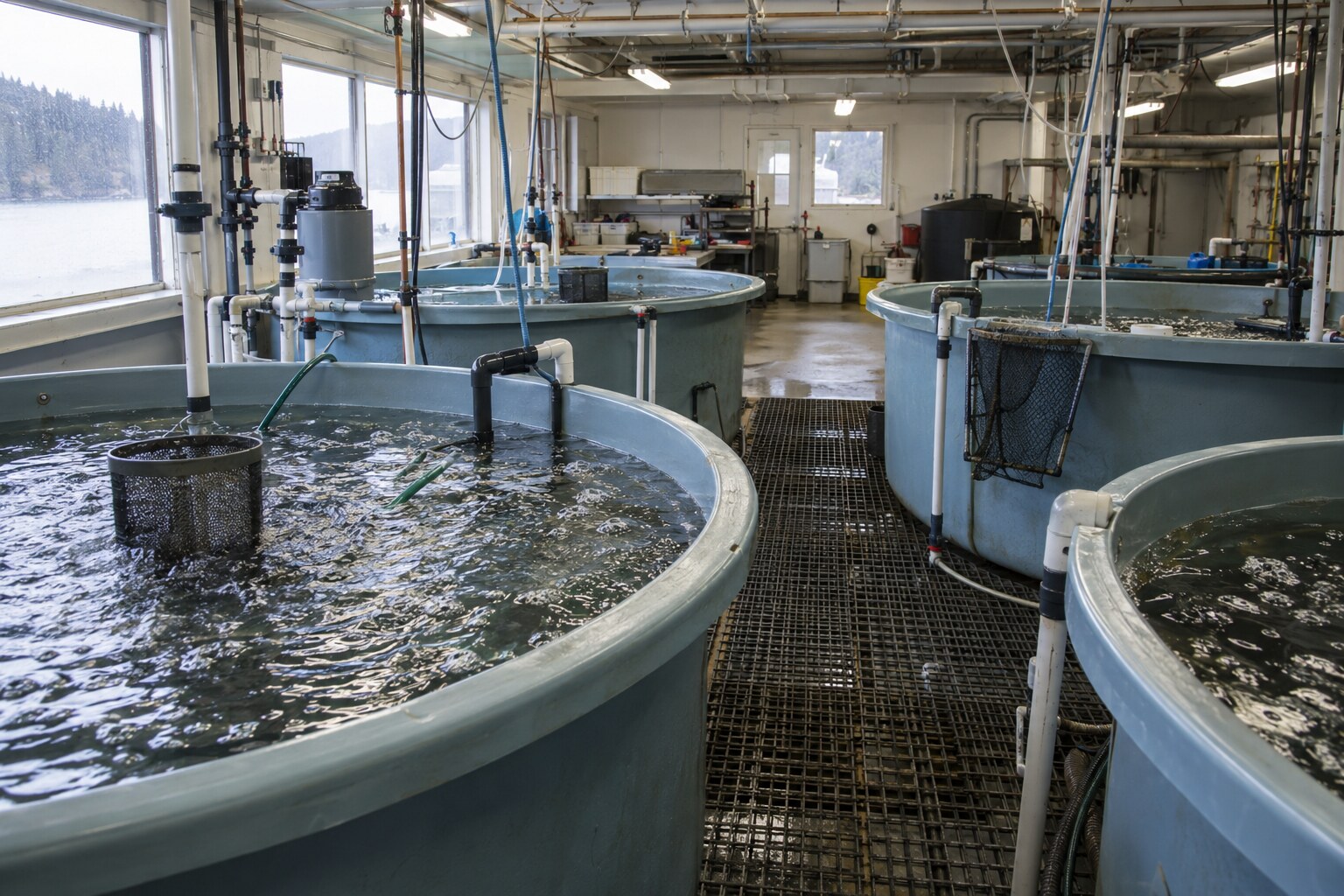
PORT SELDEN, Oregon — A nonprofit hatchery has delayed the release of about 180,000 juvenile Dungeness crabs after larvae in four tanks began gathering into adult-sized forms that moved together across the tank floors. Biologists said the individual animals appear healthy and no stock has entered the bay.
The Port Selden Marine Nursery raises crabs for a habitat-restoration study funded by fishing groups and coastal grants. Larvae are kept in round seawater tanks until they reach the megalopa stage, when they have small claws and begin settling. This month's group was scheduled for release into protected eelgrass beds Tuesday.
Technician Cora Lask first saw a dark shape on the floor of tank three during a routine feeding. Thousands of larvae had aligned into the outline of a crab nearly 18 inches wide. Separate clusters formed legs and two unequal claws. The entire arrangement moved sideways about three feet without losing its outline.
Larval crabs commonly concentrate around food, light and currents, nursery director Silas Quill said. They can also synchronize vertical movement in response to tides. Staff had not previously seen them maintain the anatomy or gait of an adult, particularly at a scale hundreds of times larger than any individual in the tank.
Workers stopped circulation to determine whether the plumbing produced the pattern. The shape loosened, turned toward the inlet pipe and assembled again. When Quill drew water into a sample cup, the collected larvae continued swimming as a small claw, opening and closing in unison against the clear wall.
The delay requires the nursery to buy additional feed and postpone a charter boat hired for the release. Tanks reserved for a later oyster trial may be used if the crabs cannot be cleared next week. Commercial crabbing is unaffected because the project stock is isolated from licensed harvest and represents a small fraction of natural settlement.
Marine invertebrates can coordinate through chemical cues and water movement without central direction, said Lina Brant, a university zoologist who reviewed video from the nursery. Similar collective behavior occurs in schooling fish and plankton layers. Brant said the recordings show a degree of anatomical detail that known larval responses do not readily explain.
Water tests found expected salinity, temperature and oxygen. Microscopic examinations identified normal megalopae with no visible parasite or shared tissue. The nursery screened incoming seawater and found ordinary plankton. Lights, pumps and feeding schedules had not changed before the first formation.
Staff divided tank three among four smaller vessels. Each group produced a complete crab outline rather than one quarter of the original. The new forms differed in size according to the number of larvae available, but all carried the larger claw on the right and moved northwest when viewed from above, regardless of how the vessels were rotated.
The crabs will remain indoors through the weekend while state permit staff review the observations. Quill said the nursery will not release, destroy or medicate them without guidance. Employees now feed from overhead platforms and avoid putting hands into the tanks while the formations are moving, though no biting or climbing has occurred.
On Friday morning, the form in tank three became still and flattened against the floor. When it dispersed, it left behind a transparent adult crab-shaped shell made from thousands of individual molts joined edge to edge. Staff lifted the shell into a shallow tray of seawater. The pieces remained connected when the tray was stirred, and the empty jointed legs continued folding beneath the body.