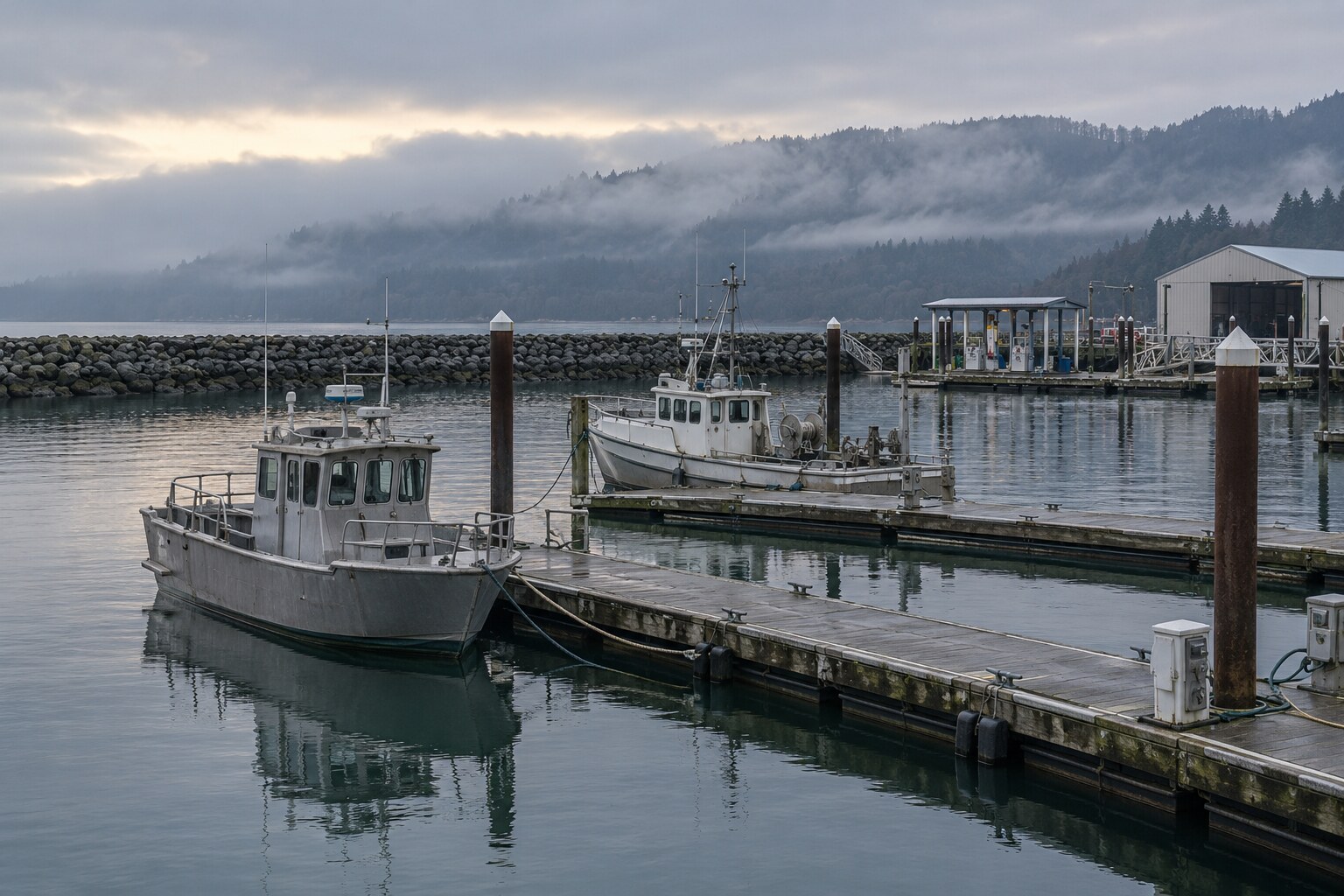
PORT WIDDER, Oregon — The port has prohibited dockside engine tests and imposed a temporary idle-speed limit after a low boat wake continued circling the inner harbor for more than two days. The entrance and fuel dock remain open, and no vessel damage or injury has been reported.
The inner basin is a sheltered rectangle used by charter boats, crabbers and two harbor work skiffs. A rock breakwater blocks most ocean swell, and posted rules already require slow speed near the floating docks. The port added the restrictions Thursday after repeated waves strained mooring lines in otherwise calm water.
Harbor mechanic Lena Cray first saw the wake Tuesday while testing a repaired diesel on the work skiff Mercer. She ran the boat once along the central fairway and returned it to berth 12. Its knee-high wake reached the north wall, reflected toward the fuel dock and should have flattened within several minutes.
Instead, a smaller ridge came back along the same route seven minutes later. Cray and dock attendant Silas Mott watched it pass beneath Mercer, lift six empty finger piers in sequence and turn along the south wall. It returned every seven minutes and 12 seconds through the evening without a boat moving in the basin.
Wind increased overnight and the tide fell nearly four feet, but the interval changed by less than two seconds. The ridge shortened in shallow water, then regained its original height when the tide rose. Outside the breakwater, harbor cameras showed ordinary chop traveling with the wind. None crossed the entrance in time with the inner wave.
Port staff cleared kayakers from the basin and doubled lines on two live-aboard boats. A seafood vendor moved glass tanks away from the dock edge after water sloshed onto an electrical cord. The charter fleet departed on schedule at idle speed, using the west side of the fairway to avoid meeting the ridge broadside.
Reflected waves can persist in enclosed basins when the harbor's dimensions reinforce particular frequencies, said naval engineer Corin Wren, who reviewed measurements for the port. Known oscillations generally affect a wide area and lose energy to friction. Wren said this wake behaved more like a traveling vessel wave, maintaining a narrow crest and turning corners rather than setting the whole basin in motion.
The port placed absorbent booms across two sections Thursday to determine whether surface debris showed the water's route. The crest passed beneath both booms without moving their anchors, then reappeared on the far side carrying the same line of foam. A pressure sensor recorded the lift, but a current meter beneath it showed no corresponding horizontal flow.
Fishermen have treated the restriction as an inconvenience rather than a closure. Crabber Jory Teal said he delayed loading pots until the wave passed so stacked gear would not shift. Marina resident Petra Dune described the repeated rise as gentle but difficult to ignore at night, when loose cups and cabinet doors moved at an interval she could anticipate without checking a clock.
Cray shut off power to the fuel dock, secured both work skiffs ashore and checked vessel tracking records for traffic outside the camera view. The last engine in the basin stopped at 5:38 p.m. Thursday. Through Friday night, the ridge completed another 215 circuits. Its height varied with passing boats but returned to about four inches after their wakes dissipated.
At dawn Saturday, a thin foam edge reached the closed service gate at the back of a boat shed, where the basin narrows to a grated drain. The water lifted against the gate, disappeared and resumed outside the shed on a rain puddle less than an inch deep. The puddle crossed the concrete in a straight ridge, tapped an overturned dinghy once and went still until the next seven-minute interval.