PRAIRIE LOCK, Nebraska — A small machine shop has changed station assignments after patterns of hardened skin faded from experienced machinists' hands and appeared on coworkers using different tools during the same shift. The company has paused overtime, but no order has been canceled and no employee has been asked to demonstrate the condition.
Prairie Lock Tool & Die makes short runs of bushings, brackets and repair parts for farm equipment. Six machinists work across manual lathes, a drill press and two inspection benches. Shop manager Dale Rusk said apprentice Mina Cole first reported soreness in her right palm Tuesday while deburring a box of steel collars.
Cole had a broad smooth callus below her thumb that matched the pressure point left by a lathe handwheel. She had not operated a lathe since training. Across the room, senior machinist Cal Venn found that the same callus, built through 18 years of work, had softened enough for the whorls beneath it to show.
The changes followed active jobs rather than tools alone. When Venn moved to the drill press, two small hardened circles faded from operator Nessa Orr's fingertips and appeared on his. Orr was completing paperwork at the time. The marks returned to her gradually after Venn stopped the press, though his remained until the end of the shift.
Workers also described pressure without an injury. Cole felt a metal burr catch beneath a fingernail while coworker Len Marr handled a rough part 30 feet away. Her glove and skin were intact, but Marr found a matching sliver in his own glove. Rusk stopped production, paid the crew for the remaining hours and locked shared gloves and hand tools in the inspection cage.
Repeated grip and friction produce distinctive calluses, but visible thickening or loss normally takes days or weeks, said Tessa Bell, an occupational clinician who examined the workers with their permission. Swelling and compressed skin can change the appearance of a hand during a shift. Bell said neither process would move an established pressure pattern between people as another task began.
The shop reopened Wednesday with each worker assigned a labeled tool set and a station different from the one used Tuesday. Gloves were changed at every break. The patterns still crossed between employees, including two people who never touched the same equipment. No response occurred when a lathe ran empty; the change began only after a worker put a cutting tool against metal.
The arrangement has slowed output on a grain-auger repair order and postponed one weekend shift. Rusk said employees may decline a station without losing hours and can use paid time for medical appointments. The shop's insurer asked for photographs and task records but did not direct workers to continue testing unfamiliar machinery.
Several workers found that the transferred calluses brought no corresponding skill. Cole's hand settled comfortably on the lathe wheel, but she followed her training checklist and required supervision as before. Venn received the narrow ridge made by calipers on an inspector's finger and still misread the first measurement when asked to cover that bench.
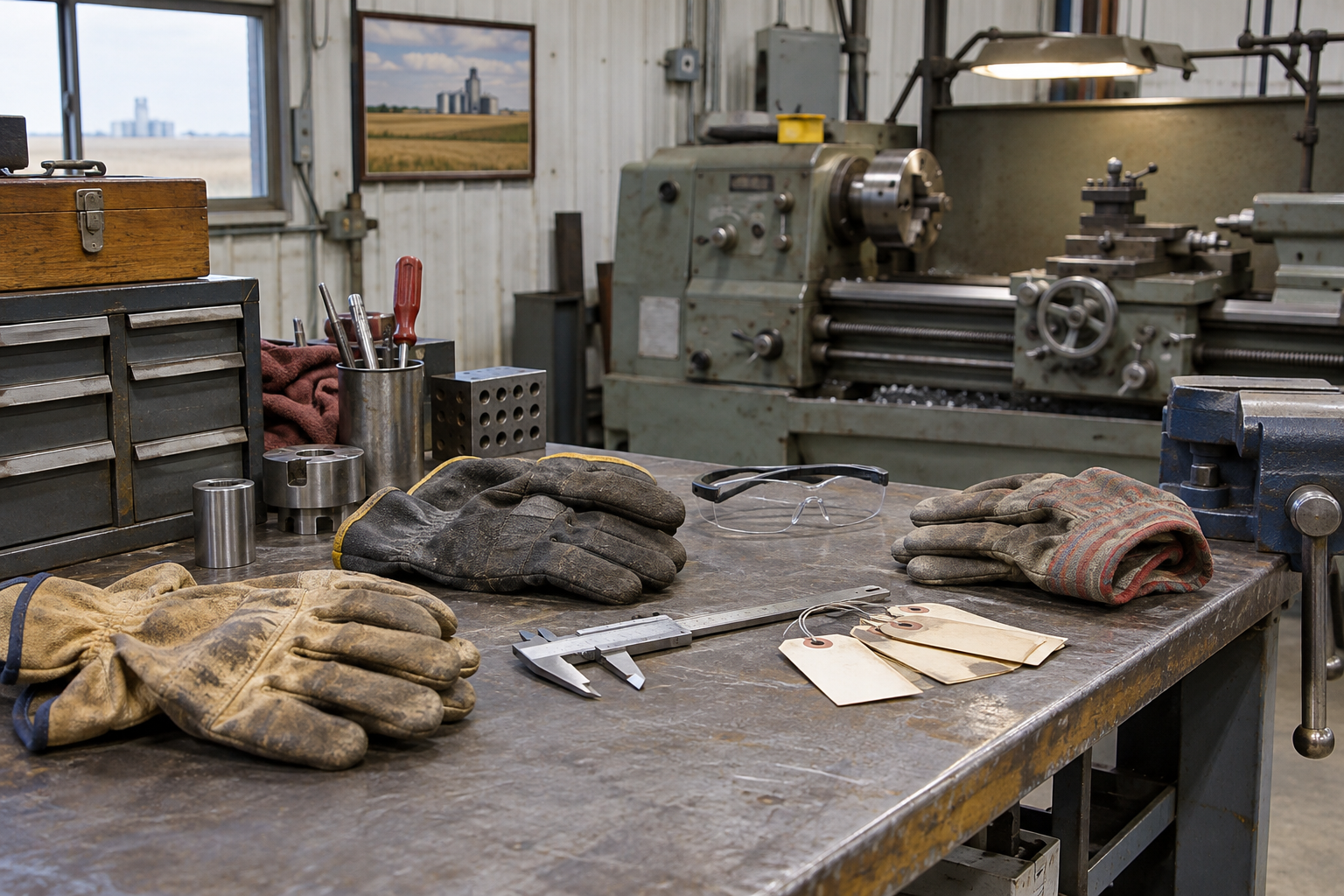
At closing, the crew placed six pairs of gloves palm-up on a cleaned steel table. Overnight, the leather stiffened at the same pressure points documented on the workers' hands, although no one wore the gloves after they were laid out. The marks formed a sequence from the drill press to the inspection bench in normal production order.
Rusk separated the pairs Thursday morning. Beneath them, a seventh set of palm and finger impressions remained in clean cutting oil on the table. The pattern included a missing left index fingertip. No current employee has that injury, but the shop has kept the associated lathe station covered since its previous operator retired five years ago.