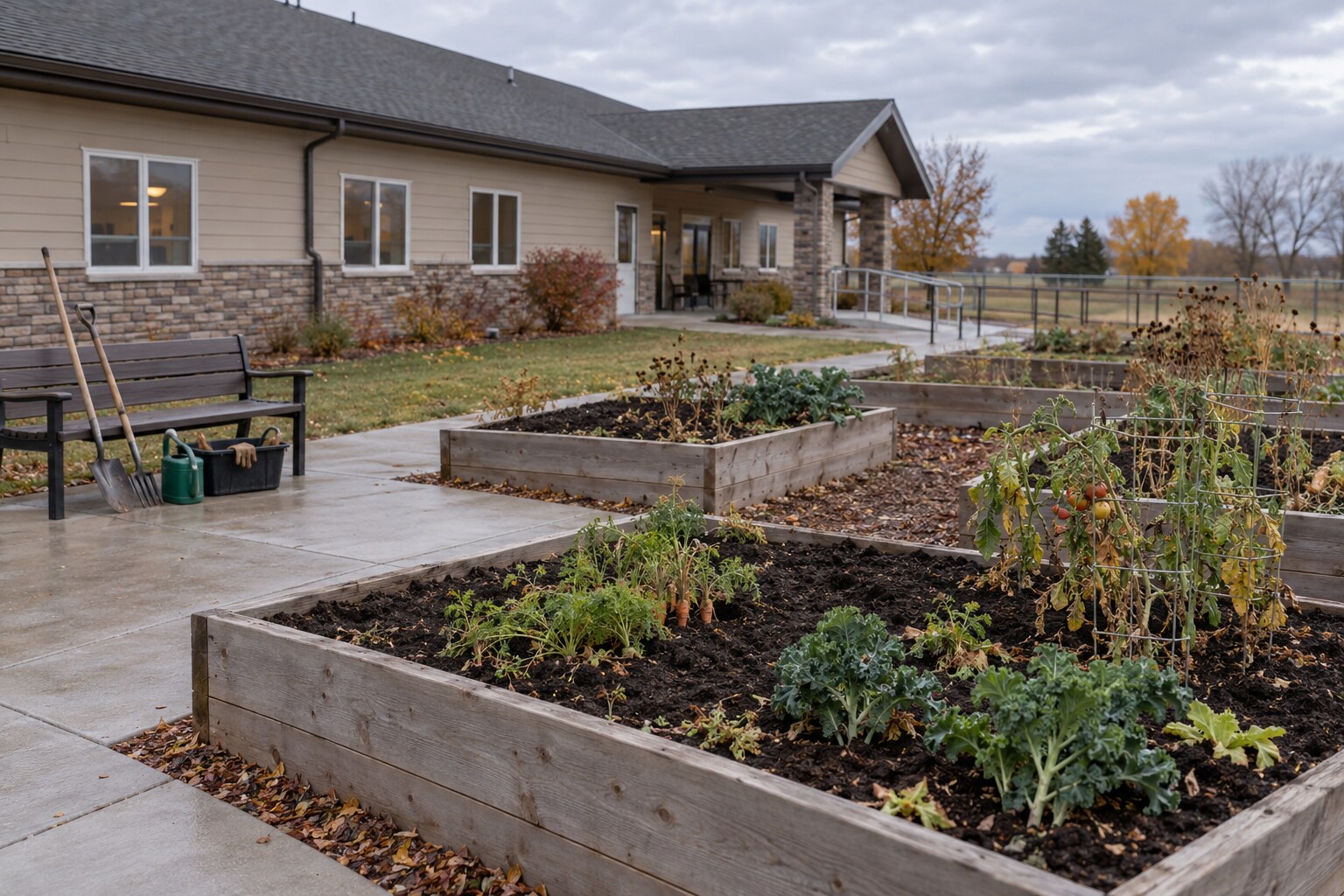
RED WILLOW, North Dakota — A senior center has moved exercise classes and card groups indoors after eight members reported spending their nights working in the center's garden while their families observed them asleep at home. Staff found the raised beds weeded, turned and planted by morning, although the rear gate remained locked.
The Red Willow Active Living Center maintains four accessible beds behind its dining room. Members grow tomatoes, beans and flowers from May through September, then clear the plots before the first hard freeze. Volunteers finished that work two weeks ago and stored the hand tools in a locked utility room.
On Tuesday morning, custodian Evan Saye found the beds freshly cultivated in straight rows. Kale, small carrots and green onions stood in soil that had been bare Monday. The plants were mature enough to harvest and showed no frost damage despite an overnight low of 24 degrees.
Center director Halley Cotter asked regular gardeners whether anyone had entered after hours. Eight members instead described dreaming that they worked together shortly before dawn. Their accounts included the same assignments: two people loosened soil, three planted, one carried water and two sat on the bench shelling beans into a yellow bowl.
The members live in six households across town. Spouses and adult children said they remained in bed during the hours they remembered gardening. One woman wears a motion alert that recorded no steps between 10:16 p.m. and 6:42 a.m. Another uses an oxygen concentrator with a 30-foot line and could not have left without disconnecting it.
By breakfast, several participants had sore shoulders, soil beneath trimmed fingernails and the small pressure marks left by garden gloves. Their nightclothes and homes were clean. Alma Reece, 84, found three bean hulls in a slipper beside her bed. She said she remembered dropping them near the outdoor bench when someone called her back to work.
Shared dreams can draw on routine, suggestion and recent group conversation, said Marit Yeo, a sleep specialist who spoke with families at the center's request. Older adults may also move or speak without fully waking. Yeo said those explanations do not establish who prepared the beds or how vegetables reached maturity overnight.
The garden camera shows empty paths from sunset until Saye arrived at 6:08 a.m. Its view includes the gate and all four beds. At 4:17, the picture brightens as if under midday sun for 13 minutes, though shadows from the bench and railing do not move. The new plants are visible when the image returns to normal.
Cotter locked the rear hall, moved the remaining tools into the main office and asked members to call if the dream returned. Lunch and transportation continue on their usual schedule. The garden club supported the precautions but asked that the produce be used rather than discarded if inspection found it safe.
State extension agent Devra Minn identified the plants as common vegetables, including a pale bean once sold locally as Prairie Pearl. That variety has not appeared in commercial catalogs for decades, Minn said, though families may retain old seed. Reece recognized it as the bean her parents grew and correctly described the maroon ring around its seed scar before a pod was opened.
Staff harvested the beds Friday and stored the vegetables in the kitchen cooler pending a food-safety decision. The members reported an uninterrupted night and attended lunch indoors. After the building closed, Cotter found 26 shelled Prairie Pearl beans laid along the accessible path outside the locked rear door. They were wet with warm soil, and each had begun putting out a white root.