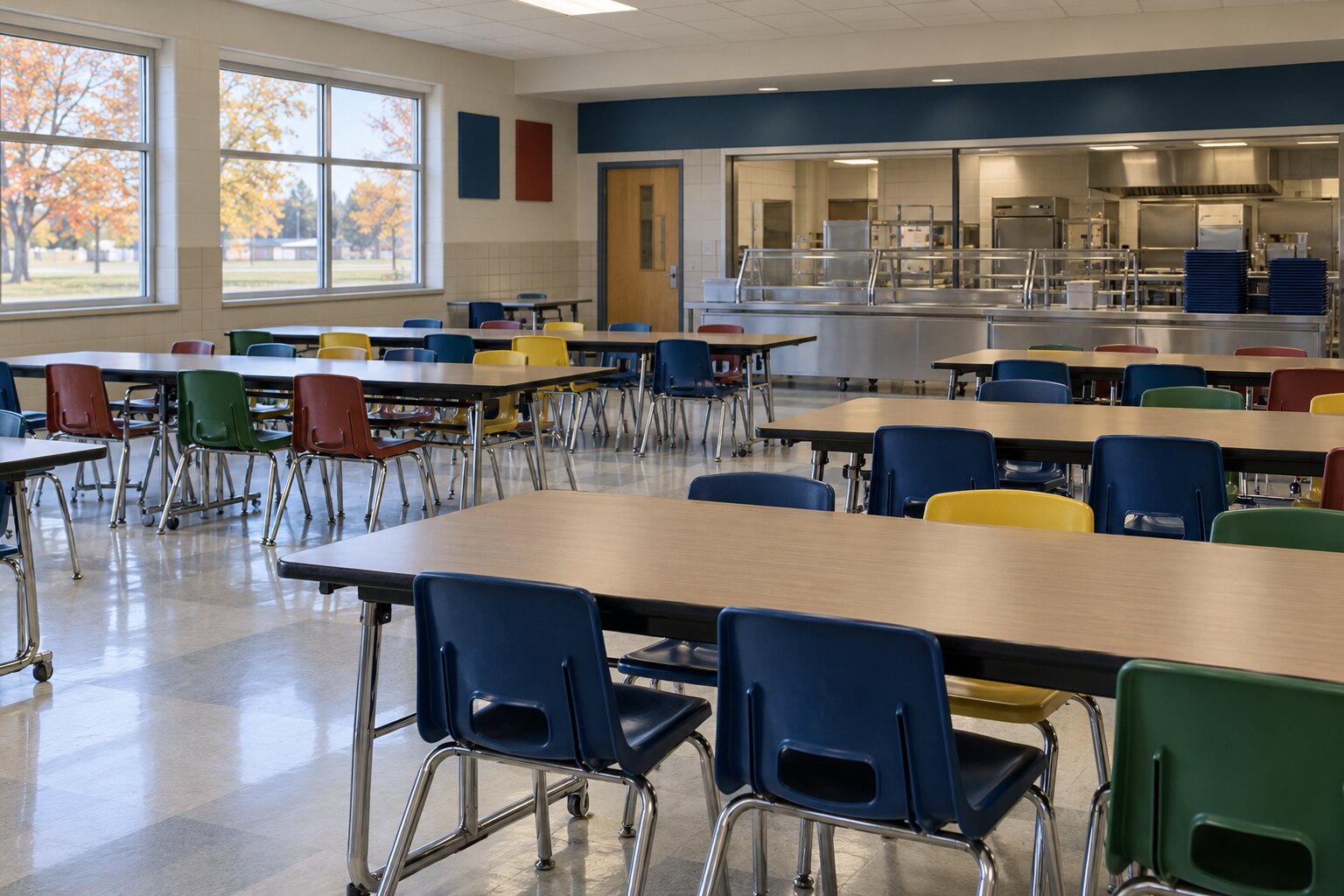
RIME CROSSING, North Dakota — An elementary school has divided its lunch period into two seatings after students at every table began reserving one empty chair for a diner they would not name. Classes and meal service remain open, and the district said no student has been threatened or excluded.
Rime Crossing Elementary serves 118 students from kindergarten through sixth grade. Its cafeteria uses rectangular tables seating eight. Staff first noticed the change Monday when children placed backpacks or folded napkins on one chair at each table and asked classmates arriving late to choose another place.
The students did not describe an imaginary friend or missing classmate. When asked who needed the chair, most said it was for the person eating after them. Several younger children called that person the late lunch, using the phrase as a name rather than a schedule. Teachers said the expression had not been used in school before Monday.
Principal Deena Ward removed the saved objects and opened the chairs during the second lunch group. Students shifted closer together and left a different seat empty at each table. Two children stood with their trays rather than occupy the last place. Ward ended lunch five minutes early after the same behavior spread to adults supervising the room.
The custom has practical effects in a small cafeteria. The school now brings half the classes at 11:15 and the rest at 11:45, adding a bus aide and library assistant to supervise. Kitchen workers prepare the same number of meals, but they place one unfilled tray at the end of the line because students became upset when all trays were assigned.
No child has claimed to see someone seated in the empty places. Several said they could tell when the late lunch had arrived because conversation became easier and food tasted less salty. Fifth-grader Nia Penn said she sometimes moved her milk aside to make room for an elbow, though she could not say whose elbow she meant.
Group customs can form quickly among children and persist without a clear origin, said Verna Cole, a school psychologist consulting with the district. A ritual may reduce anxiety or give students a shared way to organize a noisy meal. Cole advised staff not to ridicule the behavior while maintaining nutrition, access and ordinary classroom expectations.
Parents were notified Wednesday and asked whether children had discussed the seating at home. Several reported that their children had begun leaving a place open at family tables. One parent said her son set out a fork and water for late lunch, then objected when she cleared them because the guest had not finished.
Cafeteria workers weighed untouched food before and after Thursday's first seating. The reserved tray lost nine ounces, including half a bread roll and most of an apple cut into wedges. Staff had remained near the service line, and the tray was visible from two ceiling cameras. Both recordings show children passing in front of it but no hand reaching the food.
Ward said the district will keep the staggered schedule through next week and allow one open place where capacity permits. Students who want another seat may move without explanation. The school is not counting the extra tray as a reimbursable meal and will donate unopened food under its existing pantry agreement.
After Thursday's second seating, custodian Hale Moss stacked every chair upside down on the tables and photographed the room before mopping. When he returned with a clean-water bucket, one chair stood upright at the center table. Its seat was warm, and the tabletop beside it held a round condensation mark surrounding a dry brass lunch token last issued by the school in 1987.