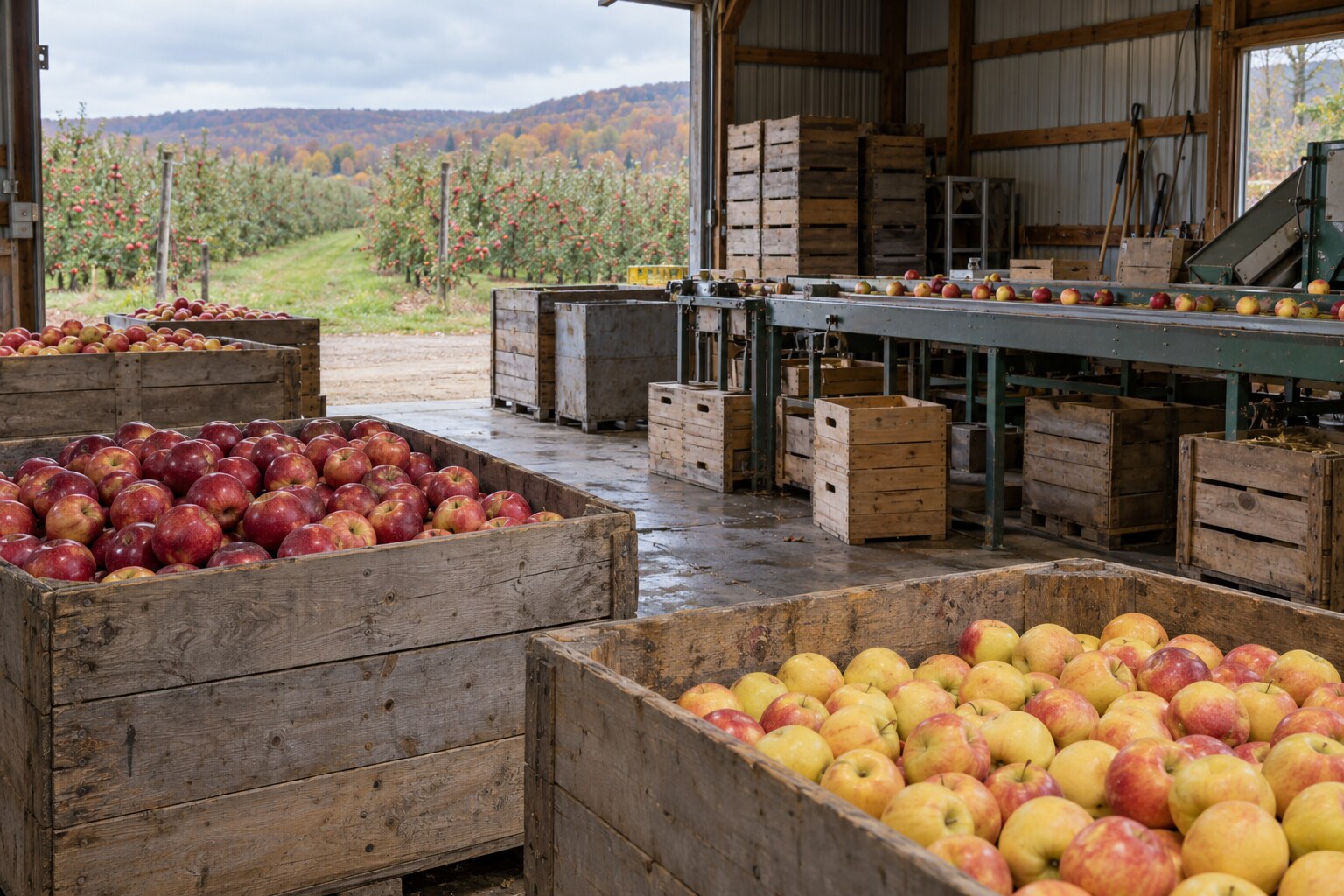
ROOK HOLLOW, Pennsylvania — A family orchard has withheld about 4,600 pounds of apples from cider production after intact fruit in cold storage developed bite-shaped bruises while visitors ate apples from the same harvest. No illness has been reported, and retail fruit from other blocks remains for sale.
Rook Hollow Orchard held its final tasting of the season Sunday, offering slices of six varieties grown on a north-facing block. The event drew about 70 visitors and used fruit picked Friday. Six additional bins from that block had been graded for pressing and placed in a locked cooler adjoining the packing shed.
Packing manager Tess Orlow entered the cooler during the tasting and found dark crescents appearing beneath the skin of otherwise whole apples. She first suspected pressure damage from the wooden bins. The marks were scattered through the upper layers and did not occur where fruit touched a slat or another apple.
Orlow asked the tasting table to pause. During the next five minutes, no new marks appeared. When one visitor resumed eating a Golden Russet with staff watching, a pale arc formed under the skin of a different russet in the cooler after each bite. The stored apple's surface remained smooth and unbroken, but its flesh softened in the shape and depth of missing mouthfuls.
The visitor's apple showed ordinary bite marks and was not restored between them. Orchard owner Len Marr photographed both fruits and ended the tasting. He said the two apples were not visibly identical in size or color and had not grown beside each other, according to the picking crews. Staff found no thread, pressure device or change in cooler temperature.
By closing time, 112 stored apples carried one or more crescents. The number was smaller than the estimated pieces eaten because sliced samples could not be connected to individual fruit. Some bruises followed the narrow marks of children's teeth; others showed straight edges consistent with tasting knives. None penetrated the peel.
Bruising can appear hours after harvest when damaged cells oxidize, said Nella Voss, a county extension horticulturist who examined a sample Monday. Pressure, chilling and rough handling may leave internal injury before the peel changes color. Voss said those causes do not normally reproduce the sequence of bites taken from another apple, but she advised treating the affected lot as a quality issue rather than evidence of contamination.
The orchard canceled a 600-gallon pressing run and offered refunds to tasting guests who had bought north-block fruit. Marr said he will compost the visibly damaged apples if laboratory screens show no regulated pest or disease. The decision costs the farm its last wholesale cider delivery before Thanksgiving but does not affect its bakery or school-tour schedule.
Visitors responded with concern and curiosity. Nora Pell, who had eaten two samples, returned an unopened bag Monday. Every apple inside was firm. She said she did not feel ill but disliked the thought that eating one fruit might leave evidence in another. A second customer asked to keep a bruised apple; the orchard declined while the lot is under review.
Workers moved the six bins apart and stopped handling them except for documented samples. Bruising continued more slowly Monday as customers finished fruit already taken home. Staff could not identify who was eating, but several new marks appeared near lunch and after the local school dismissed. The activity ceased overnight and resumed shortly after breakfast.
Marr took one unmarked apple home Tuesday rather than sell it. He ate it alone at the kitchen sink in eight bites and placed the core in his compost pail. When he opened the packing shed Wednesday morning, an apple resting by itself on the cleaned sorting table carried eight dark crescents around its middle. A ninth mark had formed beneath the stem, where the core at his house still retained one strip of flesh.