ROURKE HOLLOW, Pennsylvania — A downtown music store has postponed the sale of a used upright piano after customers playing a single note heard the instrument complete melodies they said had never been performed in the shop. Lessons and repairs continue, and the store has refunded deposits from two prospective buyers.
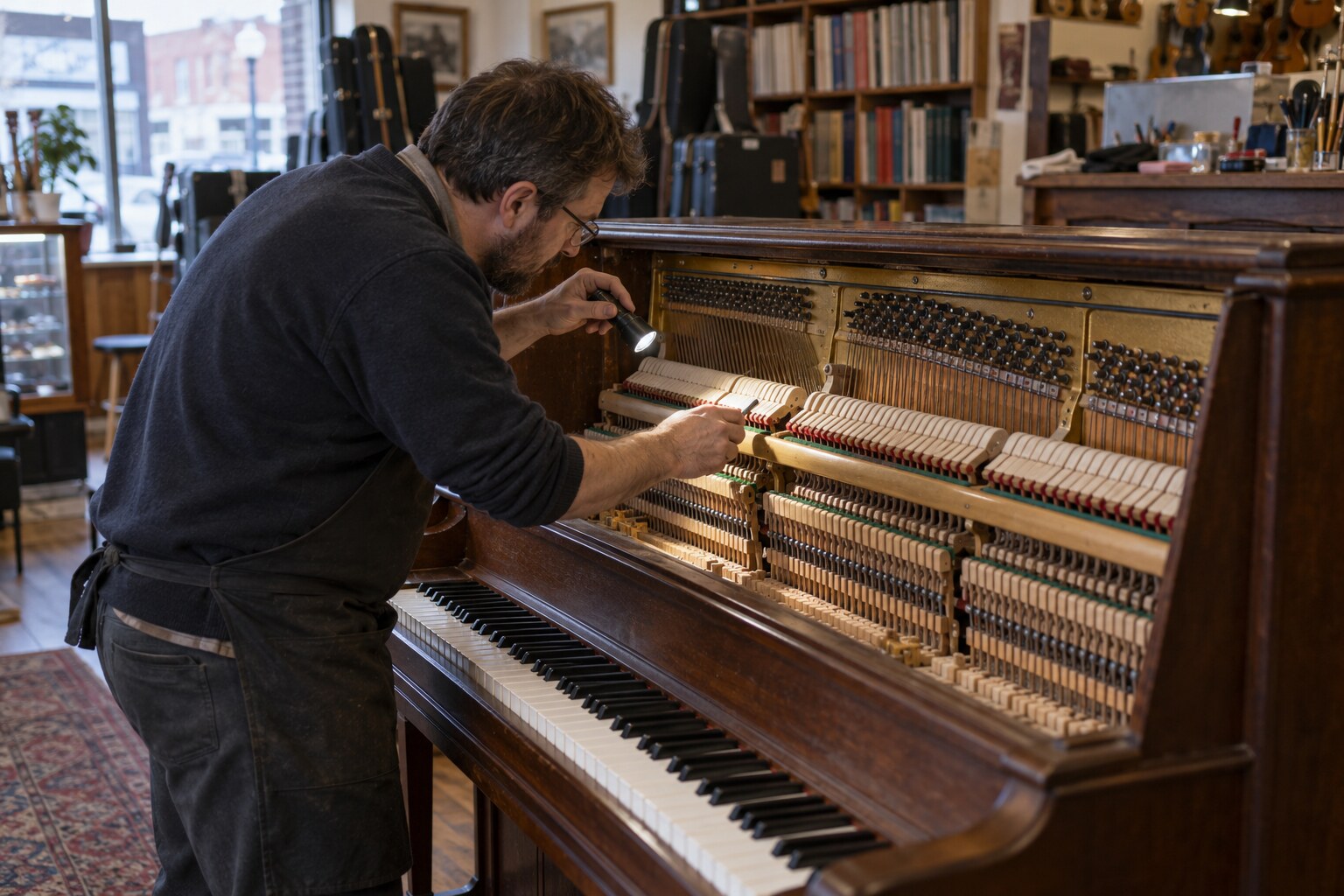
The 1938 Weller upright came from the fellowship hall of a closed church outside the borough. Rourke Hollow Music accepted it on consignment this month after tuning the middle register and replacing three felt dampers. Owner Tess Marrow priced it at $900, including delivery within the county.
During a Saturday demonstration, customer Len Voss pressed middle C to check the key weight. Four neighboring keys lowered after he released it, playing a short descending phrase. Voss recognized the notes as the beginning of a melody he had recorded on his phone in 2021 but never shared or finished. The voice memo contains him humming the same four notes beneath the sound of a kitchen fan.
The response changed with the player. A piano student touched F and heard six measures of an exercise she said she had invented at home. A choir director received two chords from an unfinished setting stored in a handwritten notebook. Customers who did not claim a private melody heard isolated notes or ordinary mechanical knocks rather than a recognizable passage.
Marrow ended demonstrations after visitors began taking turns at the keyboard and asking whether the piano knew songs connected to particular people. She closed the fallboard, moved the instrument behind the repair counter and returned a deposit to Voss. He said he wanted an upright for practice, not a machine that made authorship difficult to establish.
Piano actions can repeat or add notes when parts are worn, said technician Caro Venn, who removed the front panel Monday. Loose jacks, misaligned hammers and sympathetic vibration may create brief clusters after one key is struck. Venn said those faults would recur around the same keys and strings, not reorganize themselves into different tonal phrases for successive players.
The instrument has no player mechanism, recording unit or electrical connection. Its case contains the expected wooden action, cast-iron plate and strings. Several replacement hammer felts appear newer than the church's maintenance receipts indicate, but Venn found no hidden solenoids, magnets or linkage capable of depressing keys without moving the visible action.
The delay affects the estate that donated the piano and a school family waiting for an affordable instrument. Marrow offered the family another used upright at the same price and will continue paying storage charges to the estate while the review is underway. She said the disputed piano will not be demonstrated privately or advertised as an attraction.
Voss agreed to play the opening note once more while Venn watched the hammers. The piano supplied his four-note phrase, paused, then added a fifth note absent from the voice memo. Voss said it resolved the melody in the way he had avoided because it sounded too familiar. He wrote the note down but asked that the store not include it in any description of the instrument.
Venn removed the entire action Monday evening and stored it on a padded bench across the room, leaving the strings and empty keybed in the case. No sound was recorded overnight. When staff opened Tuesday, 11 clean rectangular patches had appeared in the dust beneath the removed hammers. They marked the same notes as the choir director's unfinished setting, including two keys she had not touched during her demonstration.